 Indietro
Study Guide: Demand, Supply, and Equilibrium in Microeconomics
Guida di studio - Note intelligenti
 Appunti personalizzati basati sui tuoi materiali, ampliati con definizioni chiave, esempi e contesto.
Markets, Demand, Supply, and Equilibrium
Introduction to Markets
Markets are fundamental to microeconomics, serving as the arena where buyers and sellers interact to exchange goods and services. Understanding how markets operate is essential for predicting prices and quantities.
Definition: A market is a group of economic agents trading a good or service, governed by rules and arrangements for trading.
Types: Markets may have physical locations (e.g., farmers' markets) or exist virtually (e.g., online platforms).
Examples: Labor market, credit market, foreign exchange (FX) market, marriage market, attention market.
Market | Economic Agents | What's Traded | Price |
|---|---|---|---|
Labor Market | Workers & Firms | Labor Services | Wage |
Credit Market | Savers/Lenders & Borrowers | Loanable Funds | Interest Rate |
FX Market | Currency Buyers & Sellers | Foreign Currencies | Exchange Rate |
Marriage Market | Potential Partners | Partnership | Implicit Tradeoffs |
Attention Market | Platforms & Advertisers | Consumer Attention | Advertising Price |
Perfectly Competitive Markets
Economists often assume markets are perfectly competitive, meaning no single buyer or seller can influence the market price, and all goods are identical.
Price-takers: Buyers and sellers accept the prevailing market price.
Identical goods: No differentiation among products.
Demand: How Buyers Behave
Individual Demand
Demand describes how much of a good consumers are willing to buy at various prices. The demand schedule lists quantities demanded at different prices, and the demand curve graphs this relationship.
Law of Demand: When price decreases, quantity demanded increases (holding all else equal).
Movement along the curve: Caused only by changes in the good's own price.

Market Demand
Market demand aggregates individual demand curves, showing the total quantity demanded at each price by all buyers.
Aggregate Demand: Sum of all individual demand schedules.

Changes in Demand
There are two types of changes affecting demand:
Movement along the demand curve: Caused by a change in the product's own price.
Shifts of the demand curve: Caused by changes in other factors:
Tastes and preferences
Number and scale of buyers
Income and wealth
Availability and prices of related goods (substitutes and complements)
Buyers' expectations about the future
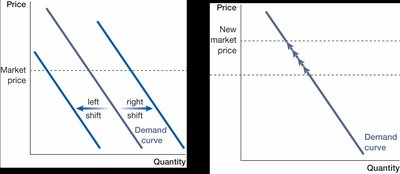
Demand Shift Factors
Tastes and Preferences: Changes can shift demand right (increase) or left (decrease).
Number and Scale of Buyers: More buyers shift demand right; fewer buyers shift demand left.
Income and Wealth:
Normal goods: Demand increases as income rises.
Inferior goods: Demand decreases as income rises.
Related Goods:
Substitutes: If the price of a substitute falls, demand for the original good shifts left.
Complements: If the price of a complement falls, demand for the original good shifts right.
Expectations: Beliefs about future prices or income can shift demand.
Supply: How Sellers Behave
Individual and Market Supply
Supply describes how much of a good sellers are willing to offer at various prices. The supply schedule lists quantities supplied at different prices, and the supply curve graphs this relationship.
Law of Supply: When price increases, quantity supplied increases (holding all else equal).
Movement along the curve: Caused only by changes in the good's own price.
Changes in Supply
There are two types of changes affecting supply:
Movement along the supply curve: Caused by a change in the product's own price.
Shifts of the supply curve: Caused by changes in other factors:
Input prices
Technology
Number and scale of sellers
Sellers' expectations about the future
Supply Shift Factors
Input Prices: Lower input prices shift supply right; higher input prices shift supply left.
Technology: Improved technology shifts supply right.
Number and Scale of Sellers: More sellers shift supply right; fewer sellers shift supply left.
Expectations: Sellers' beliefs about future prices can affect current supply.
Equilibrium: Where Supply Meets Demand
Competitive Equilibrium
Equilibrium occurs where the quantity supplied equals the quantity demanded. The market price and quantity at this point are called the competitive equilibrium price and competitive equilibrium quantity.
Definition:
No incentive to change: At equilibrium, neither buyers nor sellers wish to alter their behavior.
Excess Demand and Excess Supply
Excess Demand (Shortage): Occurs when consumers want more than suppliers provide at a given price.
Excess Supply (Surplus): Occurs when suppliers provide more than consumers want at a given price.
Curve Shifting in Equilibrium
Changes in supply or demand shift the equilibrium price and quantity. The direction and magnitude of these shifts depend on which curve moves and by how much.
Supply Shift: E.g., a major oil exporter ceasing production shifts supply left, raising price and lowering quantity.
Demand Shift: E.g., new technology reducing oil use shifts demand left, lowering price and quantity.
Simultaneous Shifts: Both curves can shift at once, making the effect on equilibrium quantity or price ambiguous without more information.
Applications and Practice
Case Studies
Brown Eggs vs White Eggs: Brown eggs cost more due to higher production costs (larger chickens), not necessarily higher demand.
Roses on Valentine's Day: Price increases due to higher demand.
Beer on Super Bowl Sunday: Price does not increase, possibly due to supply adjustments or market structure.

Summary Table: Demand and Supply Changes
Change | Effect on Curve | Effect on Equilibrium |
|---|---|---|
Price of good changes | Movement along curve | Quantity changes |
Other factors change | Curve shifts | Price and quantity change |
Key Takeaways
Demand: Price rises, quantity demanded falls (holding all else equal).
Supply: Price rises, quantity supplied rises (holding all else equal).
Movement vs Shift: Price change causes movement; other factors cause shifts.
Equilibrium: Occurs where .
Curve Shifts: Always ask: What changed, which curve moves, and what happens to equilibrium?
