 Indietro
Fats: Essential Energy-Supplying Nutrients and Cardiovascular Disease
Guida di studio - Note intelligenti
 Appunti personalizzati basati sui tuoi materiali, ampliati con definizioni chiave, esempi e contesto.
Fats: Essential Energy-Supplying Nutrients
What Are Fats?
Fats are a type of lipid, a diverse class of organic substances that are insoluble in water. Lipids are crucial for various bodily functions and are categorized into three main types:
Triglycerides: The most common form of fat in the diet and body, making up about 95% of dietary fat.
Phospholipids: Essential for cell membrane structure and function.
Sterols: Include cholesterol, important for hormone synthesis and cell membranes.
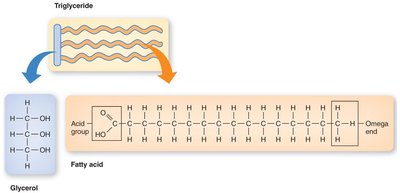
Triglycerides
Triglycerides are composed of three fatty acid molecules and one glycerol molecule. Fatty acids are long chains of carbon atoms surrounded by hydrogen atoms, while glycerol is a three-carbon alcohol forming the backbone of triglycerides. Triglycerides are the main form of fat storage in the body and are metabolically active, influencing health.
Phospholipids
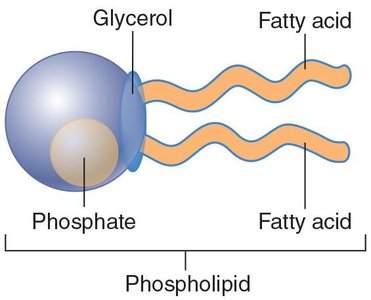
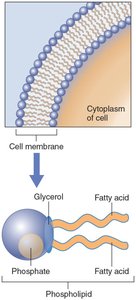
Phospholipids consist of a glycerol backbone, two fatty acids, and a phosphate group. They are soluble in water and are manufactured by the body, making them non-essential in the diet. Phospholipids are vital for cell membrane structure and regulate the transport of substances into and out of cells. The liver uses phospholipids (lecithins) to make bile, aiding fat digestion.
Sterols
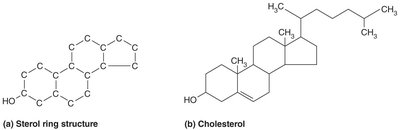
Sterols are lipids with multiple rings of carbon atoms. Cholesterol is the major sterol in the body, used to synthesize sex hormones, bile, adrenal hormones, and vitamin D. Sterols are found in both animal and plant foods and are essential for cell membranes and hormone production.
Fatty Acids: Structure and Types
Length, Saturation, and Shape
Fatty acids differ in their carbon chain length, level of saturation, and shape:
Chain Length: Short (<6 carbons), medium (6–12 carbons), or long (>13 carbons).
Saturation: Refers to the number of hydrogen atoms surrounding each carbon.
Shape: Influenced by saturation and commercial processing.
Levels of Saturation
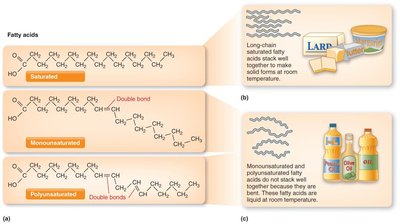
Saturated fatty acids: Have hydrogen atoms surrounding every carbon; no double bonds.
Monounsaturated fatty acids: Have one double bond; lack hydrogen atoms in one region.
Polyunsaturated fatty acids: Have two or more double bonds; lack hydrogen atoms in multiple locations.
Major Sources of Dietary Fat
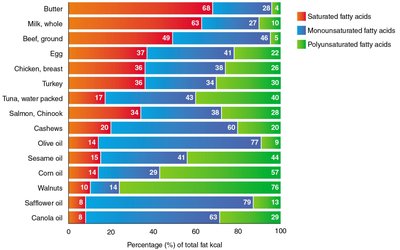
Most oils are good sources of monounsaturated (MUFA) and polyunsaturated fatty acids (PUFA). Saturated fats are generally detrimental to health, while unsaturated fats are protective.
Triglyceride Shape and Physical Properties
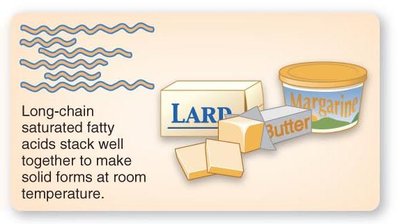
Saturated fatty acids: Pack tightly, solid at room temperature (e.g., coconut oil, butter, lard).
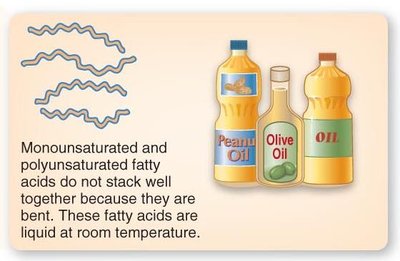
Unsaturated fatty acids: Do not stack well, liquid at room temperature (e.g., canola, corn, safflower oils).
Cis and Trans Fatty Acids
The arrangement of hydrogen atoms at the unsaturated region can be:
Cis: Hydrogens on the same side of the carbon chain.
Trans: Hydrogens on opposite sides of the carbon chain.
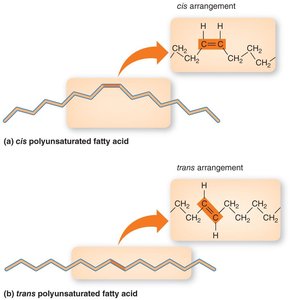
Hydrogenation
Hydrogenation is the process of adding hydrogen atoms to unsaturated fatty acids, converting liquid fats into solid or semi-solid forms. This process often creates trans fatty acids, which are listed as partially hydrogenated oils (PHO) on food labels.
Essential Fatty Acids
Omega-6 and Omega-3 Fatty Acids
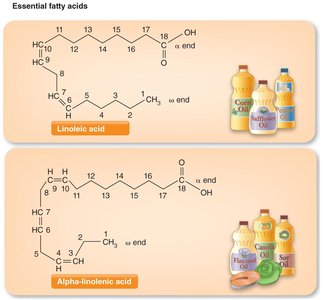
Essential fatty acids cannot be synthesized by the body and must be obtained from the diet. They are precursors to eicosanoids, which regulate cellular function.
Omega-6 (Linoleic acid): Found in vegetable and nut oils.
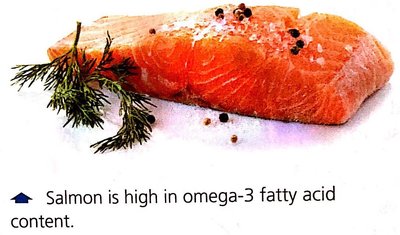
Omega-3 (Alpha-linolenic acid, EPA, DHA): Found in dark-green leafy vegetables, flaxseeds, walnuts, canola oil, fish, and fish oils.
Functions and Importance of Fats
Energy
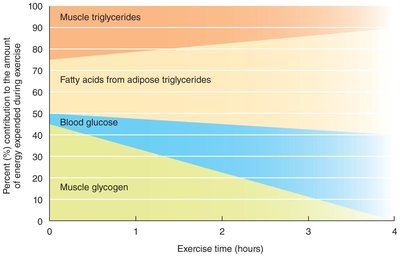
Fat is very energy dense, providing 9 kcal/gram. It is used for energy during rest and exercise, especially after glycogen is depleted. Fat is also important for energy storage.
Fat-Soluble Vitamins and Body Functions
Fat-soluble vitamins: Vitamins A, D, E, and K require fat for transport and absorption.
Cell membrane structure
Nerve cell transmission
Protection of internal organs
Insulation to retain body heat
Flavor, Texture, and Satiety
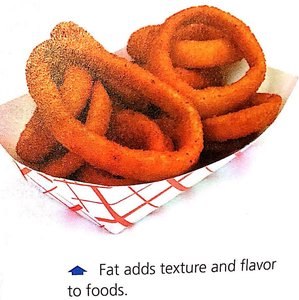
Fat provides flavor and texture to foods and contributes to satiety, helping individuals feel fuller for longer periods as energy is slowly released into the bloodstream.
Digestion and Absorption of Fats
Digestion Process
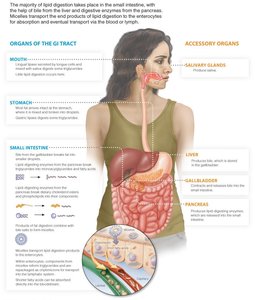
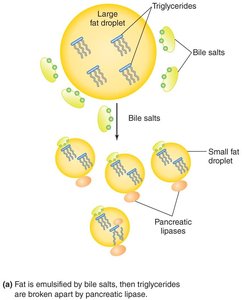
As fat enters the small intestine, bile is secreted from the gallbladder to emulsify fat droplets. Pancreatic enzymes break triglycerides into fatty acids and monoglycerides, which are absorbed as micelles.
Absorption and Transport
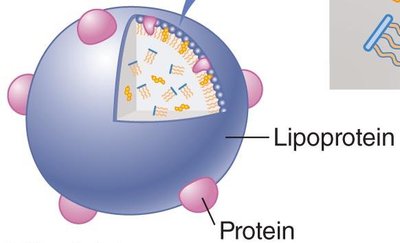
In the intestinal mucosal cell, fatty acids are reattached to monoglycerides to form triglycerides. These are packaged with proteins into chylomicrons, which transport fats through the lymphatic system and bloodstream. Short- and medium-chain fatty acids are absorbed more quickly.
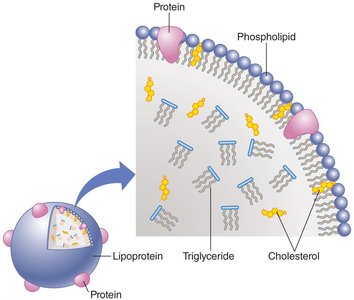
Fat Storage and Utilization
Once inside cells, triglycerides can be used for energy, to make lipid-containing compounds, or stored in liver and muscle cells.
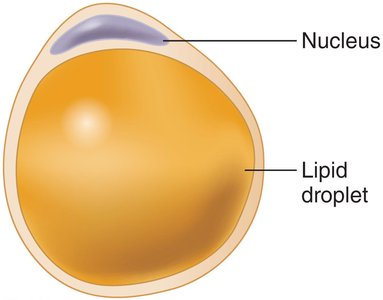
Dietary Fat: Types, Recommendations, and Health
Visible and Hidden Fats
Visible fats are those easily seen in foods, while hidden fats are added to processed foods or occur naturally. Reading Nutrition Facts Panels is important for identifying fat content.
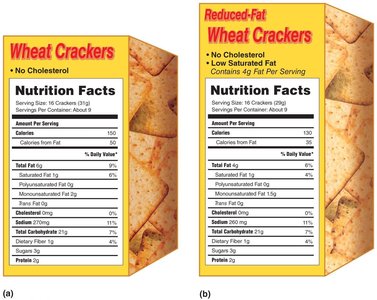
Recommended Fat Intake
AMDR for fat: 20–35% of total Calories from fat.
Athletes may reduce fat intake to 20–25% of total Calories.
Minimize intake of saturated and trans fats.
Ensure adequate omega-3 intake from leafy greens, walnuts, flaxseeds, and fish.
Essential Fatty Acid Recommendations
Linoleic acid (omega-6): AI is 14–17 g/day for men, 11–12 g/day for women.
Alpha-linolenic acid (omega-3): AI is 1.6 g/day for men, 1.1 g/day for women.
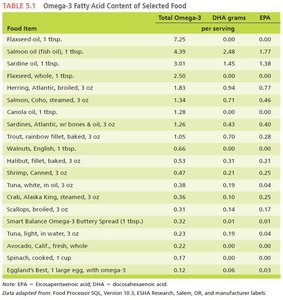
Limiting Saturated and Trans Fats
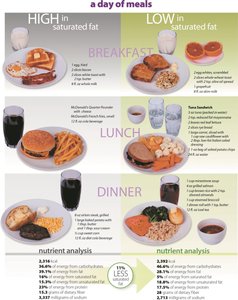
Reduce intake of saturated fats from meats, baked goods, fried foods, and sauces.
Avoid trans fatty acids and limit dietary cholesterol.
Selecting Beneficial Fats
Consume leafy greens, avocados, soybeans, flaxseed oil, walnuts, almonds, chia seeds, and fish.
Be selective with fish due to potential contaminants (mercury, PCBs).
Fat Replacers
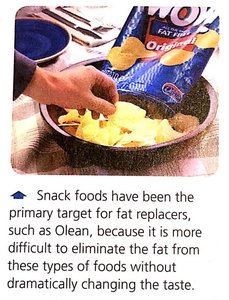
Fat replacers, such as olestra, are used in snack foods to reduce fat content but may cause gastrointestinal side effects and are not effective for weight loss.
Role of Fats in Chronic Disease
Cardiovascular Disease (CVD)
CVD includes dysfunction of the heart or blood vessels, such as coronary heart disease, stroke, hypertension, and peripheral vascular disease. Diets high in saturated fat are closely associated with CVD.
Atherosclerosis
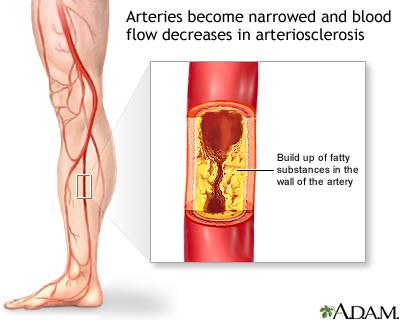
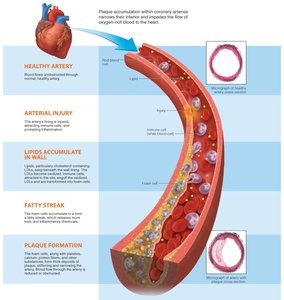
Atherosclerosis is the buildup of lipid deposits and scar tissue in artery walls, leading to impaired blood flow and increased heart workload. Risk factors include oxidative stress, hyperglycemia, hyperlipidemia, and inflammation.
Hypertension
Hypertension is a major chronic disease and a warning sign for heart disease or stroke. It can be hereditary or induced by poor nutrition and exercise habits.
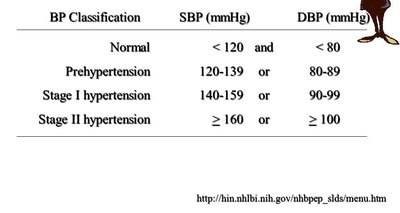
BP Classification | SBP (mmHg) | DBP (mmHg) |
|---|---|---|
Normal | < 120 | < 80 |
Prehypertension | 120–139 | 80–89 |
Stage I hypertension | 140–159 | 90–99 |
Stage II hypertension | ≥ 160 | ≥ 100 |
Modifiable Risk Factors for CVD
Being overweight
Physical inactivity
Smoking
Type 2 diabetes mellitus
Inflammation
Abnormal blood lipids
Dietary Fat and Heart Disease
Diets high in omega-3 fatty acids and moderate exercise reduce inflammation and increase HDL cholesterol.
LDLs ("bad" cholesterol) transport cholesterol throughout the body and contribute to plaque formation.
Diets high in saturated fats decrease LDL removal, increase plaque formation, and raise triglyceride levels.
Recommendations to Improve Blood Lipid Levels
Keep total fat intake within 20–35% of daily energy.
Decrease saturated fat to less than 7% of total energy.
Increase omega-3 fatty acids from foods.
Consume 400 μg/day of folate.
Increase whole grains, fruits, and vegetables.
Maintain normal blood glucose, eat meals throughout the day, limit alcohol, avoid smoking, stay active, and maintain a healthy weight.
Recommendations to Reduce Blood Pressure
Limit dietary sodium.
Follow the DASH diet (Dietary Approaches to Stop Hypertension).
Use doctor-prescribed medications if needed.
Summary Table: Types of Fatty Acids and Their Sources
Type | Structure | Sources | Health Impact |
|---|---|---|---|
Saturated | No double bonds | Butter, lard, animal fats | Increase CVD risk |
Monounsaturated | One double bond | Olive oil, canola oil, nuts | Protective |
Polyunsaturated | Two or more double bonds | Vegetable oils, fish | Protective |
Trans | Trans double bond | Processed foods, margarine | Increase CVD risk |
Omega-3 | Double bond at 3rd carbon | Fish, flaxseed, walnuts | Protective |
Omega-6 | Double bond at 6th carbon | Vegetable oils | Essential, but excess may promote inflammation |
Additional info: Academic context was added to clarify the biochemical roles of lipids, the importance of essential fatty acids, and the mechanisms of cardiovascular disease.
