 Indietro
A Review of General Chemistry: Foundations for Organic Chemistry
Guida di studio - Note intelligenti
 Appunti personalizzati basati sui tuoi materiali, ampliati con definizioni chiave, esempi e contesto.
A Review of General Chemistry
Electron Configuration
Electron configuration describes the arrangement of electrons in an atom's orbitals, which is fundamental to understanding chemical bonding and reactivity.
Ground State Electron Configuration: Electrons fill orbitals starting from the lowest energy level, following the Aufbau Principle.
Condensed Electron Configuration: Uses the previous noble gas as a starting point, then adds the remaining electrons.
Aufbau Principle: Electrons fill lower energy orbitals before higher energy ones.
Example: Phosphorus (Z = 15): Ground state configuration is ; condensed is [Ne] .
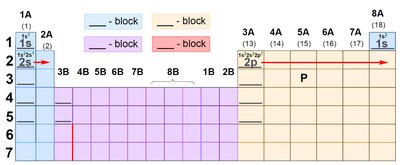
Additional info: The Pauli Exclusion Principle states that each orbital can hold two electrons with opposite spins. Hund's Rule states that electrons fill degenerate orbitals singly before pairing.
Electronegativity
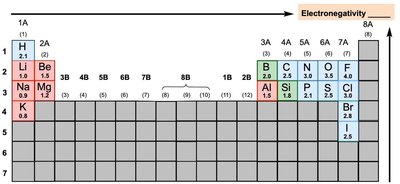
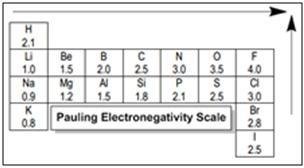
Electronegativity is a measure of an atom's ability to attract electrons in a chemical bond. It is crucial for predicting bond polarity and reactivity.
Periodic Trend: Electronegativity increases from left to right across a period and decreases down a group.
Most Electronegative Elements: Fluorine is the most electronegative element.
Example: Among Group 7A elements, Cl is more electronegative than Br and I.
Octet Rule
The octet rule states that atoms tend to form bonds to achieve eight electrons in their valence shell, mimicking the electron configuration of noble gases.
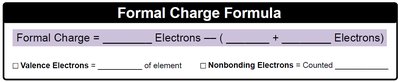
Valence Electrons: Electrons in the outermost shell, involved in bonding.
Shared Electrons: Electrons shared between atoms in a bond.
Octet Electrons: Sum of valence and shared electrons.
Exceptions: Hydrogen (2 electrons), Beryllium (4), Boron (6), and third-row elements may have expanded octets.
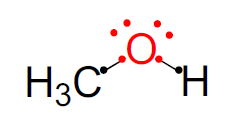
Formal Charge
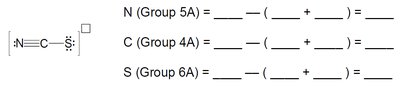
Formal charge is used to assess the stability and correctness of Lewis structures. It is calculated for each atom in a molecule.
Formula:
Allowable Charges: -1, 0, +1 are typical for stable structures.
Sum of Formal Charges: Equals the overall charge of the molecule or ion.
Lewis Dot Structures
Lewis dot structures represent molecules by showing all valence electrons and bonds, helping to visualize electron distribution and bonding.
Steps:
Count total valence electrons.
Place the least electronegative atom in the center (except hydrogen).
Connect atoms with single bonds.
Complete octets for surrounding atoms.
Add remaining electrons to the central atom.
Add double/triple bonds if needed to satisfy octets.
Check formal charges for correctness.
Resonance Structures
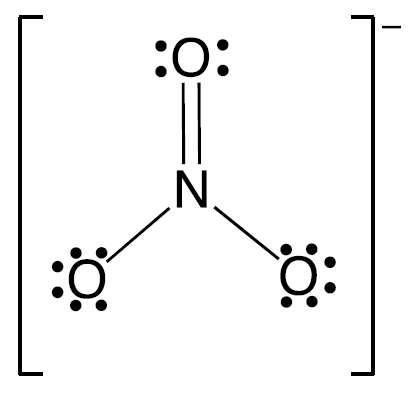
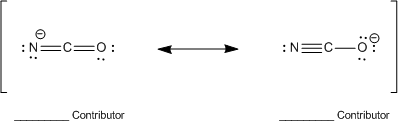
Resonance structures are multiple valid Lewis structures for a molecule, differing only in the placement of electrons (not atoms).
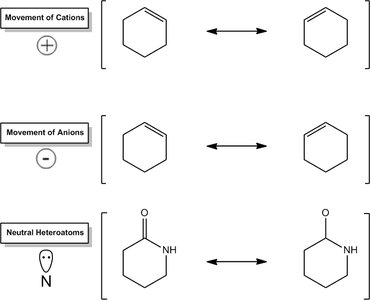
Movement: Only electrons (pi bonds or lone pairs) move.
Double-sided Arrows: Indicate resonance between structures.
Resonance Hybrid: The true structure is a blend of all resonance forms.

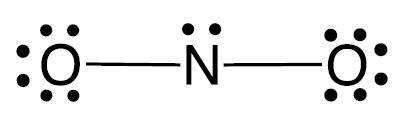
Hybridization
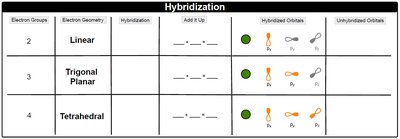
Hybridization explains the mixing of atomic orbitals to form new orbitals suitable for bonding, predicting molecular geometry and bond angles.
Electron Groups: Sum of lone pairs and bonded atoms around a central atom.
Types: sp (linear, 2 groups), sp2 (trigonal planar, 3 groups), sp3 (tetrahedral, 4 groups).
Example: HCN: Carbon is sp hybridized.
Molecular Polarity
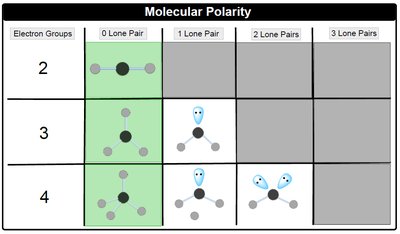
Molecular polarity arises from differences in electronegativity and molecular geometry, affecting physical properties and reactivity.
Nonpolar Molecules: Hydrocarbons and molecules with symmetrical shapes and no lone pairs on the central atom.
Polar Molecules: Molecules with asymmetrical shapes or lone pairs on the central atom.
Perfect Shape: Central atom with all surrounding atoms identical and no lone pairs.
Functional Groups
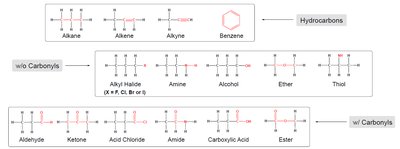
Functional groups are specific groups of atoms within molecules responsible for characteristic chemical reactions.
Hydrocarbons: Alkanes, alkenes, alkynes, benzene.
Without Carbonyls: Alkyl halides, amines, alcohols, ethers, thiols.
With Carbonyls: Aldehydes, ketones, acid chlorides, amides, carboxylic acids, esters.
What is Organic Chemistry?
Organic chemistry is the study of carbon-containing compounds, especially those found in biological systems.
Organic Molecule: Contains both carbon and hydrogen.
Hydrocarbon: Contains only carbon and hydrogen.
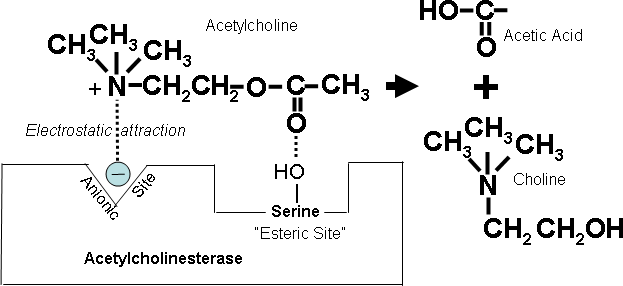
Applications: Pharmaceuticals, nerve gases, everyday products.
Atomic Structure
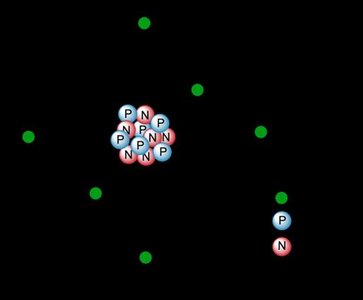
Atoms are the basic units of matter, composed of protons, neutrons, and electrons.
Atomic Number: Number of protons.
Mass Number: Protons + neutrons.
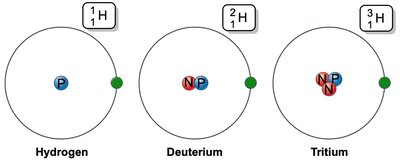
Isotopes: Same atomic number, different mass number.
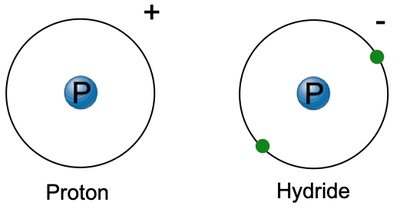
Ions: Atoms with unequal numbers of protons and electrons; cations (+), anions (-).
Principles of Electron Configuration
Three principles govern electron configuration: Aufbau Principle, Pauli Exclusion Principle, and Hund's Rule.
Aufbau Principle: Fill orbitals in order of increasing energy.
Pauli Exclusion Principle: Maximum two electrons per orbital, with opposite spins.
Hund's Rule: Fill orbitals of equal energy singly before pairing.
Wave Function and Quantum Mechanics
Quantum mechanics describes electrons as both particles and waves, leading to concepts like wave functions and atomic orbitals.
Heisenberg Uncertainty Principle: Cannot simultaneously know an electron's position and momentum.
Wave Function: Mathematical description of an electron's energy state.
Atomic Orbital: 3D region where the probability of finding an electron is high.
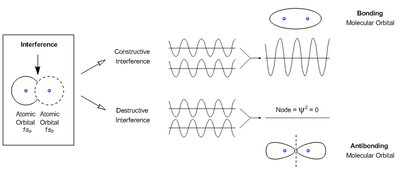
Interference: Wave functions can combine constructively (bonding) or destructively (antibonding).
Molecular Orbital Theory
Molecular orbital theory explains how atomic orbitals combine to form molecular orbitals, which can be bonding or antibonding.
LCAO: Linear Combination of Atomic Orbitals; addition/subtraction of orbitals to determine molecular orbital energy levels.
Bonding: Constructive overlap increases electron density between atoms.
Antibonding: Destructive overlap creates nodes and decreases stability.
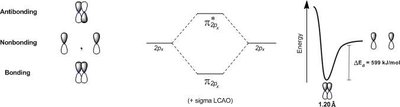
Sigma and Pi Bonds
Sigma (σ) and pi (π) bonds are types of covalent bonds formed by different orbital overlaps.
Sigma Bond: Head-on overlap of orbitals; allows free rotation.
Pi Bond: Side-on overlap of p orbitals; restricts rotation.
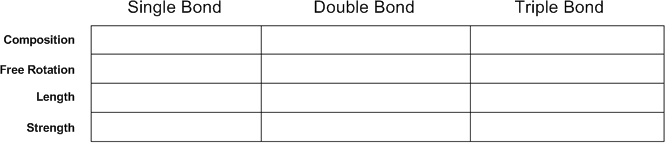
Bond Order: Single (σ), double (σ+π), triple (σ+2π).
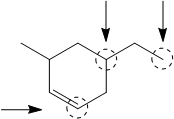
Hybridization Summary
Hybridization determines the geometry and bonding properties of atoms in molecules.
sp: Linear, 2 electron groups.
sp2: Trigonal planar, 3 electron groups.
sp3: Tetrahedral, 4 electron groups.
Molecular Geometry
Molecular geometry is predicted by VSEPR theory, which states that electron groups repel each other to maximize distance.
Linear: 2 groups, 180°.
Trigonal Planar: 3 groups, 120°.
Tetrahedral: 4 groups, 109.5°.
Bonding Preferences
Atoms have preferred numbers of bonds and lone pairs based on their group number, affecting stability and reactivity.
Bonding Preference: Determined by group number; e.g., carbon prefers 4 bonds, nitrogen 3, oxygen 2.
Stability: Atoms are most stable when their bonding preferences are satisfied.
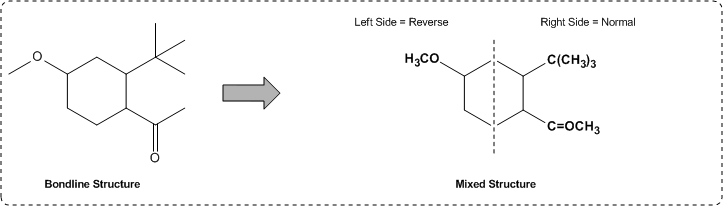
Skeletal Structure (Bondline Notation)
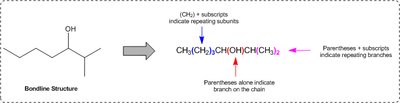
Bondline notation simplifies organic structures by omitting hydrogens and showing only carbon skeletons and heteroatoms.
Implied Carbons: Every vertex represents a carbon atom.
Implied Hydrogens: Carbons are assumed to have enough hydrogens to fill their octet.
Implied Lone Pairs: Heteroatoms are assumed to have lone pairs to fill their octet.
Condensed Structural Formula
Condensed formulas represent molecules using text, showing connectivity and branches without explicit bonds.
Interconversion: Know how to convert between condensed and bondline structures.
Index of Hydrogen Deficiency (IHD)
IHD measures the degree of unsaturation in a molecule, indicating rings and multiple bonds.
Formula:
1 IHD: Compound is missing 2 hydrogens (ring or double bond).
Triple Bond: Each triple bond counts as 2 IHD.
Constitutional Isomers
Constitutional isomers have the same molecular formula but different connectivity of atoms.
Identification: Compare atom count and IHD, then connectivity.
Example: Butane and isobutane are constitutional isomers.
Resonance Theory and Hybrids
Resonance theory describes electron delocalization in molecules, with the resonance hybrid representing the true structure.
Curved Arrows: Show electron movement.
Major Contributor: Most stable resonance form, usually with full octets and minimal charges.

Summary Table: Bond Types
The following table summarizes the properties of single, double, and triple bonds:
Single Bond | Double Bond | Triple Bond | |
|---|---|---|---|
Composition | 1 σ bond | 1 σ + 1 π bond | 1 σ + 2 π bonds |
Free Rotation | Yes | No | No |
Length | Longest | Intermediate | Shortest |
Strength | Weakest | Intermediate | Strongest |
Additional info: Bond strength and length are inversely related; more bonds mean shorter and stronger connections.
----------------------------------------
