 Indietro
A Review of General Chemistry: Foundations for Organic Chemistry
Guida di studio - Note intelligenti
 Appunti personalizzati basati sui tuoi materiali, ampliati con definizioni chiave, esempi e contesto.
A Review of General Chemistry
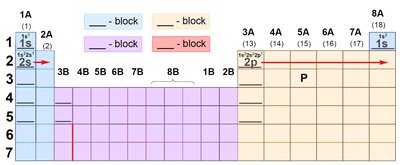
Ground State Electron Configuration
The electron configuration of an atom describes the distribution of electrons among the various atomic orbitals. The Aufbau Principle states that electrons fill the lowest energy orbitals first before occupying higher energy levels. The condensed electron configuration uses the previous noble gas as a reference point to simplify notation.
Aufbau Principle: Electrons fill orbitals in order of increasing energy (1s, 2s, 2p, etc.).
Condensed Configuration: Uses noble gas core to abbreviate electron configuration.
Example: Phosphorus (Z = 15): Ground state: Condensed:
Electronegativity
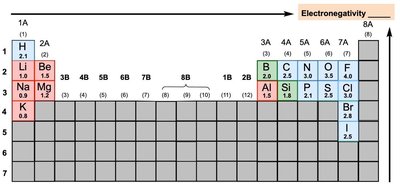
Electronegativity (EN) is a measure of an atom's ability to attract electrons in a chemical bond. The periodic trend is that electronegativity increases from left to right across a period and from bottom to top within a group.
Most electronegative element: Fluorine (F)
Periodic Trend: Increases across a period (left to right), increases up a group.
Example: Among Br, S, I, Cl, O, the most electronegative Group 7A element is Cl.
Octet Rule
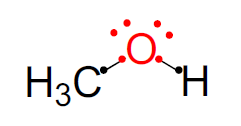
The Octet Rule states that main group elements tend to form bonds until they are surrounded by eight valence electrons, achieving a noble gas configuration. Valence electrons are those in the outermost shell, while shared electrons are those involved in bonding.
Valence Electrons: Determined by group number.
Shared Electrons: Electrons involved in bonds.
Octet Electrons = Valence Electrons + Shared Electrons
Example: Oxygen in methanol (CH3OH) has 6 valence electrons and 2 shared electrons, totaling 8 octet electrons.
Formal Charge
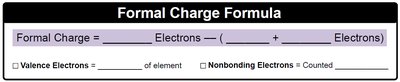
Formal charge is used to determine the most stable Lewis structure for a molecule. It is calculated as:
Formula:
Sum of all formal charges equals the overall charge of the molecule or ion.
Allowable formal charges are typically -1, 0, or +1 for main group elements.
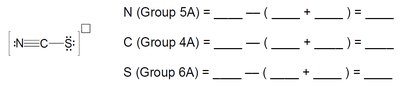
Lewis Dot Structures
Lewis structures represent the arrangement of electrons in a molecule. The best structure minimizes formal charges and satisfies the octet rule for each atom.
Step 1: Count total valence electrons.
Step 2: Place the least electronegative atom in the center (except H and halogens).
Step 3: Connect atoms with single bonds, complete octets with lone pairs.
Step 4: Add remaining electrons to the central atom.
Step 5: Use double/triple bonds if necessary to satisfy octets.
Step 6: Check formal charges.
Resonance Structures
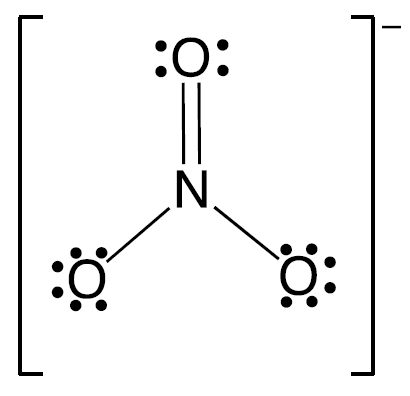
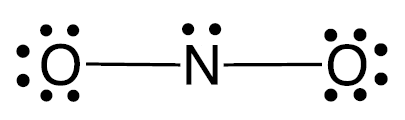
Resonance structures are different valid Lewis structures for the same molecule, showing delocalization of electrons (usually pi bonds or lone pairs). The actual structure is a resonance hybrid, a weighted average of all contributors.
Only electrons move, not atoms.
Double-sided arrows indicate resonance.
Curved arrows show electron movement.
The resonance hybrid shows partial bonds or charges where electrons are delocalized.

Hybridization
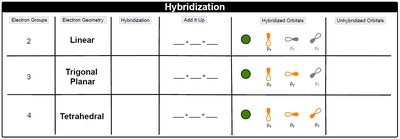
Hybridization describes the mixing of atomic orbitals to form new hybrid orbitals suitable for bonding. The number of electron groups (bonds + lone pairs) around an atom determines its hybridization:
2 groups: sp (linear)
3 groups: sp2 (trigonal planar)
4 groups: sp3 (tetrahedral)
Molecular Polarity
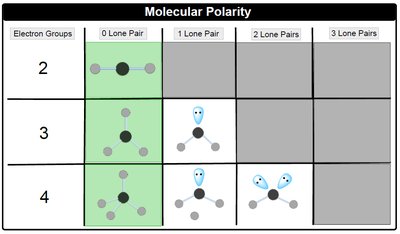
Molecular polarity depends on both the polarity of individual bonds and the geometry of the molecule. A molecule is nonpolar if it has a symmetrical shape and no net dipole moment; otherwise, it is polar.
Nonpolar: All dipoles cancel (e.g., CO2).
Polar: Net dipole exists (e.g., H2O).
Perfect shapes: Linear (2 groups, 0 lone pairs), trigonal planar (3 groups, 0 lone pairs), tetrahedral (4 groups, 0 lone pairs).
Functional Groups
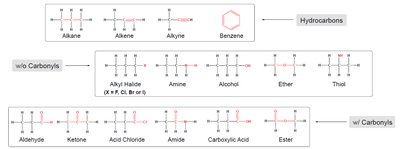
Functional groups are specific groups of atoms within molecules that are responsible for the characteristic chemical reactions of those molecules. Recognizing functional groups is essential for understanding organic reactivity.
Examples: Alkane, alkene, alkyne, benzene, alcohol, ether, amine, aldehyde, ketone, carboxylic acid, ester, amide, thiol, alkyl halide.
What is Organic Chemistry?
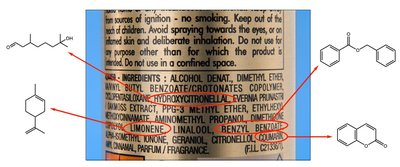
Organic chemistry is the study of carbon-containing compounds, especially those found in living organisms. Organic molecules typically contain both carbon and hydrogen. Hydrocarbons are organic molecules composed solely of carbon and hydrogen.
Applications: Pharmaceuticals, biochemistry, industrial chemicals.
Example: Identifying organic molecules and hydrocarbons from a list of compounds.
Atomic Structure
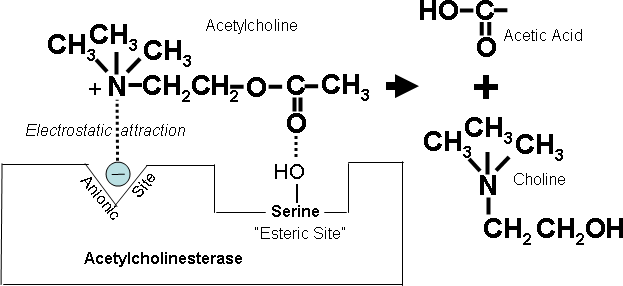
An atom consists of a nucleus (protons and neutrons) surrounded by electrons in orbitals. The atomic number equals the number of protons; the mass number equals protons plus neutrons. Isotopes have the same atomic number but different mass numbers.
Electrons occupy orbitals in shells around the nucleus.
Ions: Atoms with unequal numbers of protons and electrons. Cations are positively charged; anions are negatively charged.
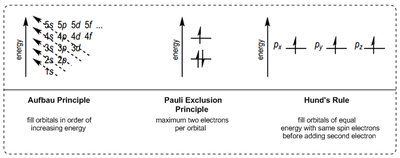
Principles of Electron Configuration
Three main principles govern electron configuration:
Aufbau Principle: Fill lowest energy orbitals first.
Pauli Exclusion Principle: Maximum two electrons per orbital, with opposite spins.
Hund's Rule: Fill degenerate orbitals singly before pairing electrons.
Wave Function and Quantum Mechanics
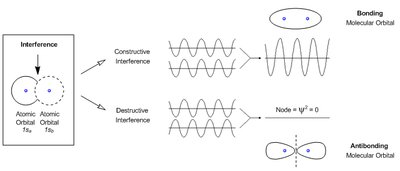
Quantum mechanics describes electrons as both particles and waves. The Heisenberg Uncertainty Principle states that the position and momentum of an electron cannot both be known exactly. The wave function () describes the probability of finding an electron in a region of space (orbital).
Atomic orbitals are regions of high probability for electrons.
Wave functions can interfere constructively (bonding) or destructively (antibonding).
Molecular Orbital Theory
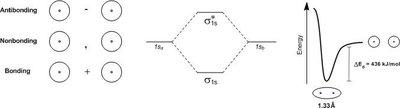
When atomic orbitals overlap, they form molecular orbitals. Constructive overlap forms bonding orbitals; destructive overlap forms antibonding orbitals. The Linear Combination of Atomic Orbitals (LCAO) method is used to predict molecular orbital energies.
Bonding orbitals: Lower energy, increased electron density between nuclei.
Antibonding orbitals: Higher energy, node between nuclei.
Sigma and Pi Bonds
Sigma (σ) bonds are formed by head-on overlap of orbitals, while pi (π) bonds are formed by side-on overlap. Single bonds are always sigma bonds; double and triple bonds contain one sigma and one or two pi bonds, respectively.
Single bond: 1 σ
Double bond: 1 σ + 1 π
Triple bond: 1 σ + 2 π
Summary Table: Bond Types
Single Bond | Double Bond | Triple Bond | |
|---|---|---|---|
Composition | 1 σ | 1 σ + 1 π | 1 σ + 2 π |
Free Rotation | Yes | No | No |
Length | Longest | Intermediate | Shortest |
Strength | Weakest | Intermediate | Strongest |
Practice and Application
Practice problems throughout the chapter reinforce the concepts of electron configuration, formal charge, resonance, hybridization, and molecular polarity. Mastery of these foundational topics is essential for success in organic chemistry.
