 Indietro
Alcohols, Ethers, Thiols, and Epoxides: Structure, Properties, and Reactions
Guida di studio - Note intelligenti
 Appunti personalizzati basati sui tuoi materiali, ampliati con definizioni chiave, esempi e contesto.
Alcohols, Ethers, Thiols, and Epoxides
Introduction to Functional Groups
Alcohols, ethers, thiols, and epoxides are fundamental organic functional groups with diverse roles in biological systems and synthetic chemistry. Their reactivity is largely determined by the presence of polar bonds and their ability to participate in redox reactions.
Alcohols: Contain a hydroxyl group (-OH) attached to a carbon atom.
Ethers: Feature an oxygen atom bonded to two carbon atoms (R-O-R').
Thiols: Analogous to alcohols, but with a sulfhydryl group (-SH).
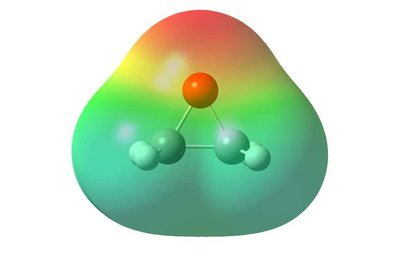
Epoxides: Cyclic ethers with a three-membered ring, highly strained and reactive.
Alcohols: Structure, Nomenclature, and Properties
Alcohols are classified based on the carbon to which the hydroxyl group is attached:
Primary (1°) alcohol: Hydroxyl group attached to a carbon bonded to one other carbon.
Secondary (2°) alcohol: Hydroxyl group attached to a carbon bonded to two other carbons.
Tertiary (3°) alcohol: Hydroxyl group attached to a carbon bonded to three other carbons.
Nomenclature: Replace the “e” ending of the parent alkane with “ol” (e.g., ethanol, methanol). The hydroxyl group takes priority in numbering. Physical Properties:
Alcohols exhibit strong hydrogen bonding, resulting in higher boiling points compared to similar alkanes or ethers.
Solubility in water decreases as the alkyl chain length increases.

Acidity and Basicity of Alcohols
Alcohols are weak acids, similar to water, and can also act as weak bases.
Alcohols can be deprotonated to form alkoxides, which are strong bases.
Alkyloxonium ions (R-OH2+) are very good leaving groups in substitution reactions.
Synthesis of Alkoxides
Alkoxides are synthesized by reacting alcohols with metals (Na, K) or metal hydrides (NaH, KH):
Synthesis of Alcohols
Alcohols can be synthesized via substitution or addition reactions:
Substitution: Use NaOH or H2O as nucleophiles.
Addition: Markovnikov addition (acid-catalyzed) or anti-Markovnikov addition (using BH3 then H2O2 + NaOH).
Reactions of Alcohols: Substitution and Elimination
Substitution: Alcohols are poor leaving groups and must be activated, often by converting to a sulfonate ester or using reagents like thionyl chloride (SOCl2) or phosphorus halides (PX3).
Thionyl chloride produces HCl and SO2 gases, driving the reaction forward.
Phosphorus halides allow separation of alkyl halides by distillation.
Elimination: Dehydration of alcohols produces alkenes, following Zaitsev’s rule:
Zaitsev Product: More substituted alkene (favored with non-bulky base, E1 mechanism).
Hoffmann Product: Less substituted alkene (favored with bulky base, E2 mechanism).
Oxidation of Alcohols
Alcohols can be oxidized to aldehydes, ketones, or carboxylic acids using various oxidizing agents:
Jones’ reagent (CrO3, H2SO4, H2O)
Pyridinium chlorochromate (PCC)
Potassium permanganate (KMnO4)
Oxidation of Phenols: Produces quinones and hydroquinones, important in biological redox reactions.
Thiols: Structure and Reactions
Thiols (R-SH) are sulfur analogs of alcohols, with greater acidity due to the larger size and stability of the sulfur anion.
Thiols are good nucleophiles and can be synthesized by substitution reactions.
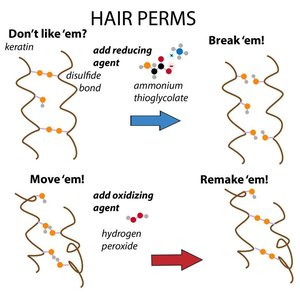
Thiols are easily oxidized to disulfides, which provide cross-linking in proteins and synthetic materials.
Ethers: Structure, Properties, and Synthesis
Ethers are colorless liquids with low boiling points, only exhibiting dipole-dipole interactions.
Oxygen atom is sp3 hybridized and acts as a Lewis base.
Ethers are good aprotic solvents, unreactive to dilute acids and bases, and easy to remove due to low boiling points.
Hazards: Highly flammable and can form explosive peroxides with atmospheric O2.
Synthesis of Ethers:
Acid-catalyzed dehydration of alcohols (for symmetric ethers).
Acid-catalyzed addition of alcohol to alkene (Markovnikov addition).
Williamson Ether Synthesis: Alkoxide reacts with alkyl halide via SN2 mechanism, best with primary or secondary alkyl halides.
Reactions of Ethers
Ethers are generally unreactive, but can be cleaved by strong acids:
SN2: 1° & 2° ethers + strong nucleophile.
SN1/E1: 3° & phenolic ethers + any nucleophile.
Epoxides: Structure, Synthesis, and Reactivity
Epoxides are cyclic ethers with a three-membered ring, resulting in significant ring strain and high reactivity.
Laboratory synthesis uses peroxyacids such as peroxyacetic acid or mCPBA.
Epoxides undergo ring-opening reactions via nucleophilic attack.
Acidic conditions favor SN1-type ring opening (carbocation intermediate).
Basic conditions favor SN2-type ring opening (steric hindrance controls regioselectivity).


Summary Table: Key Properties and Reactions
Functional Group | Structure | Key Properties | Common Reactions |
|---|---|---|---|
Alcohol | R-OH | H-bonding, weak acid/base | Substitution, elimination, oxidation |
Ether | R-O-R' | Low BP, aprotic solvent | Cleavage by strong acids |
Thiols | R-SH | More acidic than alcohols | Oxidation to disulfides |
Epoxide | 3-membered ring | High ring strain, reactive | Ring opening (acid/base) |
Applications and Biological Relevance
Alcohols, phenols, and thiols are ubiquitous in biological molecules (e.g., amino acids, antioxidants).
Ethers are important solvents in organic synthesis and stabilize organometallic reagents.
Epoxides are intermediates in many synthetic and biological pathways.
Redox reactions involving thiols and disulfides are crucial for protein structure and function (e.g., hair perms).
