 Indietro
Alcohols, Thiols, Ethers, Aldehydes, and Ketones: Structure, Properties, and Reactions
Guida di studio - Note intelligenti
 Appunti personalizzati basati sui tuoi materiali, ampliati con definizioni chiave, esempi e contesto.
Alcohols, Thiols, Ethers, Aldehydes, and Ketones
Functional Groups and Their Structures
Organic compounds are classified based on their functional groups, which determine their chemical properties and reactivity. The main functional groups discussed here are alcohols, phenols, thiols, ethers, aldehydes, and ketones.
Alcohols: Contain a hydroxyl group (–OH) attached to a carbon atom.
Phenols: Contain a hydroxyl group bonded to a benzene ring.
Thiols: Contain a thiol group (–SH) attached to a carbon atom.
Ethers: Contain an oxygen atom bonded to two carbon groups (C–O–C).
Aldehydes: Contain a carbonyl group (C=O) at the end of a carbon chain, bonded to at least one hydrogen atom.
Ketones: Contain a carbonyl group (C=O) bonded to two alkyl or aromatic groups.
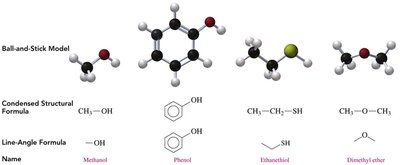
Additional info: These functional groups are foundational in organic chemistry, influencing molecular polarity, solubility, and reactivity.
Naming Alcohols, Phenols, Thiols, and Ethers
The IUPAC system provides systematic names for organic compounds, while common names are often used for simpler molecules.
Alcohols: Replace the "-e" in the alkane name with "-ol" (e.g., methane → methanol). Common names use the alkyl group followed by "alcohol" (e.g., methyl alcohol).
Phenols: Named as "phenol" with substituents indicated by their position on the benzene ring.
Thiols: Add "thiol" to the alkane name of the longest chain and number from the end nearest the –SH group.
Ethers: Common names list the alkyl groups attached to oxygen in alphabetical order, followed by "ether" (e.g., dimethyl ether).
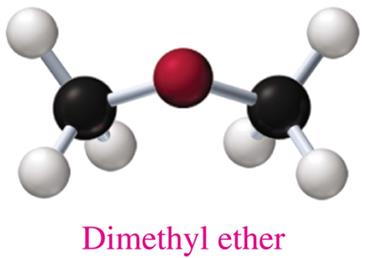
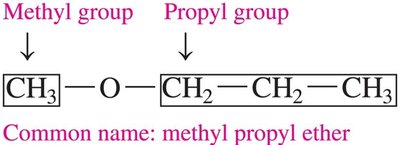
Additional info: Correct naming is essential for clear communication in chemistry and for understanding compound properties.
Classification of Alcohols
Alcohols are classified based on the number of alkyl groups attached to the carbon bearing the hydroxyl group:
Primary (1°) Alcohol: The carbon with the –OH group is attached to one other carbon.
Secondary (2°) Alcohol: The carbon with the –OH group is attached to two other carbons.
Tertiary (3°) Alcohol: The carbon with the –OH group is attached to three other carbons.
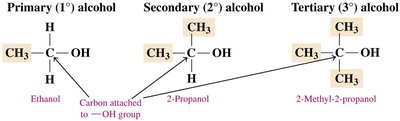
Example: Ethanol is a primary alcohol, 2-propanol is a secondary alcohol, and 2-methyl-2-propanol is a tertiary alcohol.
Solubility of Alcohols, Phenols, and Ethers in Water
The solubility of alcohols and related compounds in water depends on the balance between their polar functional groups and nonpolar hydrocarbon chains.
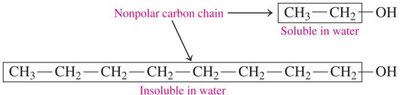
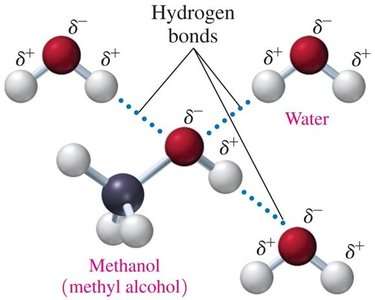
Alcohols: Alcohols with 1–3 carbons are soluble in water due to hydrogen bonding. Solubility decreases as the hydrocarbon chain length increases.
Phenols: Slightly soluble in water; can form hydrogen bonds and phenoxide ions.
Ethers: Ethers are less polar than alcohols but can dissolve in water if their alkyl groups are small.
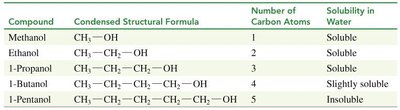
Compound | Condensed Structural Formula | Number of Carbon Atoms | Solubility in Water |
|---|---|---|---|
Methanol | CH3OH | 1 | Soluble |
Ethanol | CH3CH2OH | 2 | Soluble |
1-Propanol | CH3CH2CH2OH | 3 | Soluble |
1-Butanol | CH3CH2CH2CH2OH | 4 | Slightly soluble |
1-Pentanol | CH3CH2CH2CH2CH2OH | 5 | Insoluble |
Additional info: Hydrogen bonding is a key factor in solubility; longer chains reduce polarity and solubility.
Thiols: Structure, Properties, and Naming
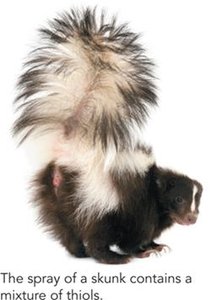
Thiols are sulfur analogs of alcohols and are known for their strong odors. They are found in various foods and biological systems.
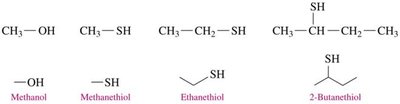
Structure: Contain an –SH group.
Properties: Often have strong, disagreeable odors; used in gas leak detection.
Naming: Add "thiol" to the alkane name and number from the end nearest the –SH group.
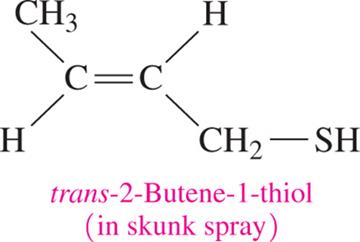
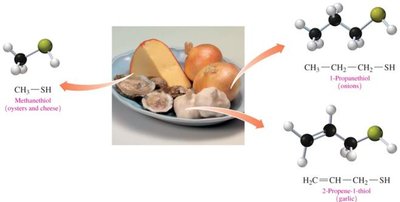
Example: Methanethiol is found in oysters and cheese; 1-propanethiol in onions; 3-propene-1-thiol in garlic.
Ethers: Structure and Naming
Ethers are characterized by an oxygen atom bonded to two carbon groups. Their common names are based on the alkyl groups attached to the oxygen.
Structure: R–O–R' (where R and R' are alkyl or aryl groups).
Naming: List alkyl groups alphabetically, followed by "ether" (e.g., methyl propyl ether).
Additional info: Ethers are important solvents in organic chemistry due to their low reactivity.
Aldehydes and Ketones: Structure and Naming
Aldehydes and ketones contain a carbonyl group (C=O), which is highly polar and reactive. Their naming follows IUPAC rules, with common names for simpler compounds.
Aldehydes: Carbonyl group at the end of the chain; named by replacing "-e" with "-al" (e.g., methanal).
Ketones: Carbonyl group within the chain; named by replacing "-e" with "-one" (e.g., propanone).
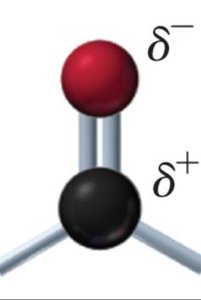
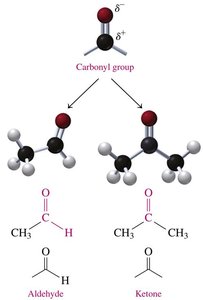
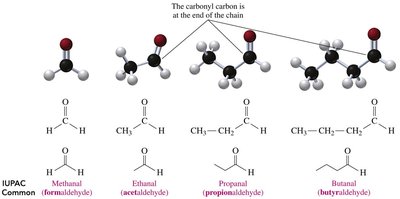
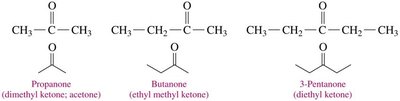
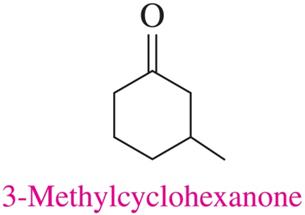
Additional info: The carbonyl group imparts significant reactivity, making these compounds central in organic synthesis.
Solubility of Aldehydes and Ketones in Water
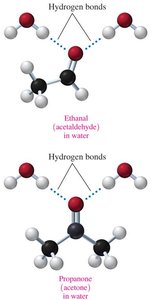
Aldehydes and ketones can form hydrogen bonds with water, making them soluble if their carbon chains are short.
Short-chain aldehydes and ketones: Soluble in water due to hydrogen bonding.
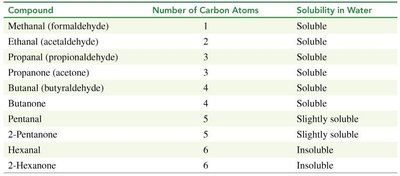
Long-chain compounds: Decreased solubility as nonpolar hydrocarbon chains dominate.
Compound | Number of Carbon Atoms | Solubility in Water |
|---|---|---|
Methanal (formaldehyde) | 1 | Soluble |
Ethanol (acetaldehyde) | 2 | Soluble |
Propanal (propionaldehyde) | 3 | Soluble |
Propanone (acetone) | 3 | Soluble |
Butanal (butyraldehyde) | 4 | Soluble |
Butanone | 4 | Soluble |
Pentanal | 5 | Slightly soluble |
2-Pentanone | 5 | Slightly soluble |
Hexanal | 6 | Insoluble |
2-Hexanone | 6 | Insoluble |
Reactions of Alcohols: Dehydration and Oxidation
Alcohols undergo important reactions such as dehydration and oxidation, which are central to organic synthesis.
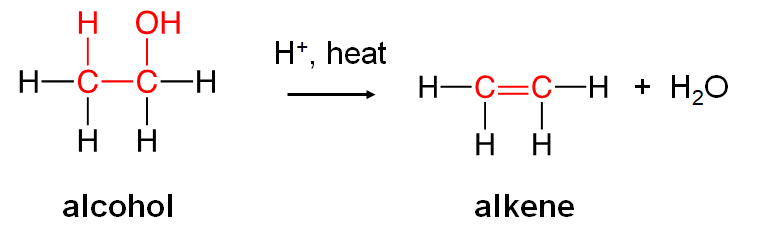
Dehydration: Alcohols lose –H and –OH from adjacent carbons when heated with acid, forming alkenes and water.
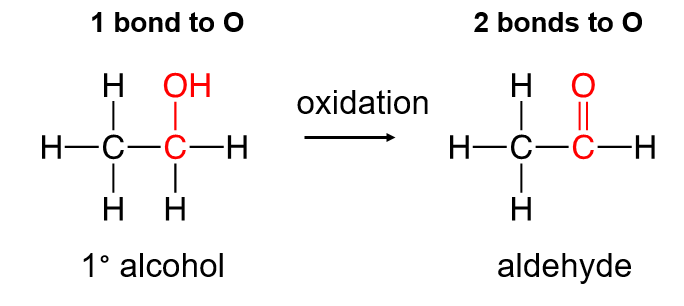
Oxidation: Alcohols are oxidized to aldehydes, ketones, or carboxylic acids depending on their classification.
Oxidation of Alcohols:
Primary alcohols: Oxidized to aldehydes, then to carboxylic acids.
Secondary alcohols: Oxidized to ketones.
Tertiary alcohols: Do not oxidize (no hydrogen atom on the carbon with –OH).
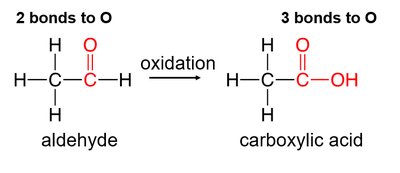
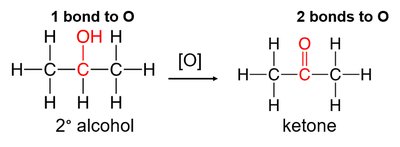
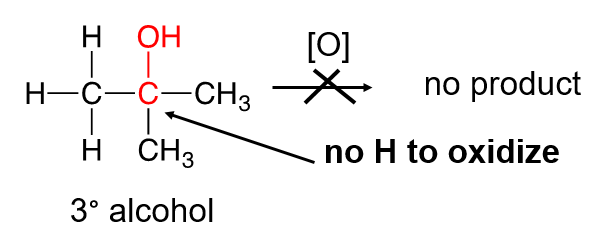
Additional info: Oxidation reactions are used in laboratory and industrial processes to synthesize various organic compounds.
Oxidation of Thiols
Thiols undergo oxidation to form disulfides, which are important in protein structure.
Oxidation: Two thiol groups lose hydrogen atoms and form a disulfide bond (–S–S–).
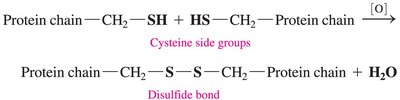
Example: Disulfide bonds stabilize protein structures, such as in cysteine residues.
Tests for Aldehydes and Ketones: Tollen’s and Benedict’s Tests
Specific tests are used to distinguish aldehydes from ketones based on their reactivity.
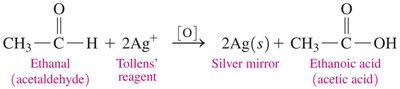
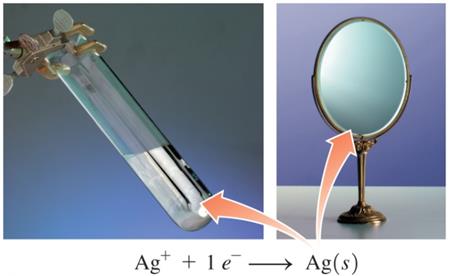
Tollen’s Test: Aldehydes are oxidized by Tollen’s reagent (Ag+), producing a silver mirror; ketones do not react.
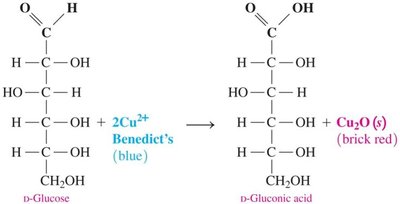
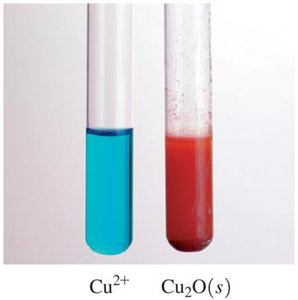
Benedict’s Test: Aldehydes with adjacent –OH groups react with Benedict’s reagent (Cu2+), forming a red precipitate of Cu2O; simple aldehydes and ketones give a negative result.

Additional info: These tests are used in clinical and laboratory settings to identify sugars and aldehydes.
Reduction of Aldehydes and Ketones
Reduction reactions convert aldehydes and ketones to alcohols, typically using hydrogen and a metal catalyst or sodium borohydride.
Aldehydes: Reduce to primary alcohols.
Ketones: Reduce to secondary alcohols.
Reagents: Commonly NaBH4 or H2 with a catalyst (Pt, Ni, Pd).
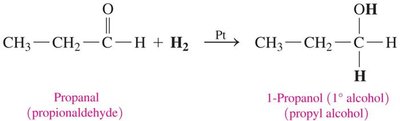
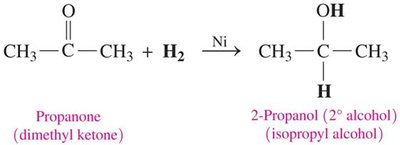
Additional info: Reduction is a key step in organic synthesis, allowing conversion of carbonyl compounds to alcohols.
Summary Table: Functional Groups and Their Reactions
This summary table organizes the relationships between functional groups and their typical reactions.
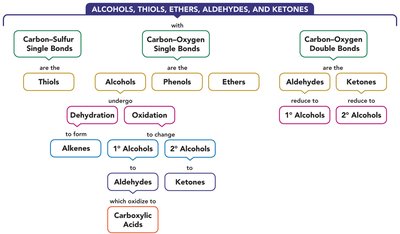
Additional info: Understanding these relationships is essential for predicting reactivity and designing synthetic pathways in organic chemistry.
