 Indietro
Aldehydes and Ketones: Structure, Properties, Nomenclature, and Reactivity
Guida di studio - Note intelligenti
 Appunti personalizzati basati sui tuoi materiali, ampliati con definizioni chiave, esempi e contesto.
Aldehydes and Ketones
Structure and Physical Properties
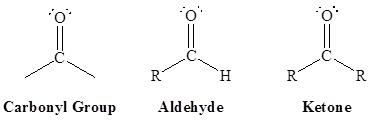
Aldehydes and ketones are organic compounds containing the carbonyl group (C=O), which imparts unique physical and chemical properties. The carbonyl group is highly polar, leading to significant intermolecular interactions and influencing solubility and boiling points.
Carbonyl Group: The carbonyl carbon is sp2 hybridized, resulting in a trigonal planar geometry with bond angles of approximately 120°.
Polarity: The C=O bond is polar due to the higher electronegativity of oxygen, making the carbonyl carbon electrophilic.
Hydrogen Bonding: Aldehydes and ketones act as hydrogen bond acceptors, increasing their solubility in water (especially for compounds with ≤ 4 carbons).
Physical State: Most short-chain aldehydes and ketones are liquids at room temperature and have densities lower than water.
Common Examples: Formaldehyde (disinfectant), acetone (nail polish remover), benzaldehyde (almond aroma).
Nomenclature of Aldehydes
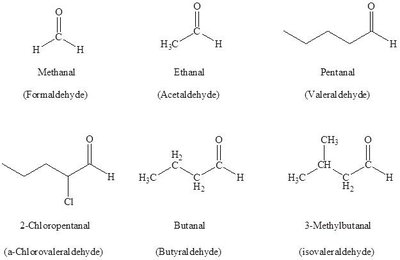
The systematic naming of aldehydes follows IUPAC rules, with the main chain containing the –CHO group and the suffix '-al'. Some aldehydes retain traditional names.
Main Chain Selection: Choose the longest chain containing the –CHO group.
Numbering: The aldehyde group is always at position 1; numbering is not required in the name.
Suffix: Use '-al' (e.g., butanal, pentanal).
Common Names: Formaldehyde (methanal), acetaldehyde (ethanal), benzaldehyde.
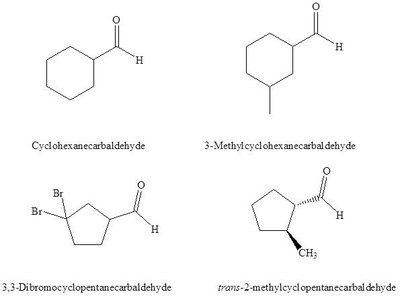
Cyclic Aldehydes: Use the suffix '-carbaldehyde' (e.g., cyclopentanecarbaldehyde).
Nomenclature of Ketones
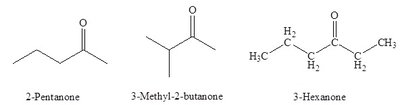
Ketones are named by selecting the longest chain containing the carbonyl group and assigning the lowest possible number to the carbonyl carbon. The suffix '-one' is used.
Main Chain Selection: Longest chain with the C=O group.
Numbering: Carbonyl carbon gets the lowest number.
Suffix: '-one' (e.g., pentan-2-one, hexan-3-one).
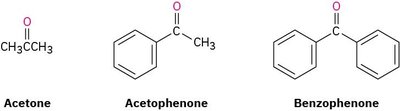
Common Names: Acetone, benzophenone, acetophenone.
Functional Group Priority and the 'Oxo-' Prefix
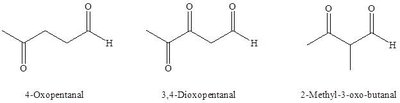
When a molecule contains a more prioritized functional group (e.g., carboxylic acid, ester, amide), the carbonyl group is named as a prefix 'oxo-'. If both aldehyde and ketone groups are present, the aldehyde takes priority.
Electronic Structure and Reactivity of the Carbonyl Group
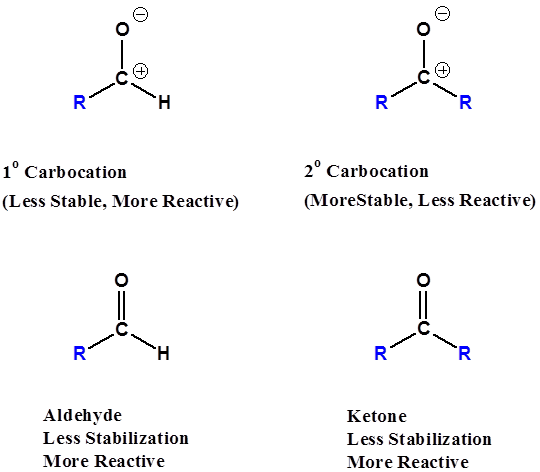
The carbonyl carbon is an electrophile due to its partial positive charge, making it susceptible to nucleophilic attack. The oxygen atom carries a partial negative charge and can stabilize intermediates during reactions.
Electrophilicity: Enhanced by acid or Lewis acid catalysts, which increase the positive character of the carbonyl carbon.
Reactivity: Aldehydes are generally more reactive than ketones due to less steric hindrance and less electron-donating alkyl groups.
Nucleophilic Addition to Carbonyls
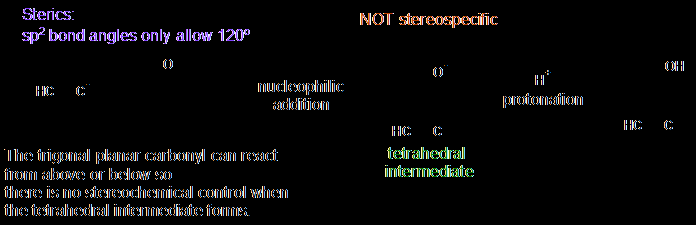
Aldehydes and ketones undergo nucleophilic addition reactions, as they lack a leaving group on the carbonyl carbon. The nucleophile attacks the carbonyl carbon, forming a tetrahedral intermediate.
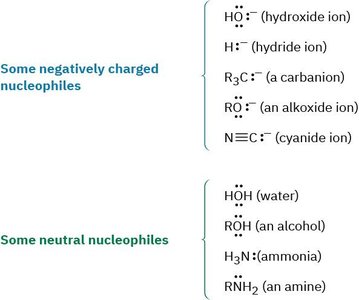
Strong Nucleophiles: React in basic conditions (e.g., alkoxides, hydrides, cyanide).
Weak Nucleophiles: Require acidic conditions to activate the carbonyl (e.g., water, alcohols, amines).
Hydration of Aldehydes and Ketones: Formation of Gem-Diols
Water adds to the carbonyl group to form geminal diols (gem-diols), a reversible reaction favored in aldehydes due to their higher reactivity.
Product: Gem-diol (two –OH groups on the same carbon).
Stability: Gem-diols are generally unstable and revert to the carbonyl compound.
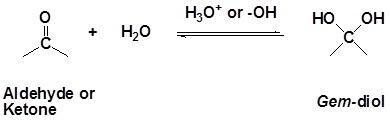
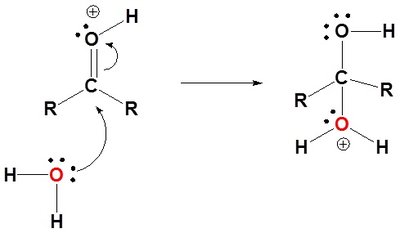
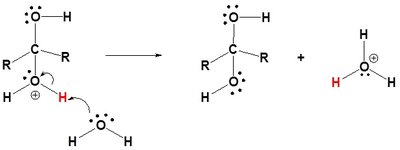
Mechanism of Hydration (Basic and Acidic Conditions)
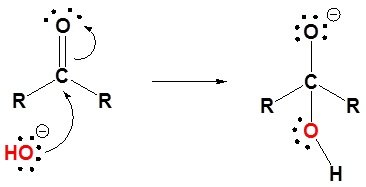
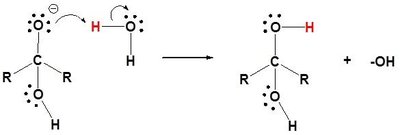
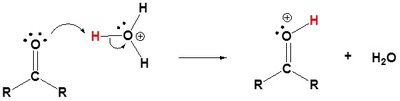
The mechanism differs depending on whether the reaction occurs in basic or acidic medium.
Basic Medium: Hydroxide ion attacks the carbonyl carbon, followed by proton transfer.
Acidic Medium: Carbonyl oxygen is protonated, increasing electrophilicity, then water attacks.
Addition of Carbon Nucleophiles: Cyanohydrin Formation
Hydrogen cyanide (HCN) adds to aldehydes and ketones to form cyanohydrins, which contain both –OH and –CN groups on the same carbon.
Mechanism: Cyanide ion attacks the carbonyl carbon, followed by protonation.
Product: Cyanohydrin (hydroxynitrile).
Addition of Grignard and Organolithium Reagents
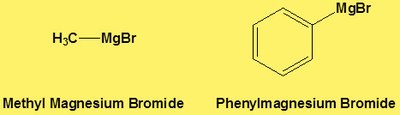
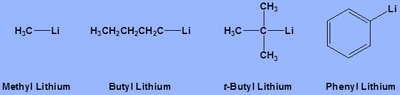
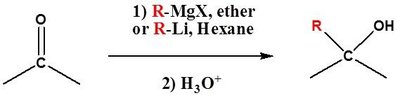
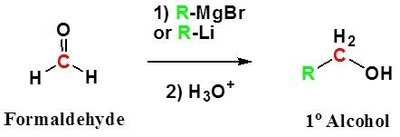
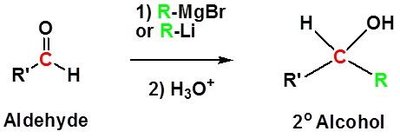
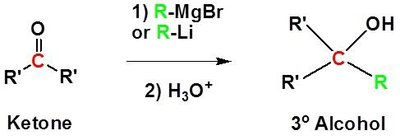
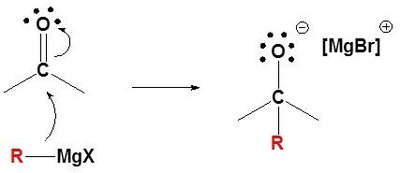
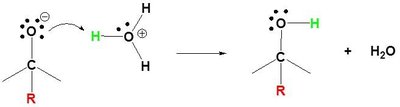
Grignard (R–MgX) and organolithium (R–Li) reagents are strong nucleophiles that add to carbonyls, forming alcohols after protonation.
Formaldehyde: Yields primary alcohols.
Aldehydes: Yields secondary alcohols.
Ketones: Yields tertiary alcohols.
Limitations of Organometallic Reagents
Grignard and organolithium reagents are strong bases and react with acidic hydrogens, so they cannot be used with alcohols, amides, amines, carboxylic acids, or terminal alkynes.
Addition of Acetylide Ions
Acetylide ions (R–C≡C–) add to carbonyls, forming alcohols with an alkyne group after protonation.
Reaction with Amines: Formation of Imines and Enamines
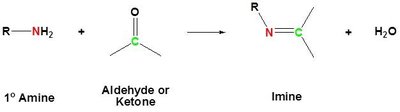
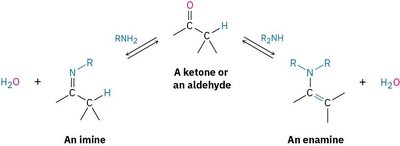
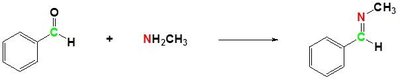
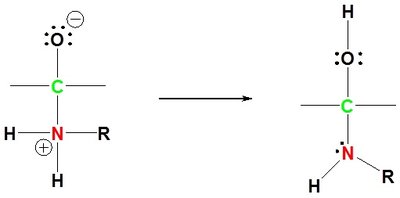
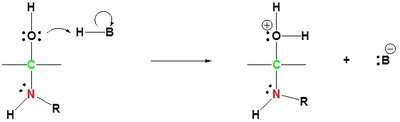
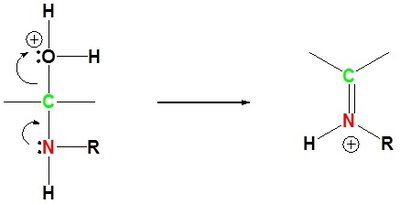
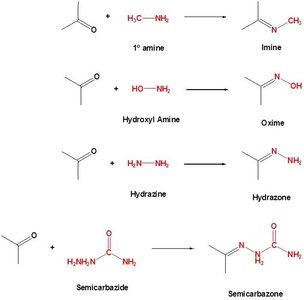
Primary amines react with aldehydes and ketones to form imines (Schiff bases) via condensation. Secondary amines form enamines. Both reactions are acid-catalyzed and involve water elimination.
Imines: Formed from primary amines and carbonyls.
Enamines: Formed from secondary amines and carbonyls.
Mechanism: Nucleophilic addition, proton transfer, water elimination, and deprotonation.


Reaction with Alcohols: Formation of Hemiacetals and Acetals
Aldehydes and ketones react with alcohols to form hemiacetals (one –OH and one –OR group on the same carbon) and acetals (two –OR groups). These reactions are important for protecting carbonyl groups in synthesis.
Hemiacetal: Formed by addition of one alcohol molecule.
Acetal: Formed by addition of two alcohol molecules.
Protection: Acetals are stable in neutral/basic media and used to protect carbonyls during reactions with strong nucleophiles.
Wittig Reaction: Synthesis of Alkenes
The Wittig reaction is a key method for synthesizing substituted alkenes from aldehydes and ketones using phosphonium ylides. The reaction is highly selective and avoids isomer mixtures.
Reactants: Phosphonium ylide and carbonyl compound.
Mechanism: Nucleophilic attack, formation of a four-membered ring, and elimination to yield alkene and phosphine oxide.
Oxidation and Reduction of Aldehydes and Ketones
Aldehydes are easily oxidized to carboxylic acids, while ketones are resistant to oxidation. Both can be reduced to alcohols using hydride reagents or hydrogenation.
Oxidation: Aldehydes → Carboxylic acids (e.g., KMnO4).
Reduction: Aldehydes → Primary alcohols; Ketones → Secondary alcohols.
Hydride Reagents: NaBH4 (selective), LiAlH4 (stronger, less selective).
Complete Reduction: Wolff-Kishner and Clemmensen methods convert carbonyls to methylene (-CH2-).
Conjugate Addition to α,β-Unsaturated Carbonyls
α,β-Unsaturated aldehydes and ketones undergo conjugate (1,4) addition, where nucleophiles add to the β-carbon, leaving the carbonyl group intact. This is facilitated by the electron-withdrawing effect of the carbonyl group.
Nucleophiles: Amines, water, organocuprates (Gilman reagents).
Mechanism: Nucleophile attacks β-carbon, forming an enolate intermediate.
Summary Table: Nucleophilic Addition Products
Carbonyl Compound | Nucleophile | Product |
|---|---|---|
Aldehyde/Ketone | Water | Gem-diol |
Aldehyde/Ketone | HCN | Cyanohydrin |
Aldehyde/Ketone | Grignard/Organolithium | Alcohol (1°, 2°, 3°) |
Aldehyde/Ketone | Primary amine | Imine |
Aldehyde/Ketone | Secondary amine | Enamine |
Aldehyde/Ketone | Alcohol | Hemiacetal/Acetal |
Key Equations
General nucleophilic addition:
Hydration:
Cyanohydrin formation:
Grignard addition:
Imine formation:
Acetal formation:
Additional info: These notes expand on the original content by providing definitions, mechanisms, and examples for each reaction type, ensuring a comprehensive and self-contained study guide for exam preparation in Organic Chemistry.
