 Indietro
Alkenes: Reactions and Synthesis – Mechanisms, Stereochemistry, and Applications
Guida di studio - Note intelligenti
 Appunti personalizzati basati sui tuoi materiali, ampliati con definizioni chiave, esempi e contesto.
Alkenes: Reactions and Synthesis
Overview of Alkene Reactivity
Alkenes are hydrocarbons containing at least one carbon-carbon double bond. Their reactivity is dominated by the presence of this π-bond, which can undergo a variety of addition and oxidation reactions, leading to a wide range of functionalized products.
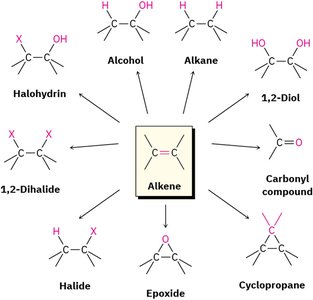
Key Transformations: Alkenes can be converted into alcohols, alkanes, halohydrins, 1,2-diols, carbonyl compounds, halides, epoxides, and cyclopropanes through different reaction mechanisms.
Reaction Types: Addition, elimination, oxidation, and cyclopropanation are common transformations.
Preparation of Alkenes: Elimination Reactions
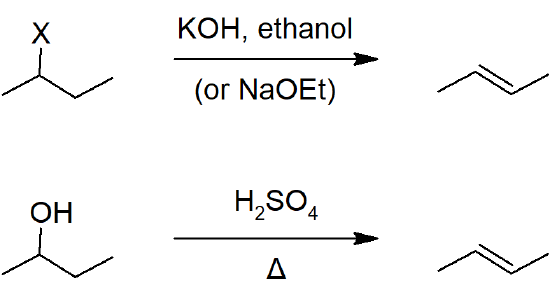
Alkenes are commonly prepared via elimination reactions, which remove atoms or groups from adjacent carbons to form a double bond.
Dehydrohalogenation: Elimination of HX from alkyl halides using a strong base (e.g., KOH/ethanol or NaOEt) yields alkenes.
Dehydration: Elimination of water from alcohols using strong acid (e.g., H2SO4, heat) forms alkenes.
Addition Reactions to Alkenes
General Mechanism of Addition
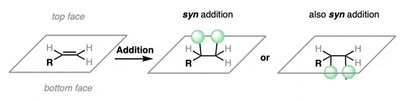
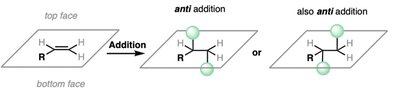
Addition reactions involve the breaking of the π-bond and the addition of atoms or groups across the double bond. The stereochemistry of addition can be syn (same side) or anti (opposite sides).

Halogenation of Alkenes
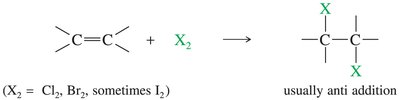
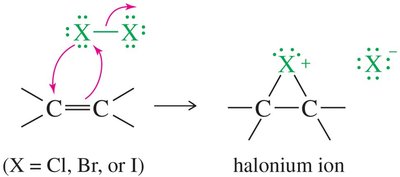
Halogens (Cl2, Br2, I2) add to alkenes to form vicinal dihalides, typically via anti addition due to the formation of a cyclic halonium ion intermediate.
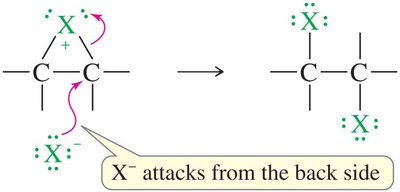
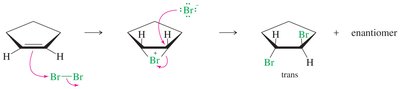
Mechanism: The alkene reacts with X2 to form a three-membered halonium ion, which is then attacked from the opposite side by X-, resulting in anti stereochemistry.
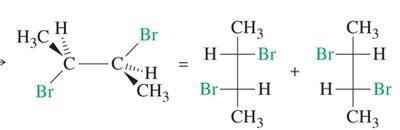
Stereochemistry: Anti addition leads to trans products from cis alkenes and vice versa.
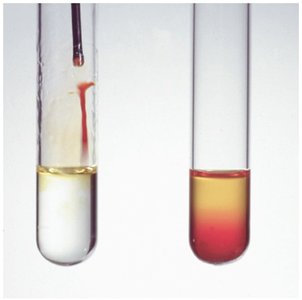
Bromine Test for Unsaturation
The bromine test is a qualitative method to detect unsaturation (double bonds) in organic compounds. Addition of Br2 (red-brown) to an alkene causes the color to disappear as the bromine adds across the double bond.
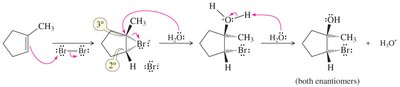
Halohydrin Formation
When halogenation occurs in the presence of water, a halohydrin is formed. The mechanism involves a halonium ion intermediate, with water attacking the more substituted carbon (Markovnikov orientation), resulting in anti addition.
Hydration of Alkenes: Formation of Alcohols
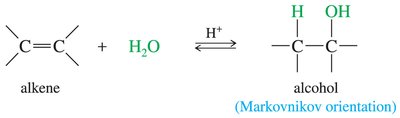
Acid-Catalyzed Hydration
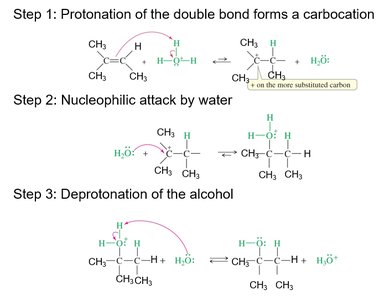
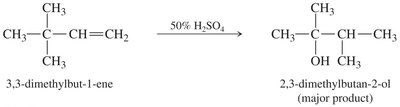
Alkenes react with water in the presence of acid to form alcohols, following Markovnikov's rule (the OH group attaches to the more substituted carbon).
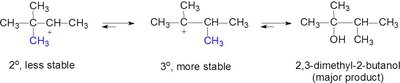
Carbocation Rearrangement: If a more stable carbocation can be formed via hydride or methyl shift, rearrangement occurs.
Oxymercuration–Demercuration
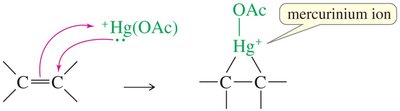
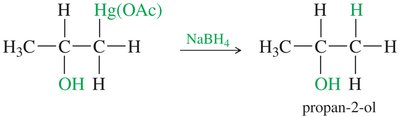
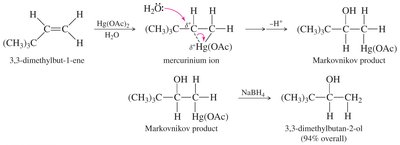
This method hydrates alkenes under milder conditions without carbocation rearrangement. The reaction proceeds via a mercurinium ion intermediate and gives Markovnikov alcohols.


Alkoxymercuration–Demercuration
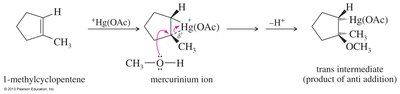
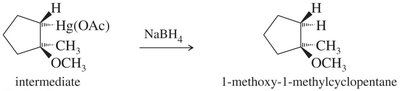
If an alcohol (ROH) is used instead of water, an ether is formed instead of an alcohol.
Hydroboration–Oxidation
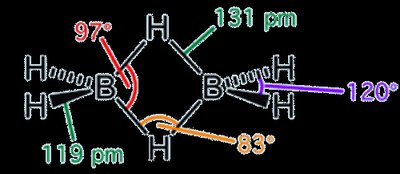
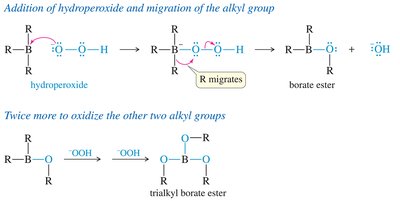
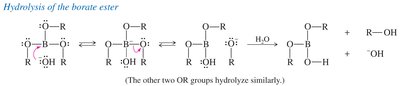
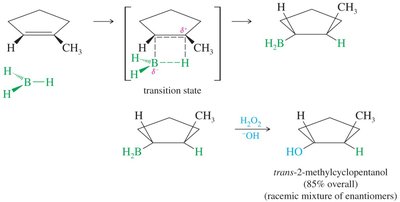
Hydroboration-oxidation adds water across the double bond with anti-Markovnikov regioselectivity and syn stereochemistry. Borane (BH3) adds to the less substituted carbon, and oxidation with H2O2/OH- replaces boron with OH.
Mechanism: Concerted addition of BH3 (syn addition), followed by oxidation to alcohol.
Stereochemistry: Both H and OH add to the same face of the alkene.

Stereochemistry in Alkene Addition Reactions
Syn vs. Anti Addition
Syn Addition: Both groups add to the same side of the double bond (e.g., hydrogenation, hydroboration).
Anti Addition: Groups add to opposite sides (e.g., halogenation, halohydrin formation).
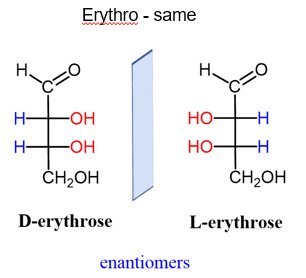
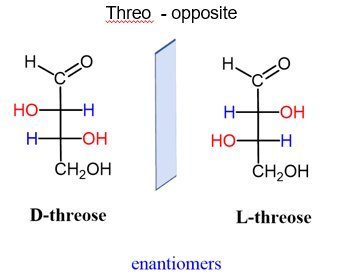
Erythro and Threo Stereochemistry
In Fischer projections, erythro isomers have identical substituents on the same side, while threo isomers have them on opposite sides. These terms are used to describe the stereochemistry of addition products.
Comparative Summary of Alkene Addition Reactions
Reaction | Intermediate | Regiochemistry | Stereochemistry |
|---|---|---|---|
Hydrohalogenation (HX) | Carbocation | Markovnikov | Not stereospecific |
Halogenation (X2) | Halonium ion | Markovnikov | Anti |
Hydration (acid-catalyzed) | Carbocation | Markovnikov | Not stereospecific |
Oxymercuration-Demercuration | Mercurinium ion | Markovnikov | Anti |
Hydroboration-Oxidation | Concerted | Anti-Markovnikov | Syn |
Catalytic Hydrogenation | Concerted | N/A | Syn |
Special Alkene Transformations
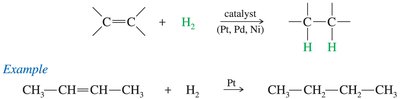
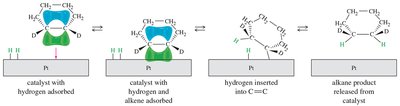
Catalytic Hydrogenation
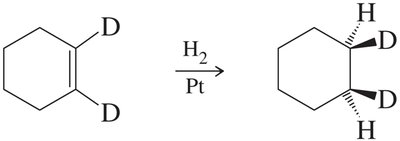
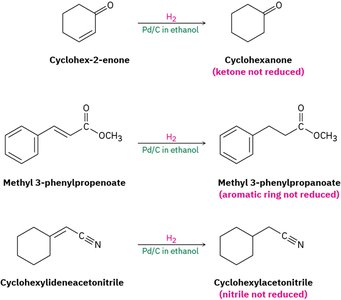
Hydrogen (H2) adds across the double bond in the presence of a metal catalyst (Pt, Pd, Ni), resulting in syn addition and formation of an alkane. The reaction is selective for C=C bonds and does not reduce ketones, esters, nitriles, or aromatic rings under standard conditions.
Cyclopropanation
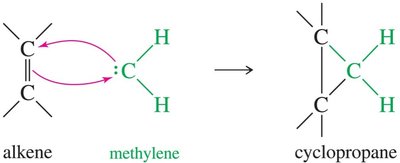
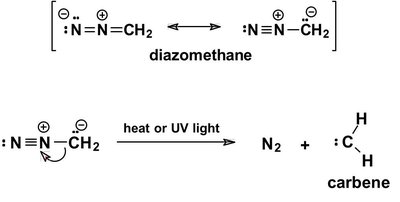
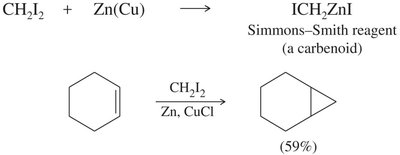
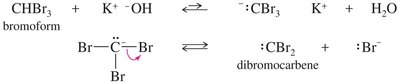
Alkenes can be converted to cyclopropanes by addition of carbenes or carbenoid reagents. Methods include diazomethane, Simmons–Smith reaction, and alpha elimination of haloforms.
Epoxidation and Dihydroxylation
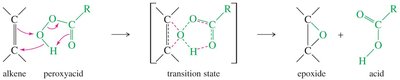
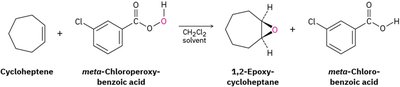
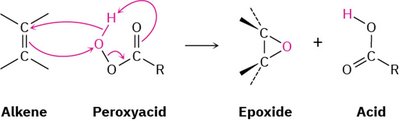
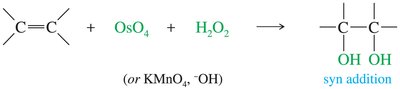
Alkenes react with peroxyacids (e.g., MCPBA) to form epoxides (oxiranes) via syn addition. Epoxides can be opened to trans-diols under acidic or basic conditions. Syn dihydroxylation (cis-1,2-diols) can be achieved with OsO4/H2O2 or cold, dilute KMnO4.

Summary Table: Alkene Addition Reactions
Starting Material | Reagent(s) | Product | Regiochemistry | Stereochemistry |
|---|---|---|---|---|
Alkene | HX | Alkyl halide | Markovnikov | Varies |
Alkene | X2 | 1,2-dihalide | Markovnikov | Anti |
Alkene | H2O, H+ | Alcohol | Markovnikov | Varies |
Alkene | Hg(OAc)2, H2O; NaBH4 | Alcohol | Markovnikov | Anti |
Alkene | BH3, H2O2, OH- | Alcohol | Anti-Markovnikov | Syn |
Alkene | H2, Pt/Pd/Ni | Alkane | N/A | Syn |
Alkene | RCO3H | Epoxide | N/A | Syn |
Alkene | OsO4, H2O2 | 1,2-diol | N/A | Syn |
