 Indietro
Alkyl Halides: Substitution and Elimination Reactions – Comprehensive Study Notes
Guida di studio - Note intelligenti
 Appunti personalizzati basati sui tuoi materiali, ampliati con definizioni chiave, esempi e contesto.
Alkyl Halides: Substitution and Elimination Reactions
Introduction to Substitution and Elimination Reactions
Alkyl halides are organic compounds in which a halogen (Cl, Br, or I) is bonded to an sp3 hybridized carbon atom. These compounds are central to organic synthesis due to their reactivity in substitution and elimination reactions. Substitution reactions involve the replacement of the halogen by a nucleophile, while elimination reactions result in the formation of a π bond (alkene) by removal of a proton and the halogen.
Substitution Reaction: Nucleophile replaces the halogen.
Elimination Reaction: Base removes a β-hydrogen, forming an alkene.
Competition between these pathways depends on the substrate, reagent, and reaction conditions.
Additional info: Chemotherapy drugs often exploit substitution reactions to damage rapidly dividing cancer cells, as illustrated above.
7.1 Structure and Reactivity of Alkyl Halides
Structure and Classification
Alkyl halides are classified based on the carbon atom to which the halogen is attached:
Primary (1°): Halogen attached to a carbon bonded to one other carbon.
Secondary (2°): Halogen attached to a carbon bonded to two other carbons.
Tertiary (3°): Halogen attached to a carbon bonded to three other carbons.
The halogen serves two critical functions:
Withdraws electron density via inductive effects, making the adjacent carbon electrophilic.
Acts as a leaving group, which is essential for both substitution and elimination reactions.
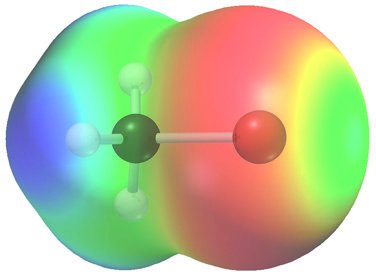
Additional info: The blue region in the electrostatic potential map above indicates low electron density, highlighting the electrophilic nature of the carbon bonded to the halogen.
Leaving Groups
Good leaving groups are weak bases and are typically the conjugate bases of strong acids (pKa < 0). Among halides, iodide is the best leaving group, followed by bromide and chloride. Fluoride and hydroxide are poor leaving groups due to their basicity.
Leaving Group | Conjugate Acid pKa | Leaving Group Quality |
|---|---|---|
I− | -11 | Excellent |
Br− | -9 | Very Good |
Cl− | -8 | Good |
F− | 3.2 | Poor |
HO− | 15.7 | Very Poor |
7.2 Nomenclature and Uses of Alkyl Halides
Nomenclature
Alkyl halides are named using IUPAC rules, treating halogens as substituents (fluoro-, chloro-, bromo-, iodo-). The parent chain is numbered to give the lowest possible number to the substituent. Common names are also used, especially for simple alkyl halides (e.g., methyl chloride, n-propyl bromide).
Systematic: 2-chloropropane
Common: isopropyl chloride
Uses, Benefits, and Hazards
Organohalides have been used as insecticides (e.g., DDT, chlordane, lindane), coolants (PCBs), and in consumer products (PFAS). Many are environmentally persistent and toxic, leading to regulatory bans. However, some organohalides are safe and have clinical or industrial applications (e.g., sucralose, Prozac).
Additional info: DDT was instrumental in reducing mosquito-borne diseases but was banned due to environmental persistence and bioaccumulation.
7.3 The SN2 Mechanism
Mechanism and Kinetics
The SN2 (bimolecular nucleophilic substitution) reaction proceeds via a concerted, one-step mechanism where the nucleophile attacks the electrophilic carbon from the side opposite the leaving group (backside attack), resulting in inversion of configuration at a chiral center (Walden inversion).
Rate Law:
Stereochemistry: Inversion of configuration (stereospecific)
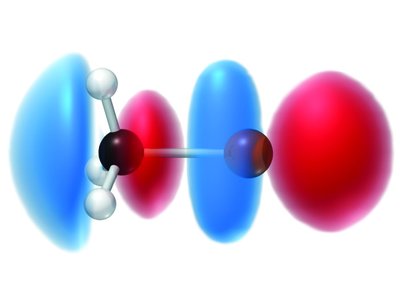
Additional info: The nucleophile's HOMO overlaps with the substrate's LUMO during backside attack, explaining the stereochemical outcome.
Effect of Substrate Structure
Steric hindrance at the α and β positions greatly affects the rate of SN2 reactions:
Methyl > Primary > Secondary > Tertiary (tertiary alkyl halides do not undergo SN2)
Bulky groups at β positions also slow the reaction.
Nucleophilic Strength
Strong nucleophiles (often negatively charged and/or highly polarizable) are required for efficient SN2 reactions. Examples include HO−, RO−, HS−, RS−, I−, Br−, and CN−.
7.5 The E2 Mechanism
Mechanism and Kinetics
The E2 (bimolecular elimination) reaction is a concerted process where a base removes a β-hydrogen as the leaving group departs, forming a double bond. The reaction is second order:
Rate Law:
Stereochemistry: Requires anti-periplanar arrangement of the leaving group and β-hydrogen (anti elimination).
7.6 Stability of Alkenes
Alkene Stability
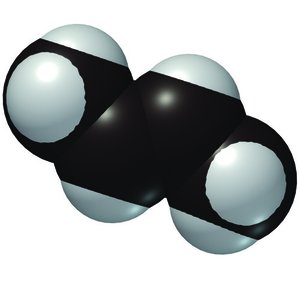
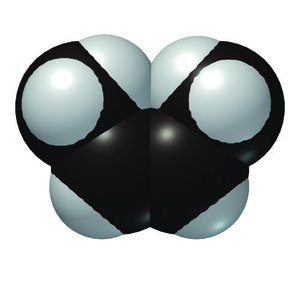
Alkene stability increases with the degree of substitution and is generally higher for trans isomers due to reduced steric strain.
Order of Stability: Tetrasubstituted > Trisubstituted > Disubstituted > Monosubstituted
Trans alkenes are more stable than cis alkenes.
7.7 E2: Regiochemistry and Stereochemistry
Regioselectivity
E2 reactions can yield multiple alkene products. The more substituted alkene (Zaitsev product) is usually favored unless a bulky base is used, which favors the less substituted (Hofmann) product.
Base | Zaitsev Product (%) | Hofmann Product (%) |
|---|---|---|
EtO− | 71 | 29 |
t-BuO− | 28 | 72 |
Other bulky bases | 8 | 92 |
Stereochemistry
The E2 reaction is stereospecific: the β-hydrogen and leaving group must be anti-periplanar. This requirement is especially important in cyclic systems, where only axial leaving groups can participate in E2 elimination.

Additional info: Adamantane derivatives illustrate the importance of conformation in E2 reactions due to their rigid, diamond-like structure.
7.8 Competing Pathways: SN2 vs. E2
When a reagent is both a strong nucleophile and a strong base (e.g., NaOH, NaOMe, NaOEt), SN2 and E2 mechanisms compete. The outcome depends on the substrate:
Primary alkyl halides: SN2 favored
Secondary alkyl halides: E2 favored
Tertiary alkyl halides: Only E2 occurs
7.9 Unimolecular Reactions: SN1 and E1
SN1 Mechanism
The SN1 (unimolecular nucleophilic substitution) reaction proceeds via a two-step mechanism: loss of the leaving group to form a carbocation, followed by nucleophilic attack. The rate-determining step is the formation of the carbocation, making the reaction first order:
Rate Law:
Stereochemistry: Racemization at a chiral center (both inversion and retention, with slight preference for inversion due to ion pairing).
E1 Mechanism
The E1 (unimolecular elimination) reaction also proceeds via a two-step mechanism: loss of the leaving group to form a carbocation, followed by deprotonation to form an alkene. The most substituted (Zaitsev) alkene is favored.
7.10 Evaluating Competing Reactions and Predicting the Major Product
To predict the outcome of substitution and elimination reactions, follow these steps:
Determine the function of the reagent (nucleophile, base, or both).
Analyze the substrate (primary, secondary, tertiary).
Consider regiochemical and stereochemical requirements for each mechanism.
Mechanism | Regiochemical Outcome | Stereochemical Outcome |
|---|---|---|
SN2 | Nucleophile replaces leaving group | Inversion of configuration |
E2 | Zaitsev or Hofmann product | Anti-periplanar elimination |
SN1 | Carbocation rearrangement possible | Racemization |
E1 | Zaitsev product | Most stable alkene favored |
7.11 Substitution and Elimination with Other Substrates
Alkyl sulfonates (e.g., tosylates, triflates) are excellent leaving groups and undergo similar reactions as alkyl halides. Alcohols can be converted to alkyl halides or undergo elimination under acidic conditions, but require activation since OH− is a poor leaving group.
7.12 Synthesis Strategies
Substitution and elimination reactions are powerful tools for organic synthesis, enabling the interconversion of functional groups and the construction of complex molecules. Retrosynthetic analysis is used to plan syntheses by identifying suitable nucleophiles and electrophiles for target molecules.
7.13 Solvent Effects in Substitution Reactions
SN2 Reactions
SN2 reactions are faster in polar aprotic solvents (e.g., DMSO, DMF, acetonitrile) because these solvents do not stabilize the nucleophile via hydrogen bonding, making it more reactive. In contrast, protic solvents (e.g., water, alcohols) stabilize nucleophiles and slow SN2 reactions.
SN1 Reactions
SN1 reactions are favored by polar protic solvents, which stabilize the carbocation intermediate and the leaving group, lowering the activation energy for ionization.
Summary Table: Mechanism Selection Guide
Substrate | Strong Nucleophile/Strong Base | Strong Nucleophile/Weak Base | Weak Nucleophile/Strong Base | Weak Nucleophile/Weak Base |
|---|---|---|---|---|
Primary | SN2 > E2 | SN2 | E2 | No Reaction |
Secondary | E2 > SN2 | SN2 | E2 | SN1/E1 (if resonance stabilized) |
Tertiary | E2 | SN1 | E2 | SN1/E1 |
Key Terms and Concepts
Alkyl halide: Organic compound with a halogen bonded to sp3 carbon.
Leaving group: Atom or group that departs with a pair of electrons in substitution/elimination.
Nucleophile: Electron-rich species that donates a pair of electrons to an electrophile.
Base: Species that abstracts a proton (H+).
SN2: Bimolecular nucleophilic substitution, concerted, inversion of configuration.
E2: Bimolecular elimination, concerted, anti-periplanar requirement.
SN1: Unimolecular nucleophilic substitution, carbocation intermediate, racemization.
E1: Unimolecular elimination, carbocation intermediate, Zaitsev product favored.
