 Indietro
Amines and Amides: Structure, Properties, and Reactions
Guida di studio - Note intelligenti
 Appunti personalizzati basati sui tuoi materiali, ampliati con definizioni chiave, esempi e contesto.
Amines
Definition and Structure
Amines are organic derivatives of ammonia (NH3) in which one or more hydrogen atoms are replaced by alkyl or aromatic groups. The nitrogen atom in amines is bonded to one or more carbon-containing groups, giving rise to a variety of structures and properties.
General formula: R-NH2 (primary), R2NH (secondary), R3N (tertiary)
Key feature: Presence of a lone pair of electrons on nitrogen, which imparts basicity and nucleophilicity.
Classification of Amines
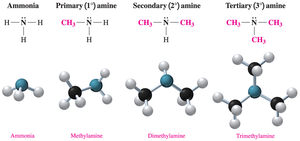
Amines are classified based on the number of carbon groups attached to the nitrogen atom:
Primary (1°) amine: One carbon group bonded to nitrogen.
Secondary (2°) amine: Two carbon groups bonded to nitrogen.
Tertiary (3°) amine: Three carbon groups bonded to nitrogen.
Naming Amines
Simple amines are named as alkylamines. The names of the alkyl groups bonded to the nitrogen atom are listed in alphabetical order, followed by 'amine'. Prefixes are used to indicate duplicate alkyl substituents.
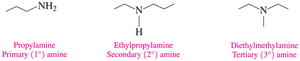
Examples: Ethylamine, Dimethylamine, Ethyldimethylamine
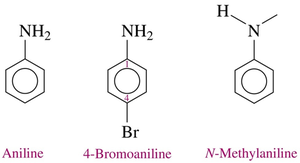
Aromatic amines: Benzene with an amine group is called aniline. Alkyl groups on the nitrogen are indicated with the prefix 'N-'.
Line-Angle Formulas of Amines
Line-angle formulas are used to represent the shapes of amine molecules, showing the connectivity of alkyl groups to the nitrogen atom.
Solubility of Amines: Hydrogen Bonds
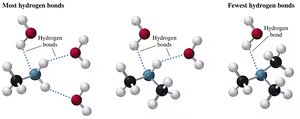
Amines can form hydrogen bonds with water due to the lone pair of electrons on nitrogen. The extent of hydrogen bonding depends on the type of amine:
Primary amines: Form the most hydrogen bonds, generally more soluble in water.
Secondary amines: Form fewer hydrogen bonds, moderate solubility.
Tertiary amines: Form the fewest hydrogen bonds, least soluble.
Amines as Bases in Water
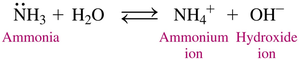
Amines act as Brønsted-Lowry bases in water. The lone pair on nitrogen accepts a proton (H+) from water, forming an ammonium ion and hydroxide ion.
General reaction:
Example with methylamine:
Example with ammonia:

Neutralization of Amines
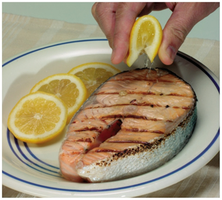
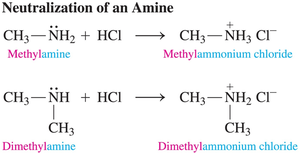
Amines can be neutralized by acids to form amine salts. This reaction is important in practical applications, such as neutralizing fishy odors with lemon juice (citric acid).
Reaction:
Application: Amines responsible for fish odor are neutralized by acid in lemon juice.
Properties of Amine Salts
Amine salts are named by using the alkylammonium ion name followed by the name of the negative ion. They are commonly used as active ingredients in medications.
Properties: Solids at room temperature, odorless, soluble in water and body fluids.
Examples: Ephedrine (decongestant), diphenhydramine (Benadryl)
Alkaloids: Amines in Plants
Alkaloids are naturally occurring amines produced by plants. They often have physiological effects and are used as anesthetics and stimulants.
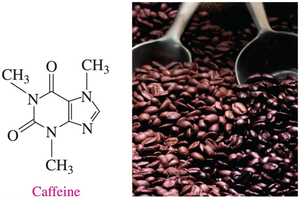
Examples: Morphine (painkiller from poppy plant), nicotine (stimulant), caffeine (stimulant in coffee)
Effects: Nicotine increases adrenaline and heart rate; caffeine increases alertness.
Amides
Definition and Structure
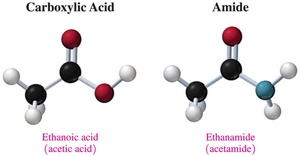
Amides are derivatives of carboxylic acids in which the hydroxyl group (-OH) is replaced by an amino group (-NH2). Amides are important in biological systems and pharmaceuticals.
General formula: RCONH2
Examples: Acetaminophen (Tylenol), urea (product of protein metabolism)
Preparation of Amides: Amidation
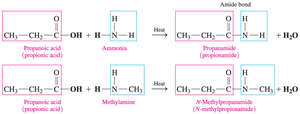
Amides are synthesized by reacting a carboxylic acid with ammonia or a primary/secondary amine in the presence of heat. This process is called amidation.
Reaction:
With methylamine:
Naming Amides
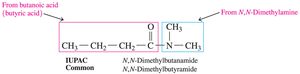
To name amides, drop the 'oic acid' (IUPAC) or 'ic acid' (common) from the carboxylic acid name and add the suffix 'amide'. Alkyl groups attached to the nitrogen are named with the prefix 'N-' followed by the alkyl name.
Example: Butanoic acid becomes butanamide; N-methylbutanamide for a methyl group on nitrogen.
Hydrolysis of Amides
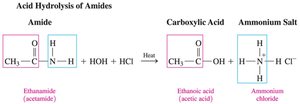
Amides can be hydrolyzed under acidic or basic conditions:
Acid hydrolysis: Produces a carboxylic acid and an ammonium salt.
Base hydrolysis: Produces the salt of a carboxylic acid and an amine or ammonia.
Additional info: Amide hydrolysis is important in metabolism and drug breakdown in the body.
