 Indietro
Aromatic Compounds: Structure, Stability, and Nomenclature
Guida di studio - Note intelligenti
 Appunti personalizzati basati sui tuoi materiali, ampliati con definizioni chiave, esempi e contesto.
Aromatic Compounds
Introduction to Aromaticity
Aromatic compounds are a class of organic molecules characterized by an unusual stability despite their high electron density and unsaturation. This stability is a result of their unique electronic structure, which makes them less reactive than expected for highly unsaturated compounds.
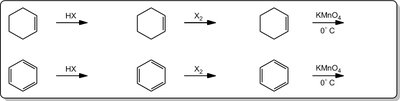
Aromatic compounds resist typical addition reactions that alkenes undergo.
Example: Cyclohexene reacts readily with reagents such as HX, X2, and KMnO4, whereas benzene does not, demonstrating its aromatic stability.
Categories of Aromaticity
Organic compounds can be classified based on their aromatic character:
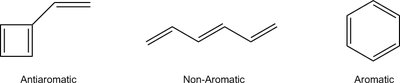
Aromatic: Compounds with unusual stability due to aromaticity.
Non-aromatic: Compounds without any special stability or instability.
Antiaromatic: Compounds with unusual instability, often highly reactive.
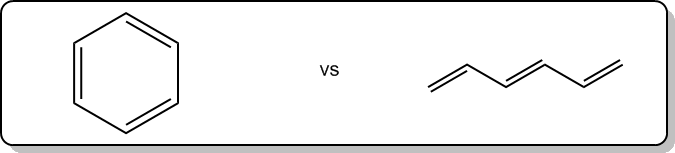
Example: Conjugated trienes can be antiaromatic, non-aromatic, or aromatic depending on their structure.
Benzene Nomenclature
Common Benzene Derivatives
Benzene and its derivatives are named using both common and systematic nomenclature. The position and number of substituents determine the naming convention:
Monosubstituted Benzene: No location necessary.
Disubstituted Benzene: No numerical locations; use ortho (o-), meta (m-), and para (p-) prefixes for 1,2-, 1,3-, and 1,4- positions respectively.
Multisubstituted Benzene: Numerical locations are necessary.
Examples of Benzene Derivatives
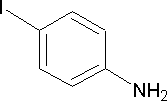
Example 1: 4-Iodoaniline (para-substituted benzene with iodine and amino groups)
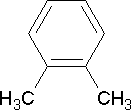
Example 2: 1,3-Dimethylbenzene (meta-xylene)
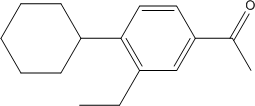
Example 3: 4-(Cyclohexyl)-3-methylbenzaldehyde (multisubstituted benzene)
Tests for Aromaticity
Hückel's Rule and Four Tests
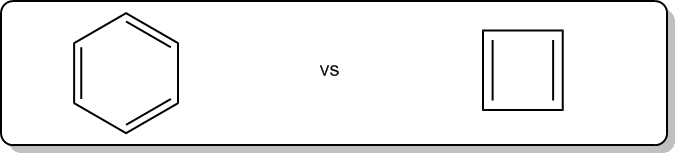
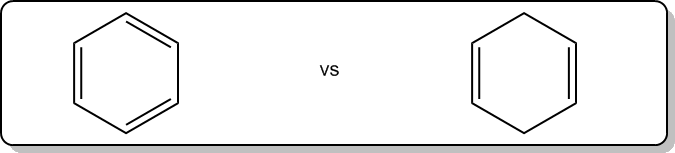
To determine if a compound is aromatic, it must pass four distinct tests, collectively known as Hückel's Rule:
Cyclic: The molecule must be a ring.
Fully Conjugated: Every atom in the ring must have a p-orbital.
Planar: The ring must be flat to allow for delocalization.
Hückel's Rule: The ring must contain π electrons, where n is an integer.
Compounds failing one or more tests are non-aromatic. Compounds meeting all but having π electrons are antiaromatic (Breslow’s Rule).
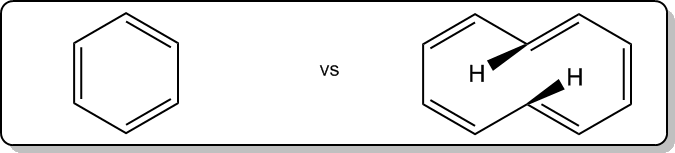
Counting π Electrons
Counting π electrons is essential for applying Hückel's Rule:
Double Bond/Anion: Each contributes 2 π electrons.
Radical: Contributes 1 π electron.
Cation: May contribute 0 or 2 π electrons depending on the structure.



Aromaticity of Hydrocarbons
Application of Aromaticity Tests
Hydrocarbons can be classified as aromatic, antiaromatic, or non-aromatic based on the Four Tests:
Aromatic: π electrons (e.g., 2, 6, 10, 14, ...)
Antiaromatic: π electrons (e.g., 4, 8, 12, 16, ...)
Non-aromatic: Fails one or more tests or has an odd number of π electrons.
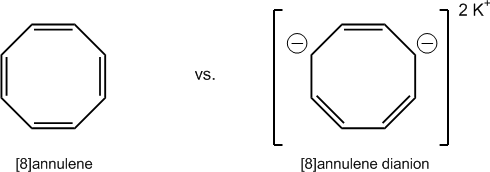

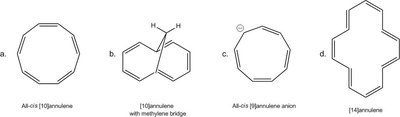
Aromaticity of Annulenes
Annulenes and Planarity
Annulenes are fully conjugated monocyclic hydrocarbons. Their aromaticity depends on ring size and planarity:
[n]Annulene: n = number of carbons in the ring.
Planarity is crucial for aromaticity; larger rings may not be planar.
![[8]Annulene vs. [8]Annulene dianion](https://static.studychannel.pearsonprd.tech/study_guide_files/organic-chemistry/sub_images/8a6000c5_image_16.png)


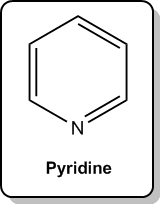
Aromaticity of Heterocycles
Heterocyclic Aromatic Compounds
Heterocycles are rings containing at least one atom other than carbon (heteroatom). Aromaticity in heterocycles depends on the ability of heteroatoms to donate lone pairs to the ring’s π system:
Heteroatoms may donate lone pairs if they are sp3 hybridized or if it helps create aromaticity.
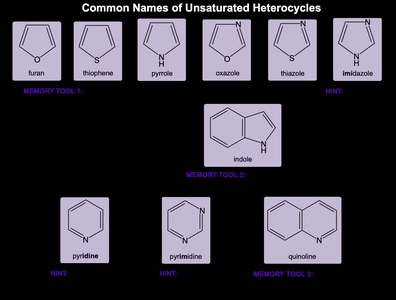
Examples include pyridine, pyrrole, furan, and thiophene.

Nomenclature of Heterocycles
Saturated and Unsaturated Heterocycles
Saturated heterocycles are named as parent chains with prefixes indicating the heteroatom. Unsaturated heterocycles use specific names for the parent chain and assign location numbers to substituents and heteroatoms.
Priority for heteroatom location: O > S > N.
Substituents are assigned the lowest possible numbers.
Acidity and Basicity of Aromatic Compounds
Acidity of Aromatic Hydrocarbons
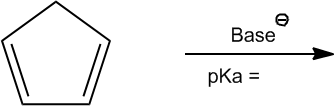
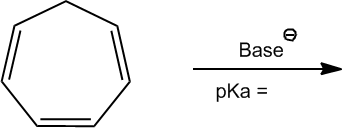
Aromatic hydrocarbons are generally not acidic. However, if a hydrocarbon can become aromatic by losing a proton, it will display unusual acidity (e.g., cyclopentadiene). Conversely, if proton loss leads to antiaromaticity, the compound will be non-acidic (e.g., cycloheptatriene).
Basicity of Aromatic Heterocycles
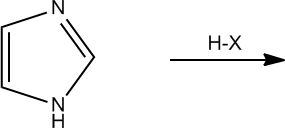
Heterocycles may have multiple lone pairs, but only those not required for aromaticity are basic and can react with acids. Typically, sp2-hybridized lone pairs are basic.
Ionization and Resonance in Aromatic Compounds
Resonance and Reactivity
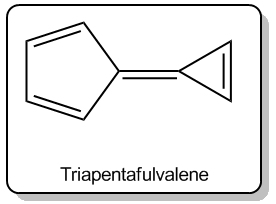
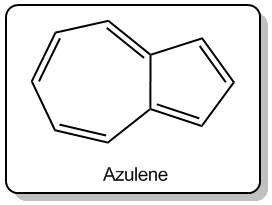
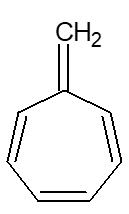
Double bonds in aromatic compounds can undergo resonance and ionization, especially if it helps create aromaticity. Fulvalenes and azulene are examples of polycyclic aromatic molecules with unique resonance and reactivity properties.
Fulvalenes: Two fully conjugated rings joined by an exocyclic double bond.
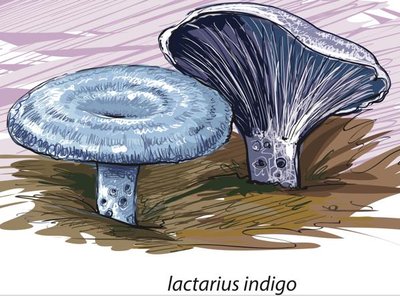
Azulene: A polycyclic aromatic molecule with a net dipole and distinctive color.
 Additional info: Where original notes were incomplete, academic context and examples were inferred to ensure completeness and clarity.
