 Indietro
Basic Principles of Chemistry for Organic and Biological Systems
Guida di studio - Note intelligenti
 Appunti personalizzati basati sui tuoi materiali, ampliati con definizioni chiave, esempi e contesto.
Basic Principles of Chemistry
Introduction to Chemistry in Biological Systems
Chemistry is fundamental to all physiological processes in living organisms. The body is composed of various chemicals, and understanding their properties and interactions is essential for comprehending movement, digestion, cellular communication, and more. Chemistry relevant to biology can be divided into basic chemistry and biochemistry, with a focus on both organic and inorganic compounds.
Key Terms and Concepts in Basic Chemistry
Matter and Its States
Matter: Anything that has mass and occupies space.
States of Matter:
Solid: Definite shape and volume.
Liquid: Changeable shape, definite volume.
Gas: Changeable shape and volume.
Elements and Atoms
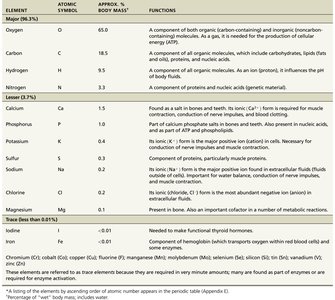
Elements: Substances that cannot be broken down into simpler substances by ordinary chemical methods. Four elements (carbon, oxygen, hydrogen, nitrogen) make up 96% of body weight.
Atoms: The smallest units of elements, combining to form molecules and compounds.
Molecules, Compounds, and Mixtures
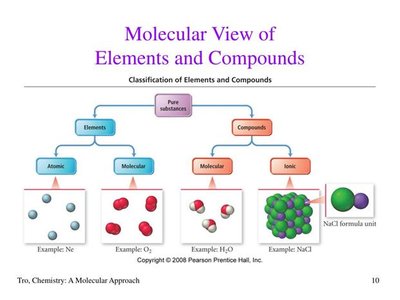
Molecule: Two or more atoms bonded together (e.g., O2).
Compound: Molecule with two or more different kinds of atoms (e.g., C6H12O6).
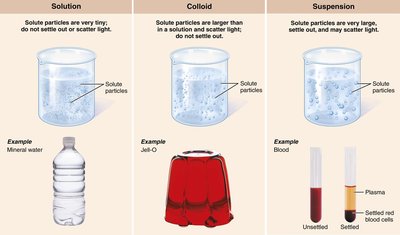
Mixtures: Physical combinations of two or more substances. Types include solutions, colloids, and suspensions.
Types of Mixtures
Solutions: Homogeneous mixtures with evenly distributed particles (e.g., salt water).
Colloids: Heterogeneous mixtures with larger particles that do not settle out (e.g., Jell-O).
Suspensions: Heterogeneous mixtures with large particles that settle out (e.g., blood).
Differences Between Mixtures and Compounds
Mixtures do not involve chemical bonding; compounds do.
Mixtures can be separated by physical means; compounds require chemical methods.
Mixtures can be heterogeneous or homogeneous; compounds are always homogeneous.
Chemical Bonds and Reactions
Chemical Bonds: Energy relationships between electrons of reacting atoms.
Chemical Reactions: Occur when bonds are formed, rearranged, or broken. Represented by chemical equations with reactants and products.
Types of Chemical Reactions
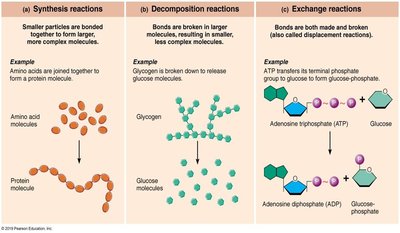
Synthesis (Combination): Atoms/molecules combine to form larger molecules (anabolic processes).
Decomposition: Molecules break down into smaller units (catabolic processes).
Exchange (Displacement): Bonds are both made and broken.
Energy in Chemical Reactions
Exergonic Reactions: Release energy (catabolic).
Endergonic Reactions: Absorb energy (anabolic).
Factors Affecting Reaction Rates
Temperature (higher increases rate)
Concentration of reactants (higher increases rate)
Particle size (smaller increases rate)
Catalysts: Increase reaction rate without being consumed (e.g., enzymes).
Organic and Inorganic Chemistry
Biochemistry Overview
Biochemistry studies the chemical composition and reactions of living matter. All chemicals are classified as organic (contain carbon) or inorganic (do not contain carbon). Both are essential for life.
Inorganic Compounds
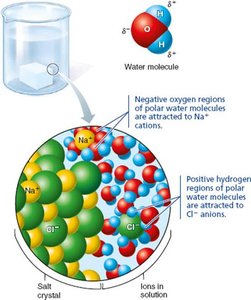
Water: Most abundant inorganic compound in cells; key properties include high heat capacity, high heat of vaporization, polar solvent properties, reactivity, and cushioning.
Salts: Ionic compounds that dissociate in water to form electrolytes (e.g., NaCl, CaCO3).
Acids and Bases: Release or accept hydrogen ions in solution; important for maintaining pH balance.
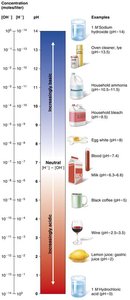
pH Scale and Buffers
pH Scale: Measures hydrogen ion concentration; pH 7 is neutral, below 7 is acidic, above 7 is basic.
Buffers: Chemical systems that resist changes in pH by releasing or binding hydrogen ions.
Organic Compounds
General Features
Contain carbon, often large, covalently bonded.
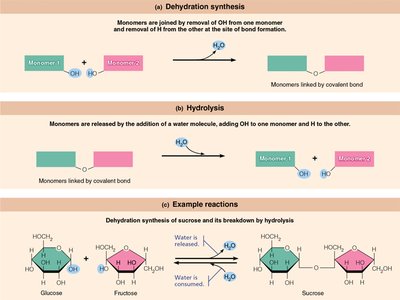
Most are polymers made by dehydration synthesis and broken down by hydrolysis.
Carbohydrates
Include sugars and starches; contain C, H, O in a 2:1 H:O ratio.
Major source of cellular fuel; also serve structural and recognition roles.
Three classes:
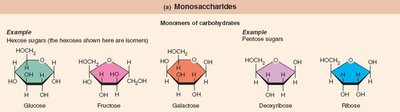
Monosaccharides: Single sugars (e.g., glucose, fructose, galactose, ribose, deoxyribose).
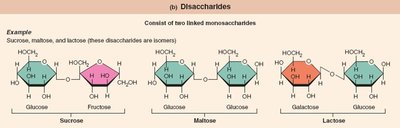
Disaccharides: Two linked monosaccharides (e.g., sucrose, maltose, lactose).
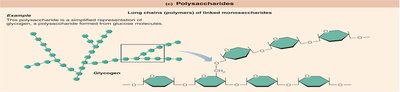
Polysaccharides: Long chains of monosaccharides (e.g., starch, glycogen, cellulose).
Lipids
Contain C, H, O (less O than carbohydrates), sometimes P; insoluble in water.
Main types: triglycerides, phospholipids, steroids, eicosanoids.
Triglycerides
Fats (solid) and oils (liquid); composed of three fatty acids and glycerol.
Functions: energy storage, insulation, protection.
Phospholipids
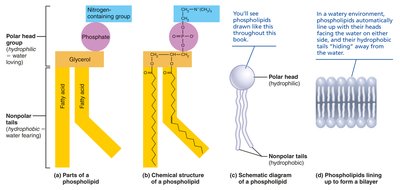
Modified triglycerides with a polar (hydrophilic) head and nonpolar (hydrophobic) tails.
Major component of cell membranes.
Steroids
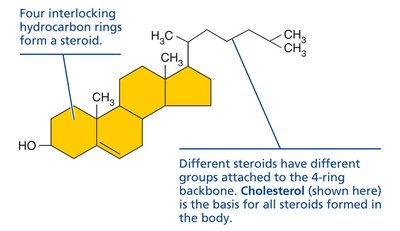
Four interlocking hydrocarbon rings; cholesterol is the most important steroid.
Functions: membrane structure, precursor for vitamin D, steroid hormones, bile salts.
Eicosanoids
Derived from arachidonic acid; includes prostaglandins involved in inflammation, blood clotting, and other processes.
Proteins
Composed of C, H, O, N (sometimes S, P); basic structural material of the body.
Monomers are amino acids linked by peptide bonds.
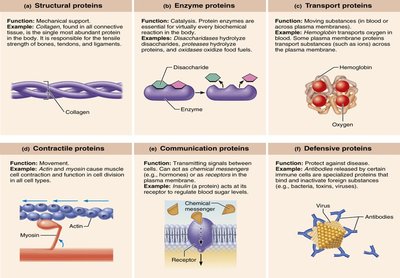
Functions: structural, enzymatic, transport, contractile, communication, defensive.
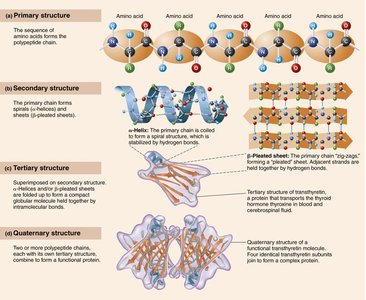
Levels of Protein Structure
Primary: Sequence of amino acids.
Secondary: Alpha helices and beta sheets formed by hydrogen bonding.
Tertiary: Three-dimensional folding driven by side chain interactions.
Quaternary: Association of multiple polypeptide chains.
Nucleic Acids
Composed of C, H, O, N, P; largest molecules in the body.
Polymers of nucleotides (nitrogen base, pentose sugar, phosphate group).
Two major classes: DNA (deoxyribonucleic acid) and RNA (ribonucleic acid).
ATP (Adenosine Triphosphate)
Primary energy-transferring molecule in cells.
Energy from glucose breakdown is captured in ATP, which powers cellular reactions.
