 Indietro
Carboxylic Acids and Nitriles: Structure, Properties, Synthesis, and Spectroscopy
Guida di studio - Note intelligenti
 Appunti personalizzati basati sui tuoi materiali, ampliati con definizioni chiave, esempi e contesto.
Carboxylic Acids and Nitriles
Introduction
Carboxylic acids and nitriles are fundamental organic compounds, widely encountered in both synthetic and biological chemistry. Carboxylic acids serve as starting materials for acyl derivatives and are abundant in nature, often formed by oxidation of aldehydes and alcohols. Nitriles, containing the –C≡N functional group, are important intermediates in organic synthesis.
Structure of Carboxylic Acids
- Carboxyl Group: The functional group of carboxylic acids is the acyl group, represented as R–COOH. - Hybridization: The carboxyl carbon is sp2 hybridized, resulting in a planar structure with bond angles close to 120°. - Hydrogen Bonding: Carboxylic acids form cyclic dimers via hydrogen bonds, leading to higher boiling points than alcohols. 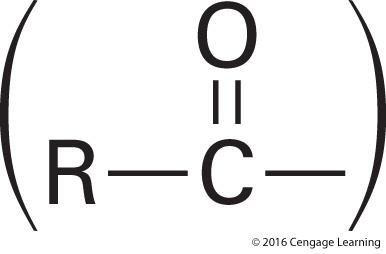
Naming Carboxylic Acids and Nitriles
Carboxylic Acids
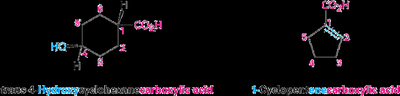
- IUPAC Naming: Derived from open-chain alkanes by replacing the terminal -e with -oic acid. The carboxyl carbon is always C1. - Cyclic Compounds: Named with the suffix –carboxylic acid; the CO2H carbon is not numbered. - As Substituent: The CO2H group is called a carboxyl group. 
Common Names and Acyl Groups
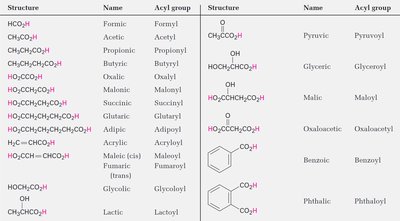
- Many carboxylic acids have common names, often derived from their natural sources. - The acyl group is the R–CO– portion of the molecule.
Structure | Name | Acyl group |
|---|---|---|
HCO2H | Formic | Formyl |
CH3CO2H | Acetic | Acetyl |
CH3CH2CO2H | Propionic | Propionyl |
CH3CH2CH2CO2H | Butyric | Butyryl |
HOCH2CO2H | Glycolic | Glycolyl |
HOCH2CH2CO2H | Lactic | Lactoyl |
Nitriles
- IUPAC Naming: Simple open-chain nitriles are named by adding 'nitrile' as a suffix to the alkane name. The nitrile carbon is C1. - Alternative Naming: Nitriles can also be named as derivatives of carboxylic acids by replacing '-ic acid' or '-oic acid' with '-onitrile', or '-carboxylic acid' with '-carbonitrile'. 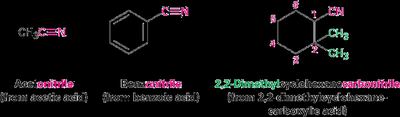
Worked Examples
- Example 1: 3-Methylbutanoic acid 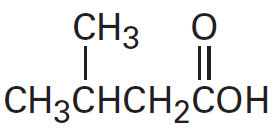 - Example 2: cis-1,3-Cyclopentanedicarboxylic acid
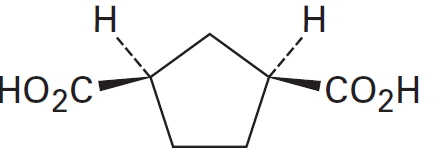
Structure and Properties of Carboxylic Acids
Carboxylic acids are characterized by their planar geometry and strong hydrogen bonding, which leads to unique physical properties.
Bond angle (degrees) | Bond length (pm) |
|---|---|
C–C=O: 119 | C–C: 152 |
C–C–OH: 119 | C–C=O: 125 |
C=O–OH: 122 | C–OH: 131 |
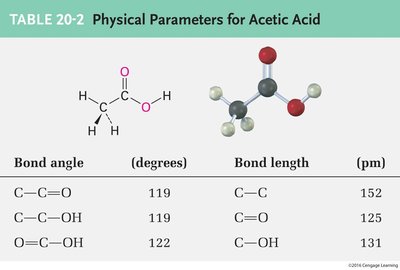
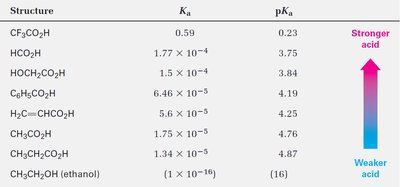
Acidity and Dissociation of Carboxylic Acids
Carboxylic acids are proton donors, reacting with bases to form water-soluble carboxylate salts. Their acidity is greater than alcohols and phenols due to resonance stabilization of the carboxylate ion. 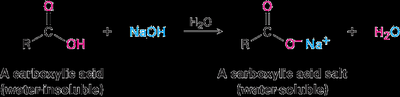

Acidity Constant and pKa
- The acidity constant () for carboxylic acids is typically to . - The pKa is calculated as .
Structure | Ka | pKa |
|---|---|---|
CF3CO2H | 0.59 | 0.23 |
HCO2H | 1.77 × 10⁻⁴ | 3.75 |
HOCH2CO2H | 1.5 × 10⁻⁴ | 3.84 |
C6H5CO2H | 6.46 × 10⁻⁵ | 4.19 |
CH3CO2H | 1.75 × 10⁻⁵ | 4.76 |
CH3CH2CO2H | 1.34 × 10⁻⁵ | 4.87 |
CH3CH2OH | 1 × 10-16 | 16 |
Resonance Stabilization
- The carboxylate ion is stabilized by resonance, making carboxylic acids more acidic than alcohols and phenols. 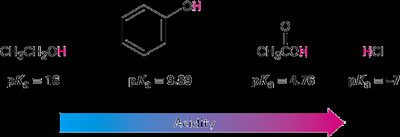
Substituent Effects on Acidity
Inductive and Aromatic Effects
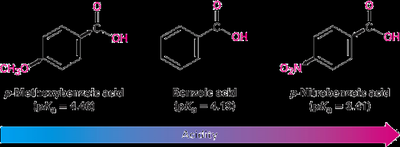
- Electron-withdrawing groups (e.g., halogens) increase acidity by stabilizing the carboxylate anion. - Electron-donating groups decrease acidity by destabilizing the carboxylate anion. - The effect decreases as the substituent moves farther from the carboxyl group. 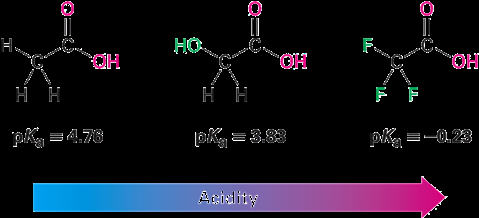
Preparation of Carboxylic Acids
Oxidation Methods
- Oxidation of substituted alkylbenzenes with KMnO4 or Na2Cr2O7 yields substituted benzoic acids. - Primary alcohols and aldehydes are oxidized to carboxylic acids, commonly using CrO3. 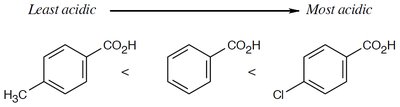
Hydrolysis of Nitriles
- Nitriles are hydrolyzed with acid or base to yield carboxylic acids. - Conversion of alkyl halides to nitriles, followed by hydrolysis, increases the carbon chain by one.
Carboxylation of Grignard Reagents
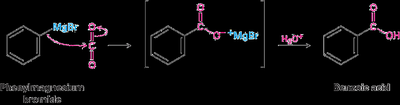
- Grignard reagents react with dry CO2 to form metal carboxylates, which are protonated to yield carboxylic acids. 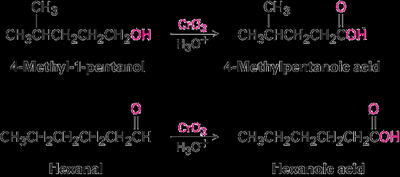
Reactions of Carboxylic Acids
Carboxylic acids undergo a variety of reactions, including proton transfer, nucleophilic addition, and acyl substitution. 
Worked Example: Synthesis from Benzyl Bromide
- 2-Phenylethanol can be prepared from benzyl bromide via carboxylation and reduction. 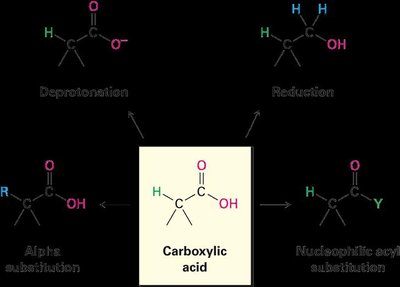

Chemistry of Nitriles
Structure and Reactivity
- Nitriles contain a carbon atom triple-bonded to nitrogen, making them electrophilic and susceptible to nucleophilic addition. - Rare in living organisms but important in synthetic chemistry.
Preparation of Nitriles
- SN2 reaction of CN– with 1° or 2° alkyl halides. - Dehydration of primary amides (RCONH2) using SOCl2.
Reactions of Nitriles
- Nucleophilic addition yields imine anions. - Hydrolysis converts nitriles to carboxylic acids and ammonia. - Reduction with LiAlH4 yields primary amines. - Reaction with Grignard reagents yields ketones after hydrolysis.
Spectroscopy of Carboxylic Acids and Nitriles
Infrared (IR) Spectroscopy
- Carboxylic acids: O–H stretch (very broad) at 2500–3300 cm−1; C=O stretch at 1710–1760 cm−1. - Nitriles: C≡N stretch at 2250 cm−1 (saturated) or 2230 cm−1 (aromatic/conjugated).
Nuclear Magnetic Resonance (NMR) Spectroscopy
- Carboxyl carbons: 165–185 δ (aromatic/unsaturated near 165 δ, saturated aliphatic near 185 δ). - Nitrile carbons: 115–130 δ. - Acidic –CO2H proton: singlet near 12 δ; disappears with D2O exchange.
Summary
- Carboxylic acids are versatile building blocks for organic synthesis. - Nitriles are important intermediates, especially for chain extension and amine synthesis. - The extent of dissociation of carboxylic acids can be calculated using the Henderson–Hasselbalch equation. - Carboxylation of Grignard reagents is a key synthetic method for carboxylic acid formation. Additional info: Academic context was added to clarify naming conventions, resonance stabilization, and synthetic routes.
