 Indietro
Carboxylic Acids and Their Derivatives: Structure, Nomenclature, Properties, and Reactions
Guida di studio - Note intelligenti
 Appunti personalizzati basati sui tuoi materiali, ampliati con definizioni chiave, esempi e contesto.
Carboxylic Acids and Their Derivatives
Introduction to Acyl Compounds
Carboxylic acids and their derivatives, collectively known as acyl compounds, are a fundamental class of organic molecules characterized by the presence of a carbonyl group bonded to a heteroatom or another group. These derivatives include acid chlorides, anhydrides, esters, amides, and nitriles, each with distinct reactivity and properties.
Carboxyl group (-COOH): The defining functional group of carboxylic acids.
Acyl derivatives: Formed by replacing the hydroxyl group of a carboxylic acid with other substituents (e.g., Cl, OR, NR2, CN).
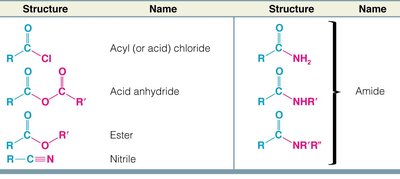
Nomenclature and Physical Properties
Naming Carboxylic Acids
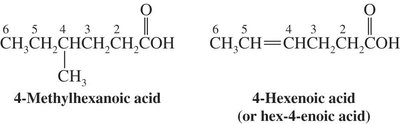
Carboxylic acids are named by replacing the -e ending of the parent alkane with -oic acid. The carboxyl carbon is always assigned position 1. Common names are still widely used for many simple acids.
Examples: Methanoic acid (formic acid), ethanoic acid (acetic acid).
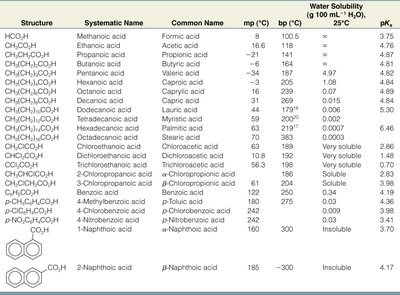
Physical properties: Carboxylic acids form strong hydrogen bonds, leading to high boiling points and significant water solubility for small acids (up to 4 carbons).
Physical Properties and Acidity
Carboxylic acids exhibit strong hydrogen bonding, resulting in high boiling points and water solubility. Their acidity (pKa ≈ 4–5) is due to resonance stabilization of the carboxylate anion. Electron-withdrawing groups increase acidity by stabilizing the anion further.
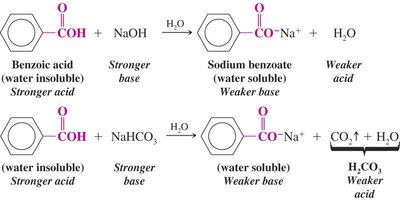
Acidity and Reactions with Bases
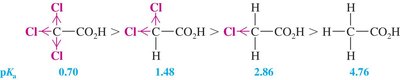
Carboxylic acids react with strong bases (e.g., NaOH) and weak bases (e.g., NaHCO3) to form water-soluble carboxylate salts. The presence of electron-withdrawing groups (e.g., Cl) increases acidity, as shown by lower pKa values.
Dicarboxylic Acids
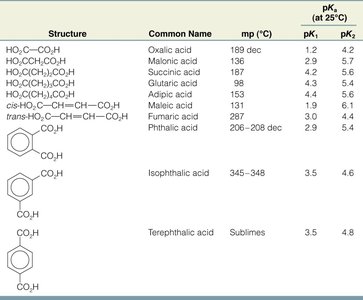
Dicarboxylic acids contain two carboxyl groups and are named as alkanedioic acids in IUPAC nomenclature. Common names are often used for simple dicarboxylic acids.
Nomenclature of Carboxylic Acid Derivatives
Esters
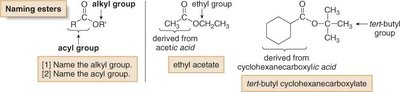
Esters are named by first identifying the alkyl group attached to the oxygen, followed by the acyl group (parent acid with -ate ending).
Example: Ethyl acetate (ethyl group + acetate from acetic acid).
Anhydrides
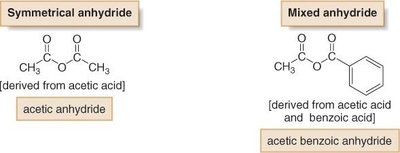
Symmetrical anhydrides are named by replacing acid with anhydride. Mixed anhydrides are named by listing both acids alphabetically, followed by anhydride.
Acid Chlorides
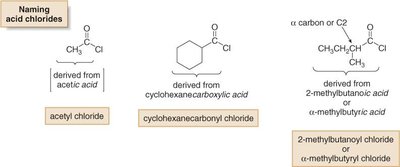
Acid chlorides are named by replacing the -ic acid ending with -yl chloride. For cyclic compounds, use -carbonyl chloride.
Amides
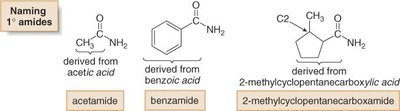
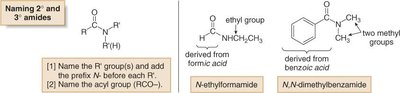
Amides are named by replacing the -ic acid, -oic acid, or -ylic acid ending with amide. For secondary and tertiary amides, use the prefix "N-" for each alkyl group attached to nitrogen.
Nitriles
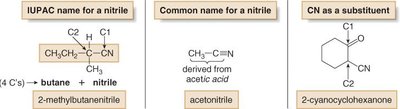
Nitriles are named by replacing the -ic acid ending of the parent acid with -onitrile or by using the suffix -nitrile in IUPAC nomenclature. The CN carbon is always carbon 1.
Preparation of Carboxylic Acids
Oxidation Methods
Carboxylic acids can be synthesized by oxidation of various functional groups:
Alkylbenzenes: Oxidation with KMnO4 yields benzoic acid derivatives.
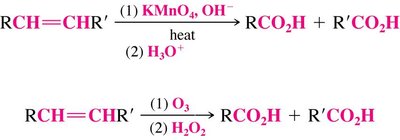
Alkenes: Oxidative cleavage with KMnO4 or ozonolysis produces carboxylic acids.
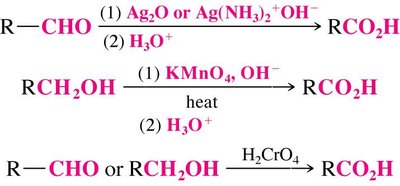
Aldehydes and primary alcohols: Oxidized to carboxylic acids using Ag2O, KMnO4, or H2CrO4.

Other Methods
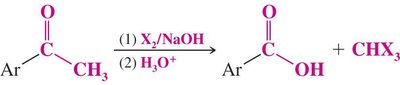
Haloform reaction: Oxidation of methyl ketones yields carboxylic acids and haloforms.
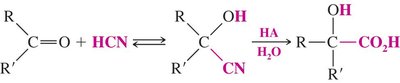
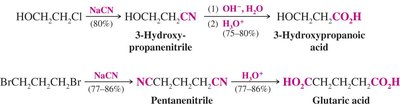
Hydrolysis of cyanohydrins and nitriles: Cyanohydrins hydrolyze to α-hydroxy acids; nitriles hydrolyze to carboxylic acids.
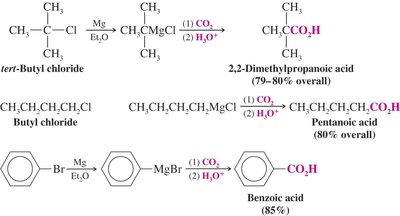
Carbonation of Grignard Reagents
Grignard reagents react with carbon dioxide to form carboxylic acids after acidic workup.
Nucleophilic Acyl Substitution
General Mechanism
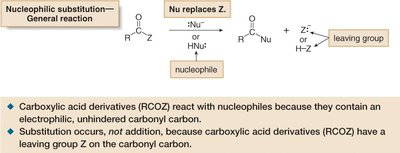
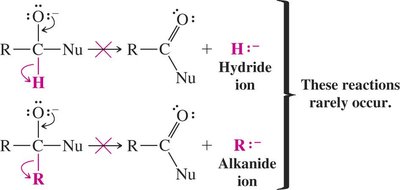
The characteristic reaction of carboxylic acid derivatives is nucleophilic acyl substitution, which proceeds via a nucleophilic addition-elimination mechanism. The presence of a good leaving group at the acyl carbon is essential for this reaction.
Mechanism steps: (1) Nucleophilic attack on the carbonyl carbon; (2) Elimination of the leaving group.
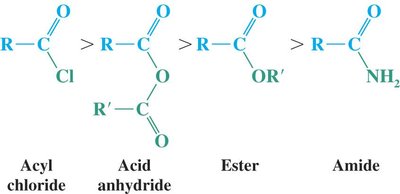
Leaving group ability: Inversely related to basicity; chloride is the best leaving group, amines are the worst.
Synthesis and Reactions of Acid Chlorides
Preparation of Acid Chlorides
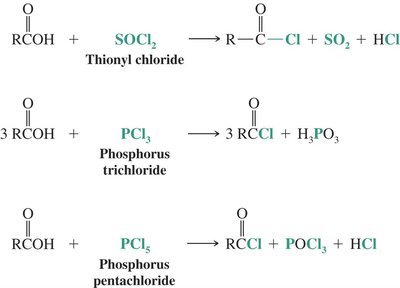
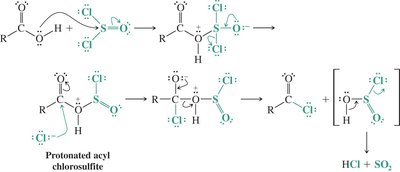
Acid chlorides are synthesized from carboxylic acids using reagents such as thionyl chloride (SOCl2), phosphorus trichloride (PCl3), or phosphorus pentachloride (PCl5).
Reactivity and Transformations
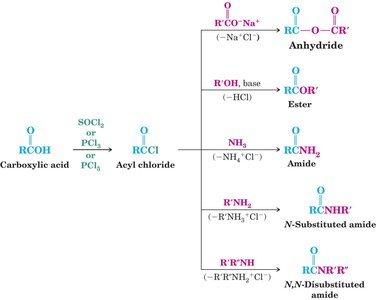
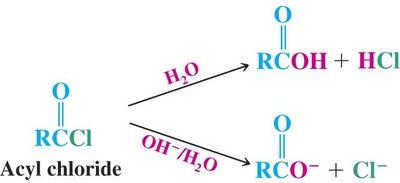
Acid chlorides are the most reactive acyl derivatives and can be converted into anhydrides, esters, and amides. They react readily with water, alcohols, and amines.
Synthesis and Reactions of Anhydrides
Preparation of Anhydrides
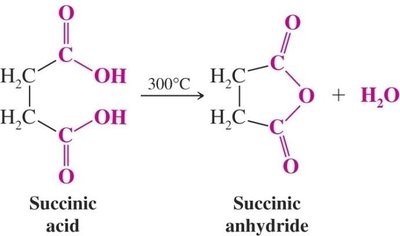
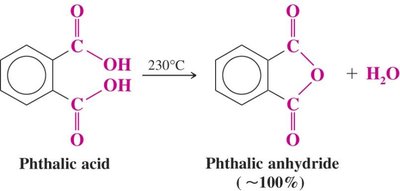
Anhydrides are synthesized by the reaction of acid chlorides with carboxylates or by heating dicarboxylic acids to induce cyclization (for cyclic anhydrides).

Reactivity and Transformations
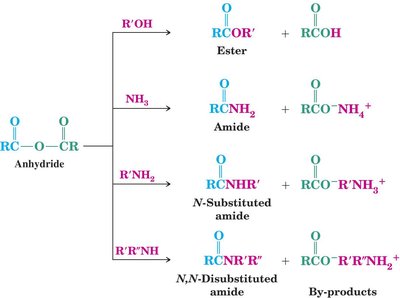
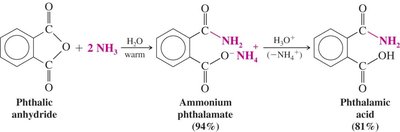
Anhydrides react with alcohols to form esters, with ammonia or amines to form amides, and with water to yield carboxylic acids.
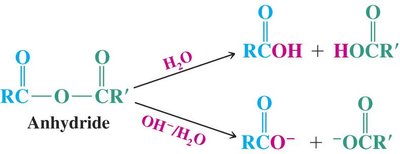
Synthesis and Reactions of Esters
Fischer Esterification
Esters are commonly synthesized by acid-catalyzed reaction of carboxylic acids with alcohols (Fischer esterification). The reaction is reversible and can be driven to completion by removing water or using an excess of one reactant.

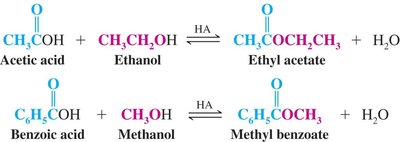

Other Methods of Ester Synthesis
From acid chlorides: React with alcohols in the presence of a base (e.g., pyridine).
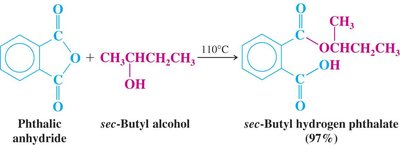
From anhydrides: Alcohols react with anhydrides to form esters.
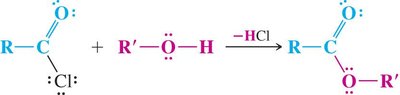

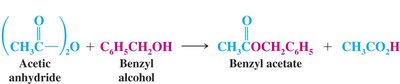
Saponification (Base-Promoted Hydrolysis of Esters)
Esters are hydrolyzed by aqueous base (saponification) to yield a carboxylate salt and an alcohol. This reaction is irreversible due to the formation of the carboxylate salt.

Lactones (Cyclic Esters)
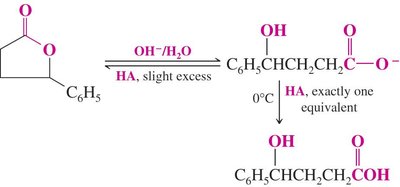
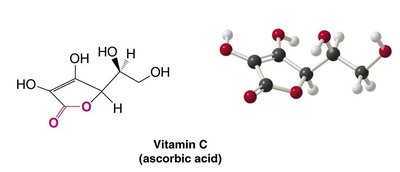
γ- or δ-hydroxy acids can cyclize under acidic conditions to form lactones (cyclic esters). Lactones can be hydrolyzed back to hydroxy acids under basic conditions.
Synthesis and Reactions of Amides
Preparation of Amides
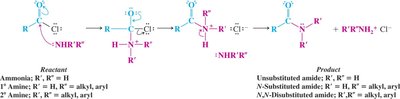
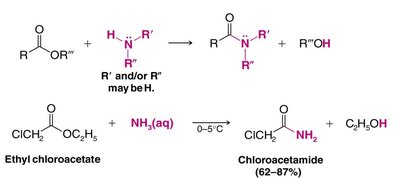
From acid chlorides: React with ammonia, primary, or secondary amines (excess amine neutralizes HCl).
From esters: Ammonia or amines react with esters to form amides.
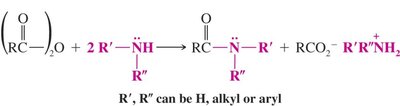
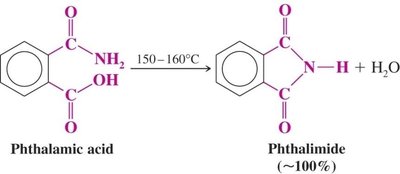
From anhydrides: Anhydrides react with amines to yield amides and carboxylate salts.
Hydrolysis of Amides
Amides are hydrolyzed to carboxylic acids under acidic or basic conditions, but the reaction is slower than ester hydrolysis.
Lactams (Cyclic Amides)
Lactams are cyclic amides named according to ring size using Greek letters (e.g., β-lactam). β-Lactams are important in antibiotics such as penicillin.
Nitriles: Preparation and Reactions
Preparation of Nitriles
Nitriles can be synthesized by dehydration of amides or by nucleophilic substitution of alkyl halides with cyanide ion.
Hydrolysis of Nitriles
Nitriles are hydrolyzed to carboxylic acids under acidic or basic conditions, making them useful synthetic equivalents for carboxylic acids.
Decarboxylation of Carboxylic Acids
β-Keto carboxylic acids and malonic acids readily lose CO2 upon heating via a six-membered ring transition state, yielding a carboxylic acid with one fewer carbon atom.
Summary Table: Reactivity of Acyl Derivatives
Derivative | General Structure | Relative Reactivity |
|---|---|---|
Acid chloride | RCOCl | Most reactive |
Anhydride | RCO-O-COR' | High |
Ester | RCOOR' | Moderate |
Amide | RCONH2 | Least reactive |
Additional info: The order of reactivity is crucial for planning synthetic routes, as more reactive derivatives can be converted to less reactive ones, but not vice versa without special reagents.
