 Indietro
Ch. 1 – Structure and Bonding: Foundations of Organic Chemistry
Guida di studio - Note intelligenti
 Appunti personalizzati basati sui tuoi materiali, ampliati con definizioni chiave, esempi e contesto.
Structure and Bonding in Organic Chemistry
Overview of Bonding
Understanding the nature of chemical bonds is fundamental to organic chemistry. Bonds can be classified as ionic or covalent, each with distinct properties and models.
Ionic Bonding: Involves the transfer of electrons from one atom (typically a metal) to another (typically a nonmetal), resulting in oppositely charged ions held together by electrostatic attraction.
Covalent Bonding: Involves the sharing of electron pairs between atoms, usually nonmetals, to achieve stable electron configurations.
Bond dissociation energy is the energy required to break a bond, while bond distance is the equilibrium distance between nuclei in a bond. Covalent bonds can be single (sigma, σ), double (one sigma and one pi, π), or triple (one sigma and two pi) bonds.
Hybridization
Hybridization explains the observed shapes and bond angles in molecules by combining atomic orbitals into new, equivalent hybrid orbitals. For example, carbon's ground-state electron configuration is 1s22s22p2, but in methane (CH4), carbon forms four equivalent sp3 hybrid orbitals.
sp3: Tetrahedral geometry, 109.5° bond angles (e.g., methane).
sp2: Trigonal planar geometry, 120° bond angles (e.g., ethene).
sp: Linear geometry, 180° bond angles (e.g., acetylene).
Lewis Structures and Formal Charge
Lewis structures represent the arrangement of valence electrons in molecules. Formal charge helps identify the most stable structure:
Formal charge = (Valence electrons) – (Nonbonding electrons) – ½(Bonding electrons)
Resonance structures depict delocalization of electrons; the best resonance contributor has complete octets, more bonds, and minimal charge separation, with negative charges on more electronegative atoms.
Predicting Geometry: VSEPR Theory
The Valence Shell Electron Pair Repulsion (VSEPR) model predicts molecular geometry based on electron pair repulsion. Electron geometry considers all electron pairs, while molecular geometry considers only bonded atoms.
Example: NH3 has tetrahedral electron geometry, trigonal pyramidal molecular geometry, and sp3 hybridization.
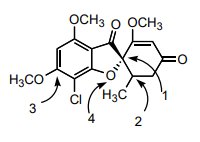
Resonance in Organic Molecules
Resonance occurs when more than one valid Lewis structure can be drawn for a molecule. Resonance stabilizes molecules by delocalizing electrons.
Rules: Do not break single bonds or exceed the octet for second-row elements.
Major contributor: Complete octets, more bonds, minimal charge separation, negative charge on electronegative atoms.
Predicting Molecular Polarity
A molecule is polar if it has a net dipole moment due to uneven electron distribution. Polarity depends on both bond polarity and molecular geometry.
Example: NH3 is polar; CCl4 is nonpolar due to its symmetrical geometry.
Structural Basis for Physical Properties
Intermolecular Forces (IMFs)
IMFs are forces between molecules that influence physical properties such as boiling and melting points.
Type | Present In | Molecular Perspective | Relative Strength |
|---|---|---|---|
Ion-Ion | Ionic compounds | Electrostatic attraction between ions | Strongest |
Hydrogen Bonding | Molecules with N-H, O-H, or F-H | Attraction between H and electronegative atom | Strong |
Dipole-Dipole | Polar molecules | Attraction between permanent dipoles | Moderate |
London Dispersion | All molecules | Temporary dipoles due to electron movement | Weakest |
Stronger IMFs lead to higher boiling and melting points.
Types of Solvents
Solvents are classified by polarity and their ability to participate in hydrogen bonding:
Polar protic: Can hydrogen bond (e.g., water, alcohols).
Polar aprotic: Cannot hydrogen bond but are polar (e.g., acetone, DMSO).
Nonpolar: Low polarity, cannot hydrogen bond (e.g., hexane, toluene).
The dielectric constant (ε) measures a solvent's ability to insulate charges. Higher ε means higher polarity. For example, water has a high dielectric constant and is highly polar, while dichloromethane is less polar.
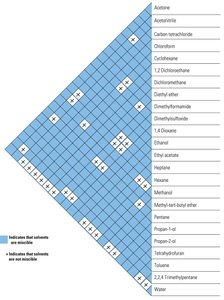
Structural Drawings in Organic Chemistry
Molecular, Empirical, and Line-Angle Formulas
Organic molecules can be represented in several ways:
Molecular formula: Shows the number and type of atoms (e.g., C2H4O).
Empirical formula: Simplest whole-number ratio of atoms (e.g., CH2O for glucose).
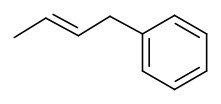
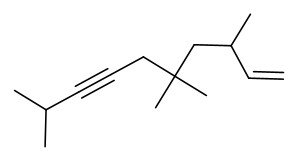
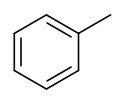
Line-angle (skeletal) formula: Each vertex or line end represents a carbon; hydrogens on carbons are implied; heteroatoms and hydrogens on heteroatoms are shown explicitly.
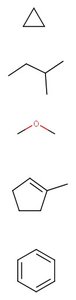
Practice: Converting Formulas and Structures
Students should practice converting between molecular, empirical, and skeletal structures, and vice versa. Multiple skeletal representations may exist for the same molecule due to different drawing conventions.
Adding Lone Pairs and Implied Hydrogens
When interpreting skeletal structures, add lone pairs to heteroatoms and fill in implied hydrogens to ensure each carbon has four bonds. Identify the hybridization of each carbon based on its bonding environment.
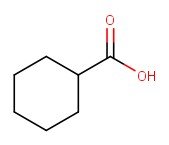
Resonance with Skeletal Structures
Resonance can be depicted in skeletal structures by showing electron delocalization:
Lone pair next to a pi bond
Lone pair next to a carbocation (C+)
Pi bond next to a carbocation
Pi bond between two atoms, one of which is electronegative
Pi bond delocalized around a ring (aromaticity)
Recognizing resonance patterns is essential for understanding reactivity and stability in organic molecules.
Additional info: This guide covers foundational concepts in organic chemistry, including bonding, structure, resonance, polarity, intermolecular forces, solvents, and structural representations. Mastery of these topics is essential for success in subsequent chapters and for understanding organic reactivity and properties.
