 Indietro
Chapter 1: Carbon and Its Compounds – Structure, Bonding, and Representations
Guida di studio - Note intelligenti
 Appunti personalizzati basati sui tuoi materiali, ampliati con definizioni chiave, esempi e contesto.
Carbon and Its Compounds
1.2 Organic Molecules from the Inside Out I: The Modeling of Atoms
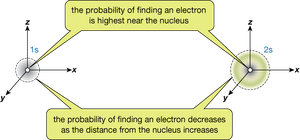
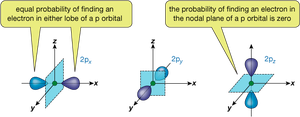
Understanding atomic structure is fundamental to organic chemistry. Atoms are composed of electrons occupying orbitals, which are regions of space with a high probability of finding electrons. The two main types of orbitals relevant to organic chemistry are s and p orbitals.
s orbitals: Spherical in shape, with the highest probability of finding an electron near the nucleus. The probability decreases as the distance from the nucleus increases.
p orbitals: Dumbbell-shaped, with equal probability of finding an electron in either lobe. The nodal plane in the center has zero probability of electron presence. The color of each lobe represents its phase.
Pauli Exclusion Principle
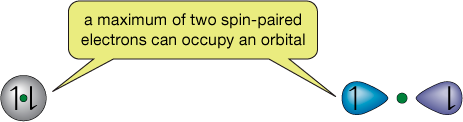
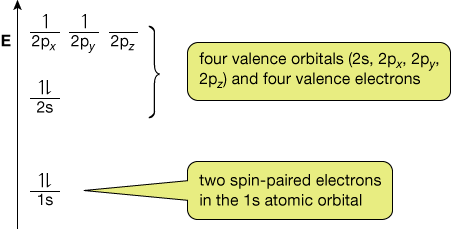
The Pauli Exclusion Principle states that a maximum of two spin-paired electrons can occupy an orbital.
Relative Orbital Energies
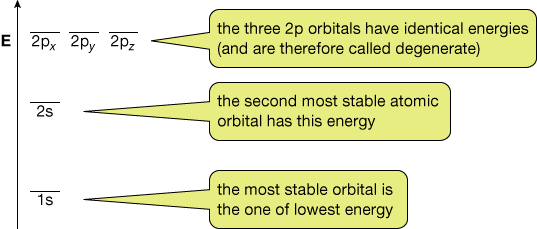
Atomic orbitals have different energies. The 1s orbital is the most stable (lowest energy), followed by 2s, and then the three degenerate 2p orbitals.
Ground-State Electron Configuration for Carbon
Carbon's ground-state electron configuration is 1s2 2s2 2p2. The valence orbitals are the highest energy occupied orbitals, and valence electrons are those found in these orbitals.
1.3 Organic Molecules from the Inside Out II: Bonding
Atoms form bonds to achieve greater stability. The two primary types of bonds in organic chemistry are ionic and covalent bonds.
Ionic bonds: Formed by the transfer of electrons from one atom to another, resulting in electrostatic attraction between oppositely charged ions.
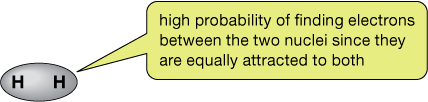
Covalent bonds: Formed by the sharing of electrons between atoms. Each atom usually contributes one electron to the bond, with opposite spins.
1.4 Organic Molecules Represented as Lewis Structures
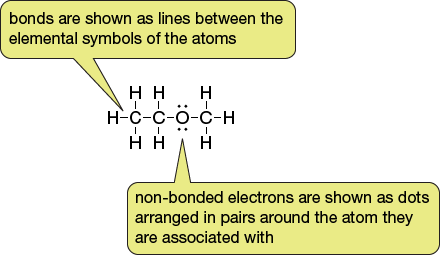
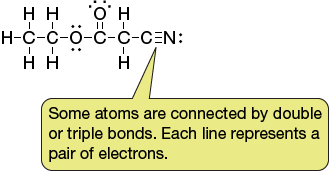
Lewis structures are a visual representation of molecules, showing bonds as lines and non-bonded electrons as pairs of dots around atoms.
Formal Charge
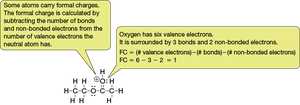
Formal charge is the deficit or excess of electrons on an atom. It is calculated as:
FC = (number of valence electrons) − (number of bonds) − (number of non-bonded electrons)
Formal Charge Method of Drawing Lewis Structures
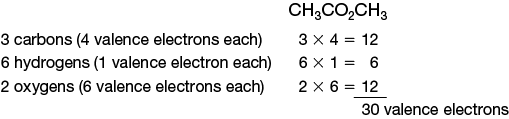
Count the total number of valence electrons in the molecule.
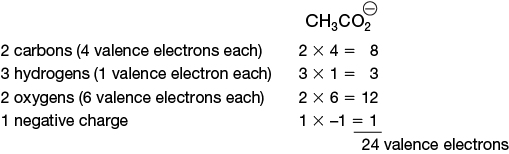
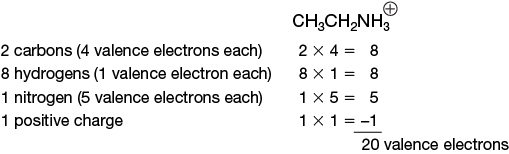
For charged molecules, add one electron for each negative charge and subtract one for each positive charge.
Draw connected atoms using single bonds only (do not exceed four bonds for second-row elements).
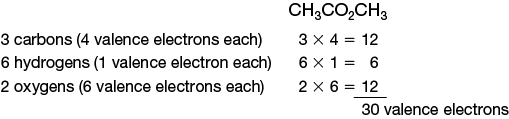
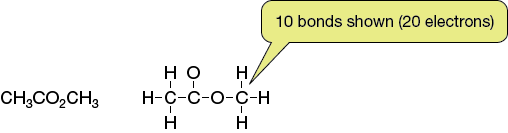
Count the total number of bonds drawn, multiply by 2 to get the total number of bonding electrons, and subtract from the total number of electrons to get the number of non-bonded electrons.
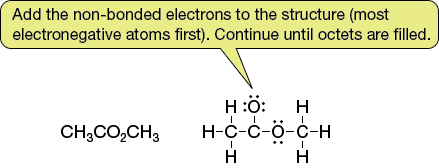
Add non-bonded electrons to the structure, starting with the most electronegative atoms, until octets are filled.
Calculate formal charges for each atom.
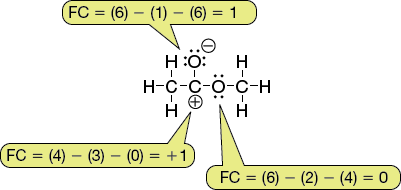
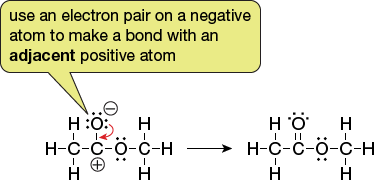
Use electron pairs from negative atoms to make extra bonds with adjacent positive atoms lacking filled octets. Recalculate formal charges and aim for the fewest charges possible.
Exceptions to the Octet Rule
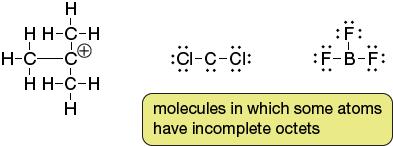
Incomplete octets: Some molecules have atoms with fewer than eight electrons.
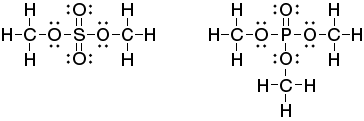
Expanded octets: Elements in the second row and beyond can have more than eight electrons.
1.5 Covalent Bonds: Overlap of Valence Atomic Orbitals
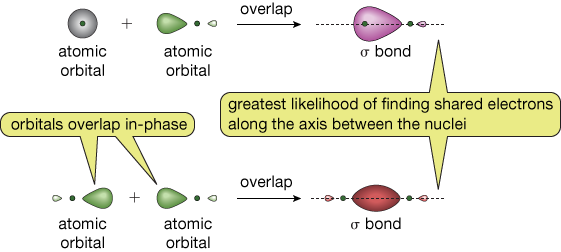
Covalent bonds are formed by the overlap of atomic orbitals. The type of overlap determines the bond type:
Direct (head-on) overlap: Results in a sigma (σ) bond, which is stronger due to greater orbital overlap.
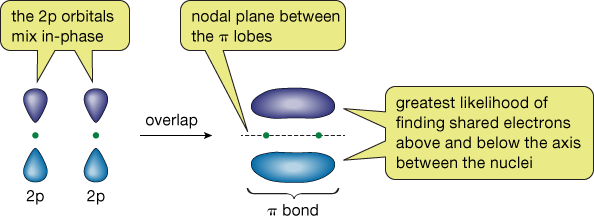
Indirect (side-by-side) overlap: Results in a pi (π) bond, which is weaker than a sigma bond.
1.5.1 Unequal Sharing of Electrons: Electron-rich and Electron-deficient Atoms
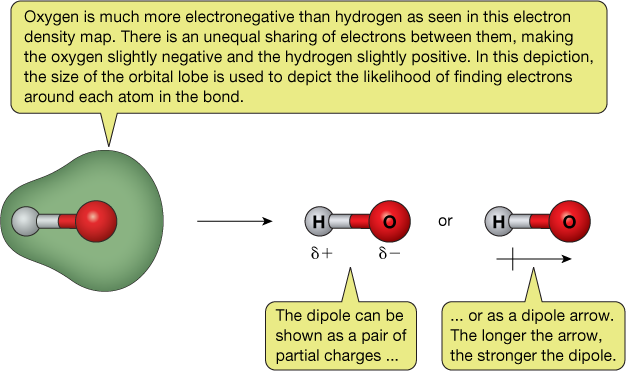
Electronegativity is the ability of an atom to attract electrons in a bond. Differences in electronegativity lead to unequal sharing, resulting in bond dipoles (partial charges).

1.6 The Shapes of Atoms in Organic Molecules
Three-dimensional Distribution of Electrons
The spatial arrangement of atoms in molecules is determined by electron pair repulsion. Common geometries include:
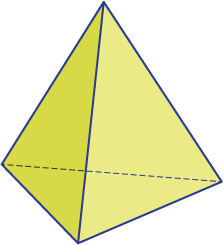
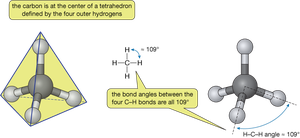
Tetrahedral: Example: Methane (CH4), bond angles 109°.
Trigonal planar: Example: Formaldehyde (CH2O), bond angles 120°.
Linear: Example: Acetylene (C2H2), bond angles 180°.
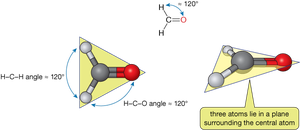
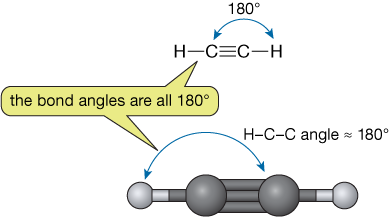
Predicting Shape Using VSEPR Theory
Valence Shell Electron Pair Repulsion (VSEPR) theory predicts molecular shape by minimizing electron pair repulsion. The most stable structure is where electron pairs are as far apart as possible.
1.7 The Valence Bond Approach to Electron Sharing
The valence bond model describes bonds as localized sharing of spin-paired electrons between atoms. Better orbital overlap results in stronger bonds.
Tetrahedral Geometries Require sp3 Hybrid Orbitals
Hybrid orbitals are formed by mixing atomic orbitals to achieve specific bonding geometries. For tetrahedral geometry, one 2s and three 2p orbitals mix to form four sp3 orbitals.
Trigonal Planar Geometries Require sp2 Hybridization
For trigonal planar geometry, one 2s and two 2p orbitals mix to form three sp2 orbitals.
Linear Geometries Require sp Orbitals
For linear geometry, one 2s and one 2p orbital mix to form two sp orbitals.
1.8 Molecular Orbital Approach to Electron Sharing
The molecular orbital approach involves mixing atomic orbitals to form molecular orbitals. Electrons in bonding orbitals stabilize the molecule, while electrons in anti-bonding orbitals destabilize it.
1.9 Other Representations of Organic Molecules
Condensed Structure
Condensed structures list atoms and groups in a compact form. Parentheses indicate attached groups, and common groups have standard abbreviations.
HONC Rule
The HONC rule helps interpret condensed structures by indicating the typical number of bonds for each atom: Hydrogen (1), Oxygen (2), Nitrogen (3), Carbon (4).
Line Structure
Line structures use lines to represent bonds between atoms, omitting carbon symbols and most hydrogens. Heteroatoms are shown, but lone pairs are usually omitted.
Chapter Summary
Covalent bonds in organic molecules can be classified as sigma (σ) or pi (π) bonds.
Bonding in organic molecules is predicted using three models: Lewis model, valence bonding model, and molecular orbital model.
Organic molecules can be represented as Lewis structures, condensed structures, or line structures.
