 Indietro
Chapter 1: Electronic Structure and Bonding in Organic Chemistry
Guida di studio - Note intelligenti
 Appunti personalizzati basati sui tuoi materiali, ampliati con definizioni chiave, esempi e contesto.
Introduction to Electronic Structure and Bonding
Structure of the Atom
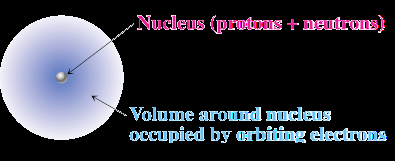
The atom consists of a dense, positively charged nucleus containing protons and neutrons, surrounded by a cloud of negatively charged electrons. The diameter of the atom is approximately 200 picometers (pm), with the nucleus being much smaller than the electron cloud.
Atomic Number (Z): Number of protons in the nucleus.
Mass Number (A): Sum of protons and neutrons.
Isotopes: Atoms of the same element with different numbers of neutrons.
Atomic Mass: Weighted average mass of naturally occurring isotopes.
Quantum Numbers and Atomic Orbitals
Electrons occupy atomic orbitals defined by four quantum numbers, which describe their energy, shape, orientation, and spin. No two electrons in an atom can have the same set of four quantum numbers (Pauli exclusion principle).
Principal quantum number (n): Indicates energy level and size.
Angular momentum quantum number (l): Defines orbital shape (s, p, d, f).
Magnetic quantum number (ml): Specifies orbital orientation.
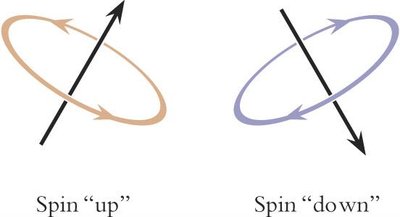
Electron spin quantum number (ms): Describes electron spin direction.
Types of Atomic Orbitals
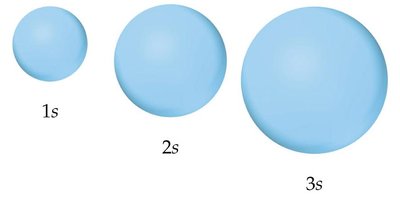
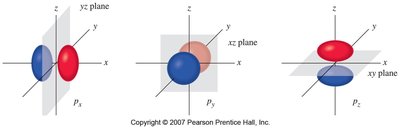
Atomic orbitals differ in size, shape, and orientation. The s-orbitals are spherical, p-orbitals are dumbbell-shaped, and d-orbitals have more complex shapes.
s-orbitals: Spherical, number of nodes = n - 1.
p-orbitals: Three orientations (px, py, pz), each with a node at the nucleus.
d-orbitals: Five orientations, four lobes each (except one with two lobes and a collar).
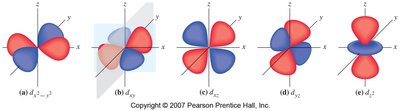
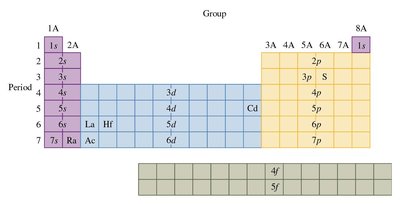
Electron Configuration and the Periodic Table
Electrons fill orbitals from lowest to highest energy (Aufbau principle). The periodic table reflects the order of orbital filling and the arrangement of elements by their electron configurations.
Pauli exclusion principle: Only two electrons per orbital, with opposite spins.
Hund's rule: Electrons fill degenerate orbitals singly before pairing.
Bonding in Molecules
Ionic and Covalent Bonds
Bonds form because molecules are more stable than separated atoms. Atoms achieve filled valence shells by sharing (covalent) or transferring (ionic) electrons.
Ionic bonds: Electrostatic attraction between cations and anions, formed by electron transfer (usually metal with non-metal).
Covalent bonds: Electrons shared between atoms, usually between non-metals.
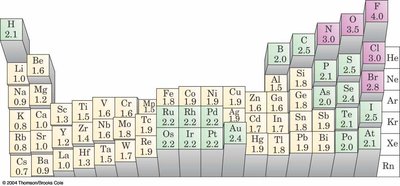
Polar covalent bonds: Unequal sharing of electrons, resulting in partial charges.
Electronegativity and Dipole Moments
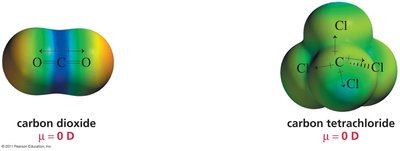
Electronegativity is the ability of an atom to attract electrons. Differences in electronegativity lead to bond polarity and dipole moments, which measure the separation of charge in a molecule.
Inductive effect: Shifting of electrons in response to electronegativity.
Dipole moment (μ): Calculated as (charge × distance).
Lewis Structures and the Octet Rule
Lewis Structures and VSEPR Theory
Lewis structures show bonding and lone pairs. The Valence Shell Electron Pair Repulsion (VSEPR) theory predicts molecular shapes based on electron pair repulsion.
Octet rule: Atoms (except hydrogen) strive for eight electrons in their valence shell.
VSEPR: Electron pairs (bonding and lone pairs) arrange to minimize repulsion.
Drawing Lewis Structures
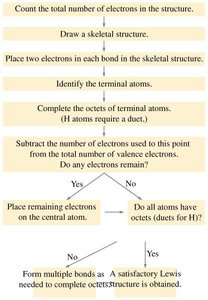
To draw a Lewis structure:
Count total valence electrons.
Draw skeletal structure, connecting atoms with single bonds.
Complete octets for terminal atoms, then central atoms.
Form multiple bonds if necessary to satisfy octet rule.
Formal Charges and Bond Numbers
Formal charge helps identify the most stable Lewis structure. It is calculated as:
Formal charge = number of valence electrons – (number of lone pair electrons + 1/2 number of bonding electrons)

Hybridization and Molecular Geometry
Hybrid Orbitals
Hybridization explains molecular geometry by combining atomic orbitals to form new hybrid orbitals. The type of hybridization depends on the number of electron groups:
sp: 2 electron groups, linear geometry, 180° bond angle.
sp2: 3 electron groups, trigonal planar geometry, 120° bond angle.
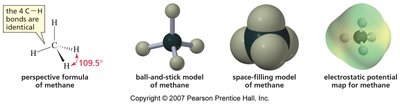
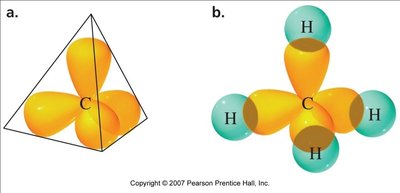
sp3: 4 electron groups, tetrahedral geometry, 109.5° bond angle.
Examples of Hybridization
Methane (CH4): Carbon is sp3 hybridized, forming four identical tetrahedral bonds.
Ethene (C2H4): Carbon is sp2 hybridized, forming a trigonal planar structure.
Acetylene (C2H2): Carbon is sp hybridized, forming a linear structure.
Resonance and Delocalized Electrons
Resonance Structures
Resonance occurs when more than one valid Lewis structure can be drawn for a molecule or ion, differing only in the placement of electrons. The actual structure is a resonance hybrid, which is more stable than any individual contributor.
Resonance contributors: Individual Lewis structures.
Resonance hybrid: Composite of all contributors.
Delocalized electrons: Electrons shared among multiple atoms, increasing stability.
Rules of Resonance
Resonance structures differ only in the placement of π-electrons and lone pairs.
Do not break σ bonds.
Structures with complete octets and minimal charge separation are most stable.
All resonance contributors must have the same net charge.
The greater the number and equivalence of stable contributors, the greater the resonance energy.
Summary of Key Concepts
Atomic number, mass number, isotopes, and atomic mass are fundamental to understanding elements.
Electron configuration and orbital theory explain chemical bonding.
Lewis structures and VSEPR theory predict molecular shapes and bonding.
Hybridization is essential for explaining molecular geometry.
Resonance and delocalized electrons contribute to molecular stability.
