 Indietro
Chapter 1: The Basics of Bonding and Molecular Structure in Organic Chemistry
Guida di studio - Note intelligenti
 Appunti personalizzati basati sui tuoi materiali, ampliati con definizioni chiave, esempi e contesto.
Bonding and Molecular Structure
Introduction to Organic Chemistry
Organic chemistry is the study of carbon compounds, which are fundamental to life and industry. While carbon is the principal element, organic compounds often contain hydrogen, nitrogen, oxygen, phosphorus, sulfur, chlorine, and other elements. Most natural substances—such as food, medicine, clothing, and energy sources—are organic, and chemists have synthesized millions of organic compounds not found in nature, including plastics and pharmaceuticals.
Atomic Structure and Elements
Atoms are the basic units of elements, consisting of a positively charged nucleus (protons and neutrons) surrounded by negatively charged electrons. The atomic number (Z) distinguishes each element and equals the number of protons in the nucleus.
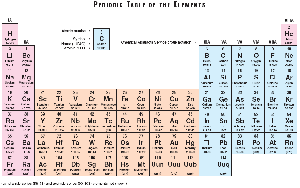
The periodic table organizes elements by their atomic number and properties, which is essential for understanding their behavior in organic compounds.
Isotopes
Isotopes are atoms of the same element with different numbers of neutrons, resulting in different masses. For example:
Carbon Isotopes: 12C (6 protons, 6 neutrons), 13C (6 protons, 7 neutrons), 14C (6 protons, 8 neutrons)
Hydrogen Isotopes: Hydrogen (1H, 1 proton, 0 neutrons), Deuterium (2H, 1 proton, 1 neutron), Tritium (3H, 1 proton, 2 neutrons)
Valence Electrons and Chemical Bonding
Electrons occupy shells of increasing energy around the nucleus. The valence shell is the outermost shell, and its electrons (valence electrons) are involved in chemical bonding. The number of valence electrons corresponds to the group number in the periodic table:
Carbon (Group IVA): 4 valence electrons
Nitrogen (Group VA): 5 valence electrons
Halogens (Group VIIA): 7 valence electrons
The Structural Theory of Organic Chemistry
Elements form a characteristic number of covalent bonds:
Carbon: Tetravalent (forms 4 bonds)
Oxygen: Divalent (forms 2 bonds)
Hydrogen and Halogens: Monovalent (forms 1 bond)
Structures with more than 4 bonds on carbon or unusual bonding patterns require charges to be assigned to atoms.
Isomers and Structural Formulas
Isomers are compounds with the same molecular formula but different structures. Constitutional isomers differ in connectivity and usually have distinct physical and chemical properties.
The Tetrahedral Shape of Methane
Methane (CH4) is a classic example of a tetrahedral molecule, with bond angles of approximately 109.5° due to sp3 hybridization.
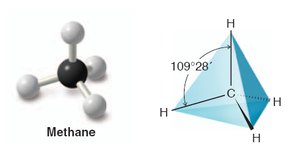
This geometry is fundamental to understanding the three-dimensional structure of organic molecules.
Chemical Bonds and the Octet Rule
Atoms form bonds to achieve a stable configuration of 8 valence electrons (the octet rule):
Ionic bonds: Formed by electron transfer, creating ions
Covalent bonds: Formed by electron sharing
Electron configurations of noble gases serve as reference points for stability.
Electronegativity
Electronegativity (EN) is an atom's ability to attract shared electrons in a covalent bond. Fluorine is the most electronegative (EN = 4.0), while cesium is the least (EN = 0.7).
Lewis Structures
Lewis structures represent the connections between atoms using valence electrons. For ions, adjust the electron count for charges. The goal is to give each atom a noble gas configuration.
Exceptions to the Octet Rule
Second-row elements (Li, Be, B, C, N, O, F) usually obey the octet rule, but third-row elements may use d orbitals and exceed the octet.
Formal Charges
Formal charge is calculated as:
Z = group number
S = number of shared electrons
U = number of unshared electrons
The sum of formal charges equals the overall charge of the molecule or ion.
Resonance Theory
Some molecules cannot be represented by a single Lewis structure. Resonance structures are multiple valid Lewis structures connected by double-headed arrows. The actual molecule is a hybrid of these structures, which stabilizes the molecule (resonance stabilization).
Quantum Mechanics and Atomic Structure
Quantum mechanics describes electrons as wave functions, which determine their energy and probability distribution. Constructive and destructive interference of wave functions explains bonding and antibonding interactions.
Atomic Orbitals and Electron Configuration
Electrons fill atomic orbitals according to:
Aufbau principle: Fill lowest energy orbitals first
Pauli exclusion principle: Maximum two electrons per orbital, paired spins
Hund’s rule: Add electrons singly to degenerate orbitals before pairing
Molecular Orbitals
Atomic orbitals combine to form molecular orbitals (MOs):
Bonding MO: Overlap of same phase orbitals
Antibonding MO: Overlap of opposite phase orbitals
Hybridization and Molecular Geometry
Hybridization explains molecular shapes:
sp3: Tetrahedral (methane)
sp2: Trigonal planar (ethene)
sp: Linear (ethyne)
Hybrid orbitals mix s and p orbitals from the same atom.
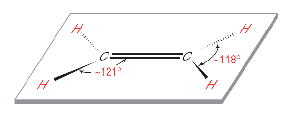
Ethene (C2H4) is planar with bond angles close to 120°, characteristic of sp2 hybridization.
Valence Shell Electron Pair Repulsion (VSEPR) Model
The VSEPR model predicts molecular geometry by considering repulsions between electron pairs (bonding and nonbonding) around the central atom. The shape is described by the positions of the nuclei.
Structural Formulas in Organic Chemistry
Organic molecules can be represented in several ways:
Dash structural formulas: Show all bonds
Condensed structural formulas: Group atoms
Bond-line formulas: Simplified lines for bonds
Three-dimensional formulas: Indicate spatial arrangement
These representations help visualize and interpret molecular structure and reactivity.
