 Indietro
Comprehensive Study Notes: Alkynes – Structure, Properties, Synthesis, and Reactions
Guida di studio - Note intelligenti
 Appunti personalizzati basati sui tuoi materiali, ampliati con definizioni chiave, esempi e contesto.
Chapter 9: Alkynes
Introduction to Alkynes
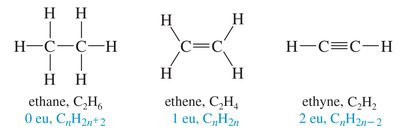
Alkynes are hydrocarbons characterized by the presence of a carbon-carbon triple bond. Their general formula is CnH2n–2, indicating two elements of unsaturation for each triple bond. Alkynes are also known as acetylenes, as they are derivatives of acetylene, the simplest alkyne.
Structure: Alkynes contain a linear arrangement due to sp-hybridization of the triple-bonded carbons.
Unsaturation: Each triple bond adds two elements of unsaturation.
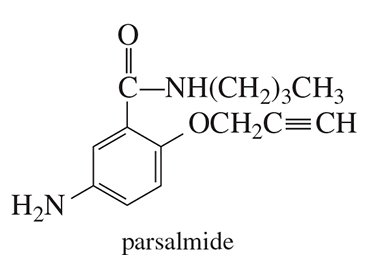
Examples: Ethyne (acetylene), ethylacetylene, dimethylacetylene.

Nomenclature of Alkynes
The IUPAC system is used to name alkynes. The longest chain containing the triple bond is identified, and the suffix -yne replaces -ane. Numbering starts from the end closest to the triple bond, and substituents are assigned locants accordingly.
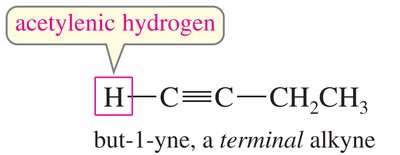
Terminal Alkynes: Alkynes with a triple bond at the end of the chain, possessing an acetylenic hydrogen.
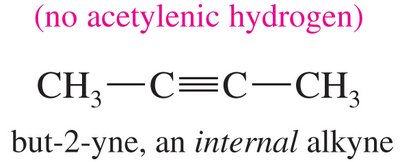
Internal Alkynes: Alkynes with the triple bond within the chain, lacking acetylenic hydrogen.
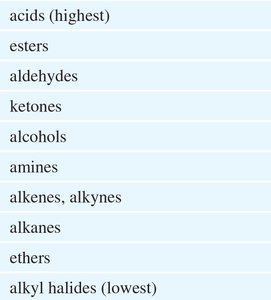
Functional Group Priority: All functional groups except ethers and halides have higher priority than alkynes.
Physical Properties of Alkynes
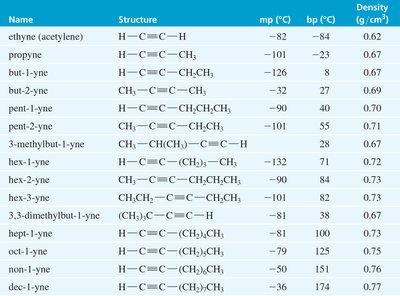
Alkynes are nonpolar, insoluble in water, but soluble in most organic solvents. Their boiling points are similar to alkanes of comparable size, and they are less dense than water. Acetylene is the most industrially significant alkyne.
Boiling Points: Comparable to alkanes of similar molecular weight.
Solubility: Insoluble in water, soluble in organic solvents.
Industrial Use: Acetylene is used extensively in industry.
Electronic Structure and Bonding in Alkynes
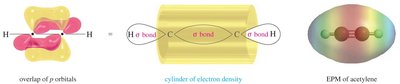
Triple-bonded carbons in alkynes are sp-hybridized, resulting in a linear geometry. The triple bond consists of one sigma bond and two pi bonds formed by the overlap of unhybridized p orbitals.
Bonding: Sigma bond from sp orbital overlap; pi bonds from p orbital overlap.
Geometry: Linear due to sp hybridization.

Bond Lengths in Hydrocarbons
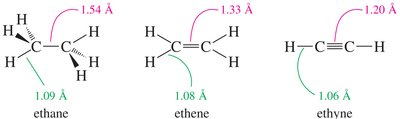
Bond lengths decrease with increasing bond order. Alkynes have the shortest C–C bond due to the triple bond, followed by alkenes (double bond) and alkanes (single bond).
Alkane (C–C): 1.54 Å
Alkene (C=C): 1.33 Å
Alkyne (C≡C): 1.20 Å
Acidity of Hydrocarbons
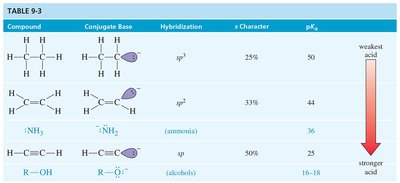
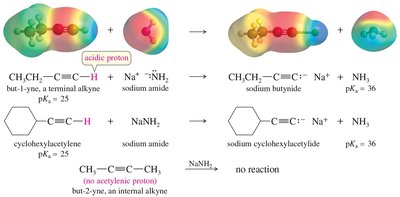
Terminal alkynes are more acidic than other hydrocarbons due to the higher s character of the sp hybridized carbon. They can be deprotonated quantitatively with strong bases such as sodium amide (NaNH2), but not with hydroxide or alkoxide bases.
Acidity Order: Alkynes > Alkenes > Alkanes
pKa Values: Terminal alkynes (~25), ammonia (~36), alkenes (~44), alkanes (~50)
Deprotonation: Only terminal alkynes can be deprotonated by strong bases.
Synthesis of Alkynes
Synthesis from Acetylides
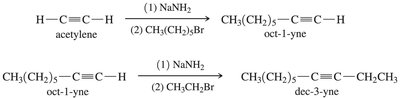
The acetylide ion, formed by deprotonation of terminal alkynes, is a strong base and nucleophile. It can undergo nucleophilic substitution (SN2) with alkyl halides to form substituted alkynes. If SN2 is not possible, elimination (E2) occurs.
Alkylation: Acetylide ions react with alkyl halides to extend the carbon chain.
Example: Synthesis of oct-1-yne and dec-3-yne from acetylene.

Addition to Carbonyl Compounds
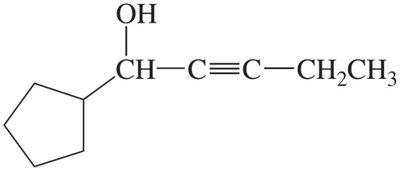
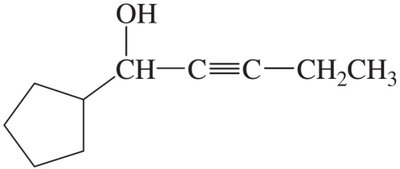
Acetylide ions can add to carbonyl compounds (aldehydes and ketones), forming alkoxide ions that, upon protonation, yield alcohols. Addition to aldehydes produces secondary alcohols, while addition to ketones yields tertiary alcohols.
Mechanism: Nucleophilic attack on carbonyl carbon, followed by protonation.
Example: Synthesis of a secondary alcohol from acetylene and an aldehyde.



Synthesis by Elimination Reactions
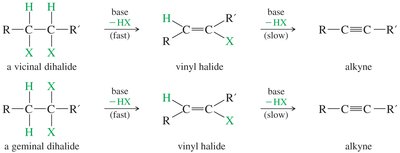
Alkynes can be synthesized by elimination of two molecules of HX from vicinal or geminal dihalides. Dehydrohalogenation under strongly basic conditions forms alkynes, with the product depending on the base and reaction conditions.
Internal Alkynes: Favored by molten or alcoholic KOH at 200°C.
Terminal Alkynes: Favored by sodium amide (NaNH2) at 150°C, followed by water.


Addition Reactions of Alkynes
Catalytic Hydrogenation
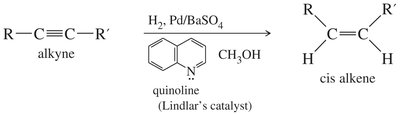
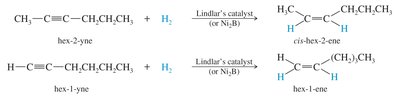
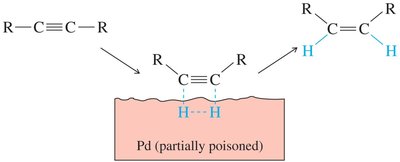
Alkynes can be hydrogenated to alkanes using metal catalysts. Partial hydrogenation to cis alkenes is achieved using Lindlar's catalyst (Pd/BaSO4 poisoned with quinoline).
Complete Hydrogenation: Converts alkyne to alkane.
Partial Hydrogenation: Lindlar's catalyst yields cis alkenes via syn addition.
Reduction with Metal-Ammonia
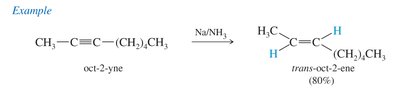
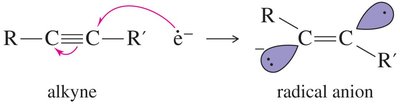
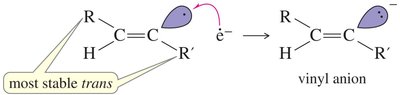
Reduction of alkynes with sodium in liquid ammonia produces trans alkenes via anti addition. The mechanism involves electron transfer, formation of radical anion, protonation, and further electron transfer.
Trans Alkenes: Produced by anti addition of hydrogen.
Mechanism: Electron transfer, radical formation, protonation.



Addition of Halogens
Cl2 and Br2 add to alkynes to form vinyl dihalides, which may be mixtures of cis and trans isomers. Two moles of halogen can add to form tetrahalides.
Vinyl Dihalides: Formed by addition of one mole of halogen.
Tetrahalides: Formed by addition of two moles.
Addition of Hydrogen Halides
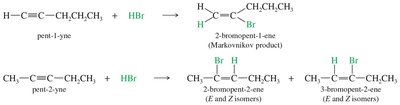
Hydrogen halides (HCl, HBr, HI) add to alkynes to form vinyl halides. Addition of two moles produces geminal dihalides. The addition follows Markovnikov's rule, with anti-Markovnikov addition possible for HBr in the presence of peroxides.
Markovnikov Addition: Halide attaches to the more substituted carbon.
Anti-Markovnikov Addition: Achieved with peroxides for HBr.



Hydration of Alkynes
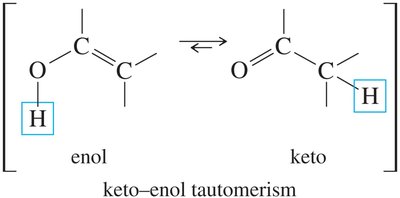
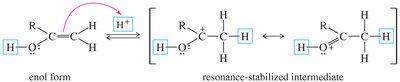
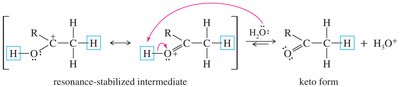
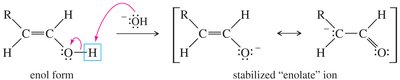
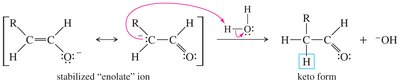
Hydration of alkynes with mercuric sulfate in aqueous sulfuric acid adds water across the triple bond in a Markovnikov orientation, forming a vinyl alcohol (enol) that tautomerizes to a ketone or aldehyde. Hydroboration–oxidation provides anti-Markovnikov hydration, yielding aldehydes from terminal alkynes.
Mercuric Ion Catalysis: Markovnikov addition, enol intermediate, tautomerization to ketone.
Hydroboration–Oxidation: Anti-Markovnikov addition, enol intermediate, tautomerization to aldehyde.
Keto–Enol Tautomerism: Enols are unstable and convert to ketones or aldehydes.




Oxidation Reactions of Alkynes
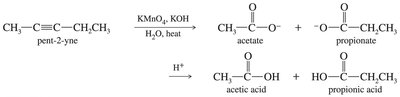
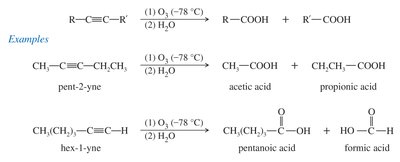
Alkynes can be oxidized to diketones or carboxylic acids. Permanganate oxidation under neutral conditions forms diketones, while under basic conditions and heat, carboxylic acids are produced. Ozonolysis also cleaves alkynes to carboxylic acids.
Permanganate Oxidation: Dilute KMnO4 forms diketones; concentrated KMnO4 forms carboxylic acids.
Ozonolysis: Cleaves triple bond to yield carboxylic acids.

Summary of Alkyne Reactions
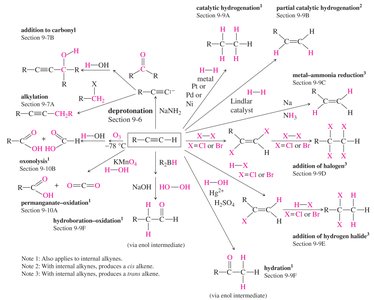
Terminal alkynes undergo a variety of reactions, including deprotonation, alkylation, addition to carbonyls, catalytic hydrogenation, metal-ammonia reduction, addition of halogens and hydrogen halides, hydration, hydroboration–oxidation, permanganate oxidation, and ozonolysis.
Practice and Applications
Retrosynthetic Analysis and Multistep Synthesis
Alkynes are valuable intermediates in organic synthesis. Retrosynthetic analysis allows for the design of multistep syntheses using alkynes as reagents, intermediates, or products.
Predicting Reaction Products
Alkynes react with various reagents to yield predictable products based on the reaction type, regiochemistry, and stereochemistry.
Functional Group Interconversion
Alkynes can be converted to aldehydes via hydration or hydroboration–oxidation. Nucleophilic reagents such as ethoxide add more easily to alkynes than to alkenes due to the higher s character and acidity of the terminal alkyne hydrogen.


Key Equations and Mechanisms
General Formula for Alkynes:
Bond Lengths:
Acidity Order:
Alkylation of Acetylide Ion:
Hydration of Alkynes:
Hydroboration–Oxidation:
Permanganate Oxidation:
Ozonolysis:
Conclusion
Alkynes are versatile organic compounds with unique structural, physical, and chemical properties. Their reactivity, especially in synthesis and addition reactions, makes them essential intermediates in organic chemistry. Understanding their nomenclature, acidity, synthesis, and reaction mechanisms is crucial for mastering organic chemistry at the college level.
