 Indietro
Ethers, Epoxides, and Thioethers: Structure, Properties, Synthesis, and Reactions
Guida di studio - Note intelligenti
 Appunti personalizzati basati sui tuoi materiali, ampliati con definizioni chiave, esempi e contesto.
Ethers, Epoxides, and Thioethers
Introduction to Ethers
Ethers are organic compounds with the general formula R–O–R', where R and R' can be alkyl or aryl groups. Ethers are structurally related to alcohols and water, but both hydrogens of water are replaced by organic groups in ethers. Ethers can be symmetrical (R = R') or unsymmetrical (R ≠ R').
Symmetrical Ether Example: Diethyl ether (CH3CH2–O–CH2CH3)
Unsymmetrical Ether Example: Methyl phenyl ether (CH3–O–C6H5)
Cyclic Ether Example: Tetrahydrofuran (THF)
Ethers are commonly used as solvents in organic chemistry due to their stability and ability to dissolve a wide range of substances.
Physical Properties of Ethers
Structure and Polarity
Ethers have a bent structure due to the sp3 hybridization of oxygen, resulting in a bond angle close to tetrahedral. The dipole moment arises from two polar C–O bonds and lone pairs on oxygen, making ethers strongly polar.
Dipole Moment: Ethers have significant dipole moments, but lack the O–H group found in alcohols.
Boiling Points: Ethers have lower boiling points than alcohols of similar molecular weight due to the absence of hydrogen bonding.
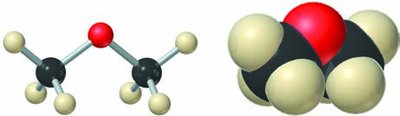
Hydrogen Bonding
Ethers cannot form hydrogen bonds with themselves, but can act as hydrogen bond acceptors with compounds containing O–H or N–H groups. This makes ethers more volatile than alcohols.
Ethers as Polar Solvents
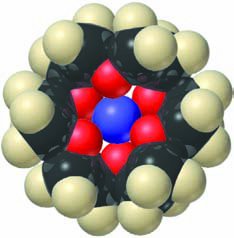
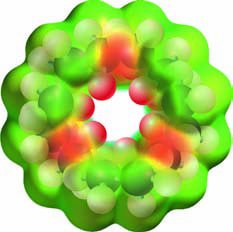
Ethers are excellent solvents for both polar and nonpolar substances. They solvate cations effectively due to lone pairs on oxygen, but do not solvate anions as well as alcohols.
Solvation: Ethers solvate cations (e.g., Li+) but not anions (e.g., F–) efficiently.

Nomenclature of Ethers
Common Names
Common names are formed by naming the two alkyl groups in alphabetical order followed by "ether." For example, "ethyl methyl ether."
IUPAC Names
IUPAC names use the more complex alkyl group as the root and the other as an alkoxy substituent. For example, "methoxycyclohexane."
Nomenclature of Cyclic Ethers
Cyclic ethers are heterocyclic compounds with oxygen as a ring atom. Epoxides (oxiranes) are three-membered cyclic ethers, oxetanes are four-membered, furans (oxolanes) are five-membered, and pyrans (oxanes) are six-membered.
Spectroscopy of Ethers
Infrared Spectroscopy
Ethers show moderate to strong C–O stretches around 1000–1200 cm–1 in the IR spectrum. The absence of O–H and C=O stretches can help identify ethers.
Mass Spectrometry
Ethers commonly undergo α-cleavage next to the oxygen atom, forming resonance-stabilized oxonium ions.
NMR Spectroscopy
Carbons bonded to oxygen absorb between δ 65–90 in 13C NMR; protons on these carbons absorb at δ 3.5–4 in 1H NMR.

Synthesis of Ethers
Williamson Ether Synthesis
The most versatile method for ether synthesis is the SN2 reaction of an alkoxide ion with a primary alkyl halide or tosylate.
Equation:
Limitations: Secondary and tertiary alkyl halides often lead to elimination rather than substitution.
Alkoxymercuration–Demercuration
Adds an alcohol across an alkene to form an ether, following Markovnikov's rule.
Equation:
Bimolecular Condensation of Alcohols
Acid-catalyzed condensation of two primary alcohols forms symmetrical ethers. This method is limited to unhindered alcohols and is mainly used industrially.
Equation:
Reactions of Ethers
Cleavage by HBr and HI
Ethers are cleaved by strong acids (HBr, HI) to form alkyl halides. The reaction proceeds via protonation of the ether, followed by nucleophilic substitution.
Equation:
Autoxidation
Ethers can undergo autoxidation in air to form hydroperoxides and dialkyl peroxides, which are explosive. Proper storage and handling are essential.
Thioethers (Sulfides) and Silyl Ethers
Thioethers (Sulfides)
Thioethers are analogs of ethers with sulfur replacing oxygen. They are synthesized via the Williamson method using thiolate ions and are more nucleophilic than ethers.
Oxidation: Thioethers can be oxidized to sulfoxides and sulfones.
Silyl Ethers
Silyl ethers are used as protecting groups for alcohols. They are formed by reacting alcohols with chlorosilanes and are easily removed by fluoride ions.
Example: Triisopropylsilyl (TIPS) ether

Epoxides: Synthesis and Reactions
Synthesis of Epoxides
Peroxyacid Epoxidation: Alkenes are oxidized by peroxyacids (e.g., mCPBA) to form epoxides in a stereospecific, concerted reaction.
Base-Promoted Cyclization of Halohydrins: Halohydrins treated with base undergo intramolecular SN2 to form epoxides.
Ring Opening of Epoxides
Acid-Catalyzed Opening: Epoxides react with acids to form glycols or alkoxy alcohols, with nucleophilic attack at the more substituted carbon.
Base-Catalyzed Opening: Strong nucleophiles attack the less hindered carbon, forming products with anti stereochemistry.
Organometallic Reagents: Grignard and organolithium reagents open epoxides to form alcohols.
Epoxy Resins
Epoxy resins are polymers formed from bisphenol A and epichlorohydrin. They are used as adhesives and coatings due to their strength, gap-filling ability, and resistance to water.

Summary Table: Properties of Ethers
Compound | Formula | MW | Boiling Point (°C) | Dipole Moment (D) |
|---|---|---|---|---|
Water | H2O | 18 | 100 | 1.9 |
Ethanol | CH3CH2OH | 46 | 78 | 1.7 |
Dimethyl ether | CH3OCH3 | 46 | -25 | 1.3 |
Propane | CH3CH2CH3 | 44 | -42 | 0.1 |
Tetrahydrofuran | THF | 72 | 66 | 1.6 |
Diethyl ether | CH3CH2OCH2CH3 | 74 | 35 | 1.2 |
Pentane | CH3CH2CH2CH2CH3 | 72 | 36 | 0.1 |
Essential Terms
Ether: Compound with two alkyl/aryl groups bonded to oxygen.
Epoxide: Three-membered cyclic ether (oxirane).
Thioether: Ether analog with sulfur replacing oxygen.
Silyl Ether: Ether with silicon substituent, used as protecting group.
Williamson Ether Synthesis: SN2 reaction of alkoxide with alkyl halide.
Autoxidation: Spontaneous oxidation by atmospheric oxygen.
Crown Ether: Large cyclic polyether that complexes cations.
Additional info: This summary expands on the original notes with academic context, definitions, and examples to ensure completeness and clarity for exam preparation.
