 Indietro
Foundations of Organic Chemistry: Structure, Bonding, and Resonance
Guida di studio - Note intelligenti
 Appunti personalizzati basati sui tuoi materiali, ampliati con definizioni chiave, esempi e contesto.
Introduction to Organic Chemistry
What is Organic Chemistry?
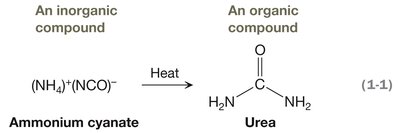
Organic chemistry is the branch of chemistry that studies the structure, properties, and reactions of organic compounds and materials. Historically, organic compounds were defined as those derived from living organisms, while inorganic compounds came from non-living sources. The vitalism hypothesis posited that a 'vital force' unique to living things was necessary to create organic compounds. This idea was eventually disproven by key experiments in the 19th century.
Vitalism Hypothesis: Suggested a 'vital spark' was needed for organic compounds.
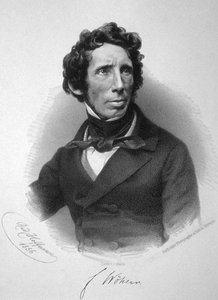
Disproven by Synthesis: Friedrich Wöhler's synthesis of urea from inorganic ammonium cyanate in 1828 marked the birth of modern organic chemistry.
Development of Organic Chemistry
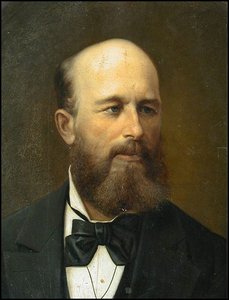
After the fall of vitalism, chemists sought to systematize and characterize organic compounds. Early theories included the Radical Theory and the Theory of Types, which introduced concepts such as radicals and valence, but could not fully explain molecular structure or isomerism. The breakthrough came with Alexander Butlerov's Theory of Chemical Structure.
Butlerov’s Theory of Chemical Structure
Butlerov's theory established that:
Atoms in a molecule are connected in specific ways according to their valences.
The properties of a compound depend on both the types of atoms present and their connectivity (structure determines properties).
Isomerism can be explained by different atomic arrangements with the same composition.
Atoms and groups within a molecule influence each other, anticipating concepts like inductive and resonance effects.
This theory allowed for the prediction and discovery of new compounds and laid the foundation for stereochemistry and atomic structure theory.
Definition of Organic Compounds
An organic compound is primarily composed of carbon and hydrogen. Carbon's unique ability to form four covalent bonds and create chains or rings of various lengths and complexities underpins the vast diversity of organic molecules.
Carbon forms stable bonds with itself and other elements, leading to millions of known organic compounds.

Lewis Structures and Covalent Bonding
Steps to Drawing a Lewis Structure
Lewis structures are a way to represent the bonding and lone pairs of electrons in molecules. The steps are:
Count the total number of valence electrons (adjust for charges).
Write the skeletal structure, connecting atoms with single bonds.
Subtract two electrons for each bond drawn.
Distribute remaining electrons as lone pairs, starting with outer atoms.
If any atom lacks a filled valence shell, convert lone pairs to bonding pairs to form double or triple bonds as needed.

Exceptions to the Octet Rule
Some molecules do not follow the octet rule:
Incomplete Octet: Atoms like boron in BH3 have fewer than 8 electrons.
Expanded Octet: Atoms like sulfur in SOCl2 can have more than 8 electrons.

Common Covalent Bonds and Lone Pairs
Atom | Number of Bonds | Number of Lone Pairs | Examples |
|---|---|---|---|
H | 1 | 0 | H– |
C | 4 | 0 | –C–, C=C, C≡C |
N | 3 | 1 | –N–, N≡N |
O | 2 | 2 | –O–, O=O |
X (F, Cl, Br, I) | 1 | 3 | –F, –Cl, –Br, –I |
Ne | 0 | 4 | Ne: |

Atomic Structure and Bonding
Atomic Orbitals and the Wave Nature of Electrons
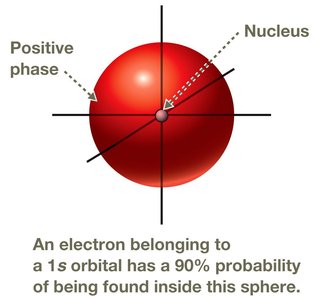
Electrons exhibit both particle and wave properties. The probability of finding an electron in a region is called electron density. The Heisenberg uncertainty principle states that the position and momentum of an electron cannot both be precisely known at the same time.

Atomic Orbital Phases and Interference
The phase of an orbital affects how orbitals interact. When orbitals of the same phase overlap, constructive interference occurs, forming a bonding molecular orbital (MO). When opposite phases overlap, destructive interference occurs, forming an antibonding MO.



2p Orbitals and Their Orientation
The 2p orbital has two lobes with opposite phases and zero electron density at the nucleus. There are three perpendicular 2p orbitals (2px, 2py, 2pz), each with a specific orientation in space.

Molecular Orbital Theory
Molecular orbital (MO) theory describes electrons in molecules as occupying molecular orbitals formed from the combination of atomic orbitals (AOs). For example, in H2, two 1s AOs combine to form one bonding and one antibonding MO.


Hybridization and Molecular Geometry
Hybridization explains the common geometries found in organic molecules:
sp3 hybridization: Tetrahedral geometry (109.5° bond angles), as in methane (CH4).
sp2 hybridization: Trigonal planar geometry (120° bond angles), as in ethene (C2H4).
sp hybridization: Linear geometry (180° bond angles), as in ethyne (C2H2).
Hybrid orbitals are formed by mixing s and p orbitals from the same atom.
Chemical Bonds: Covalent and Ionic
Classification of Chemical Bonds
Chemical bonds are lasting attractions that enable the formation of compounds. The main types are:
Covalent bonds: Sharing of valence electrons between atoms. Can be nonpolar (equal sharing) or polar (unequal sharing).
Ionic bonds: Electrostatic attraction between oppositely charged ions, formed by electron transfer.
Electronegativity and Bond Polarity
Electronegativity (EN) is an atom's ability to attract electrons in a bond. The Pauling scale is commonly used (range: 0–4). The difference in EN between atoms determines bond polarity:
Nonpolar covalent bond: EN difference ≈ 0 (e.g., C–C, H–H)
Polar covalent bond: Moderate EN difference (e.g., H–Cl)
Ionic bond: Large EN difference (e.g., Na–Cl)
Bond Energy and Bond Length
Single, double, and triple bonds differ in the number of shared electrons:
Single bond: 2 electrons shared
Double bond: 4 electrons shared
Triple bond: 6 electrons shared
As bond order increases, bond strength increases and bond length decreases.
Resonance Theory
Resonance in Organic Molecules
Some molecules cannot be adequately described by a single Lewis structure. Resonance theory accounts for electron delocalization by representing the molecule as a resonance hybrid of multiple valid structures.
Resonance structures differ only in the arrangement of electrons, not atoms.
The true structure is a weighted average (hybrid) of all valid resonance forms.
Resonance stabilization is greatest when resonance forms are equivalent and when more resonance structures are possible.
Rules for Resonance Structures
Resonance occurs when two or more valid Lewis structures can be drawn.
Resonance structures are imaginary; the real molecule is the resonance hybrid.
The resonance hybrid resembles the lowest-energy (most stable) resonance structure most closely.
Stability increases with more filled valence shells, more covalent bonds, and fewer formal charges.
Resonance provides stabilization by delocalizing electrons.
Greater number of resonance structures leads to greater stabilization.
Summary and Conclusions
Lewis structures, electronegativity, formal charges, and resonance structures are essential for understanding organic molecules.
Quantum mechanics describes electrons as waves; molecular orbitals result from constructive and destructive interference of atomic orbitals.
Hybridization explains molecular geometry and bonding in organic compounds.
Resonance theory explains electron delocalization and stabilization in molecules with multiple valid Lewis structures.
