 Indietro
Fundamental Concepts in Organic and Inorganic Chemistry
Guida di studio - Note intelligenti
 Appunti personalizzati basati sui tuoi materiali, ampliati con definizioni chiave, esempi e contesto.
Organic and Inorganic Compounds
Introduction to Chemistry in Biological Systems
All living organisms are composed of chemical substances, and understanding chemistry is essential to comprehend biological processes and origins. Cells, the basic units of life, are made up of atoms, elements, compounds, and molecules, and all cellular processes are fundamentally chemical in nature. 
Atoms: The Building Blocks of Matter
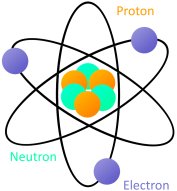
Atoms are the fundamental units of both living and non-living matter. Each atom consists of a dense nucleus containing protons and neutrons, surrounded by electrons at varying energy levels.
Protons: Positively charged particles in the nucleus.
Neutrons: Neutral particles in the nucleus.
Electrons: Negatively charged particles orbiting the nucleus.
The chemical behavior of an atom is determined by its electrons. 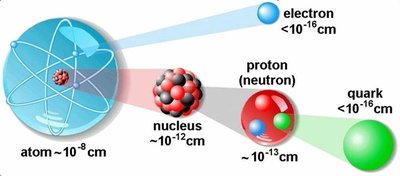

Ions and Their Formation
Ions are formed when the number of protons and electrons in an atom are not equal.
Cation: More protons than electrons (P > E), positively charged.
Anion: More electrons than protons (P < E), negatively charged.

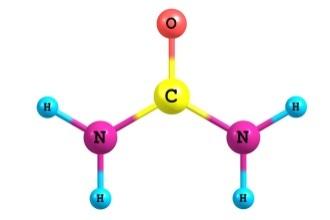
Elements and Their Biological Importance
Definition and Classification of Elements
An element is a substance made up of only one type of atom. There are 92 naturally occurring elements, but only 14 are found in significant amounts in living organisms.
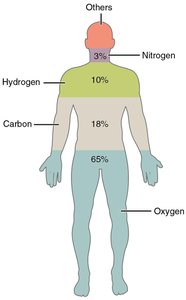
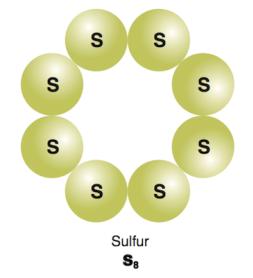
Major elements in the human body: Oxygen, carbon, hydrogen, nitrogen, phosphorus, and sulfur.
These elements constitute over 99% of body weight.
Molecules and Compounds
Formation and Types
Elements combine to form molecules and compounds.
Molecule: Contains only one type of element (e.g., O2, N2).
Compound: Contains two or more different elements (e.g., H2O, CO2).
Organic vs. Inorganic Compounds
Characteristics and Examples
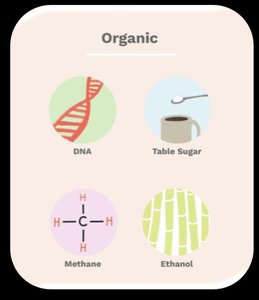
Organic compounds: Contain carbon-hydrogen (C-H) bonds, typically derived from living organisms.
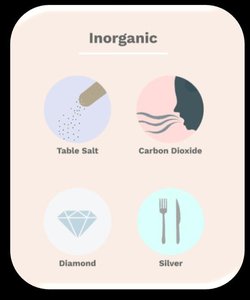
Inorganic compounds: Generally lack C-H bonds, originate from minerals and geological processes.
Main Types of Organic Compounds
Overview
There are four main types of organic compounds essential to life:
Carbohydrates
Lipids
Proteins
Nucleic acids
Carbohydrates
Carbohydrates are composed of carbon, hydrogen, and oxygen, with a typical formula of . They serve as the main source of immediate energy and also function as structural elements.
Monosaccharides: Simple sugars, building blocks of carbohydrates (e.g., glucose, ribose).
Di-oligosaccharides: Formed by glycosidic bonds between monosaccharides (e.g., maltose, sucrose, lactose).
Polysaccharides: Large molecules with many monosaccharides (e.g., starch, cellulose, chitin).
Examples and Functions
Glucose: Immediate energy source.
Ribose/Deoxyribose: Structural elements in RNA and DNA.
Glycolipids/Glycoproteins: Structural and functional roles in cells.
Lipids
Lipids are composed of carbon, hydrogen, and oxygen, but with a higher proportion of hydrogen. They are not polymers and are made up of one alcohol (glycerol) and three fatty acids.
Saturated fatty acids: Single bonds, solid at room temperature.
Unsaturated fatty acids: One or more double bonds, liquid at room temperature.
Lipids serve as energy reserves, water storage, heat insulation, and protection of organs.
Classification of Lipids
Simple lipids: Alcohol + fatty acids.
Compound lipids: Alcohol + fatty acids + non-fatty groups (e.g., phospholipids, glycolipids).
Derived lipids: Products from breakdown of simple and compound lipids.
Proteins
Proteins are polymers composed of amino acids, which contain carbon, hydrogen, oxygen, and nitrogen. They are the most abundant organic compounds in living organisms and serve diverse functions:
Structural/support: Keratin, collagen.
Transport/storage: Hemoglobin, myoglobin.
Biological catalysts: Enzymes.
Metabolic regulation: Hormones, cell surface receptors.
Defense: Immune proteins.
Motion: Muscle proteins.
Protein Structure
Primary structure: Amino acid sequence.
Secondary structure: Hydrogen bonds form β-sheets and α-helices.
Tertiary structure: Three-dimensional folding.
Quaternary structure: Aggregation of multiple polypeptide chains.
Nucleic Acids
Nucleic acids are polymers of nucleotides, which consist of a sugar, a nitrogen base, and a phosphate group.
DNA: Double-stranded, hereditary material.
RNA: Single-stranded, involved in protein synthesis.
Nitrogen Bases
Purines: Adenine (A), Guanine (G).
Pyrimidines: Cytosine (C), Thymine (T, DNA only), Uracil (U, RNA only).
Main Types of Inorganic Compounds
Overview
Four main types of inorganic compounds are essential for life:
Water: Solvent, participates in chemical reactions, exists in all three states.
Acids and Bases: Acids release H+ ions, bases release OH- ions.
Salts: Ionic compounds, dissolve in water to form electrolytes.
Oxygen: Required for cellular respiration and energy production.
Water: Properties and Functions
Water is essential for cell function and chemical reactions. It forms hydrogen bonds, leading to cohesion (attraction between water molecules) and adhesion (attraction to other substances).
Acids, Bases, and Salts
Acids: Produce H+ ions in water.
Bases: Produce OH- ions in water.
Salts: Formed from the reaction of acids and bases, important for metabolism.
Oxygen
Oxygen is vital for aerobic respiration, which produces ATP, the energy currency of cells.
Summary Table: Organic vs. Inorganic Compounds
Type | Contains C-H Bonds? | Origin | Examples |
|---|---|---|---|
Organic | Yes | Living/once-living organisms | DNA, proteins, carbohydrates, lipids |
Inorganic | No | Minerals, geological processes | Water, salts, acids, bases, O2 |
Summary Table: Main Types of Organic Compounds
Type | Monomer | Function | Example |
|---|---|---|---|
Carbohydrates | Monosaccharide | Energy, structure | Glucose, cellulose |
Lipids | Fatty acid + glycerol | Energy storage, insulation | Triglycerides, phospholipids |
Proteins | Amino acid | Structure, enzymes, transport | Hemoglobin, collagen |
Nucleic acids | Nucleotide | Genetic information | DNA, RNA |
Summary Table: Main Types of Inorganic Compounds
Type | Function | Example |
|---|---|---|
Water | Solvent, chemical reactions | H2O |
Acids | Release H+ ions | HCl |
Bases | Release OH- ions | NaOH |
Salts | Electrolytes, metabolism | NaCl |
Oxygen | Cellular respiration | O2 |
Conclusion
Understanding the basic chemical principles underlying organic and inorganic compounds is fundamental to the study of organic chemistry and biology. These concepts provide the foundation for more advanced topics such as molecular representations, acids and bases, and the chemistry of biomolecules. Additional info: Expanded explanations and tables were added to provide academic context and ensure completeness for exam preparation.
