 Indietro
Fundamentals of Organic Chemistry: Structured Study Notes
Guida di studio - Note intelligenti
 Appunti personalizzati basati sui tuoi materiali, ampliati con definizioni chiave, esempi e contesto.
Fundamentals of Organic Chemistry
What is Organic Chemistry?
Organic chemistry is the branch of chemistry that studies the structure, properties, and reactions of molecules primarily composed of carbon and hydrogen, often with other elements such as oxygen, nitrogen, sulfur, and halogens. These molecules are central to biological systems and everyday life, including pharmaceuticals, plastics, and natural products.
Definition: Organic molecules contain both carbon and hydrogen atoms.
Hydrocarbons: Molecules composed solely of carbon and hydrogen.
Applications: Organic chemistry is essential for understanding biological processes, industrial products, and environmental chemistry.
Example: Identifying organic molecules and hydrocarbons in everyday products such as hairspray.
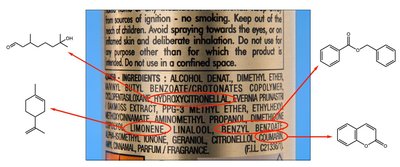
Atomic Structure
The atom is the fundamental unit of matter. Understanding atomic structure is crucial for predicting chemical behavior and bonding in organic molecules.
Atomic Number: Number of protons in the nucleus.
Mass Number: Sum of protons and neutrons.
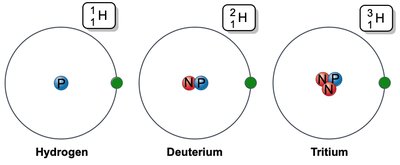
Isotopes: Atoms with the same number of protons but different numbers of neutrons.
Electrons: Orbit the nucleus in defined regions called shells and orbitals.
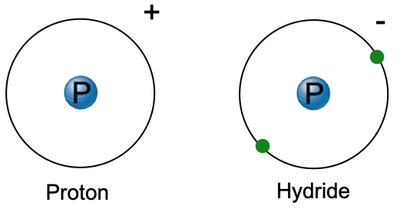
Ions: Atoms with unequal numbers of protons and electrons; cations are positively charged, anions are negatively charged.
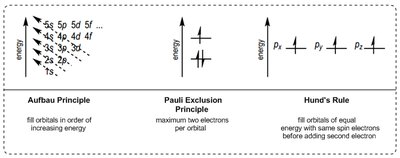
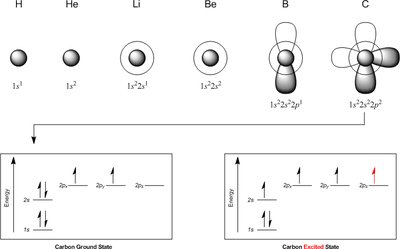
Electron Configuration Principles: Aufbau Principle, Pauli Exclusion Principle, Hund's Rule.
Electron Configuration Principles
Electron configuration determines how electrons are distributed in an atom, influencing chemical bonding and reactivity.
Aufbau Principle: Electrons fill orbitals in order of increasing energy.
Pauli Exclusion Principle: Maximum two electrons per orbital, with opposite spins.
Hund's Rule: Electrons fill orbitals of equal energy with the same spin before pairing.
Octet Rule
Atoms are most stable when they achieve a noble gas electron configuration, typically eight electrons in their valence shell (octet).
Octet Rule: Atoms tend to gain, lose, or share electrons to achieve eight valence electrons.
Exceptions: Hydrogen, helium, lithium prefer two; beryllium and boron may have less than eight; third-row elements can have expanded octets.
Bonding: Atoms satisfy the octet rule through chemical bonds or lone pairs.
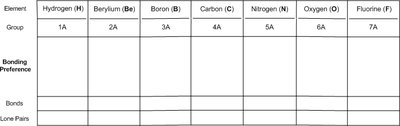
Bonding Preferences
Atoms combine octet electrons in various ways to achieve stability. The number of bonds and lone pairs an atom prefers is determined by its group number in the periodic table.
Valence Electrons: Electrons in the outermost shell involved in bonding.
Bonding Preference: Atoms 'own' all lone electrons and one electron per bond.
Stability: Most stable when bonding preferences are satisfied.
Sigma and Pi Bonds
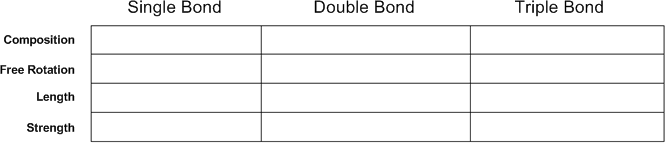
Covalent bonds are classified as sigma (σ) or pi (π) bonds, which differ in their formation and properties.
Sigma (σ) Bonds: Formed by head-on overlap of orbitals; present in all single bonds.
Pi (π) Bonds: Formed by side-on overlap; present in double and triple bonds.
Bond Length and Strength: Single bonds are longest and weakest; triple bonds are shortest and strongest.
Single Bond | Double Bond | Triple Bond | |
|---|---|---|---|
Composition | 1 σ | 1 σ + 1 π | 1 σ + 2 π |
Free Rotation | Yes | No | No |
Length | Longest | Intermediate | Shortest |
Strength | Weakest | Stronger | Strongest |
Lewis Structures
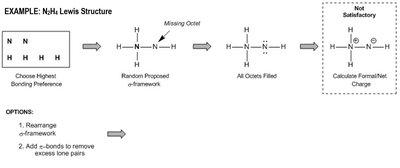
Lewis structures are diagrams that show the arrangement of atoms, bonds, and lone pairs in a molecule, based on the octet rule and bonding preferences.
Steps: Place atom with highest bonding preference in the center, propose σ-bond framework, complete octets with lone pairs, calculate theoretical and actual valence electrons, adjust with double bonds or lone pairs as needed.
Application: Used to predict molecular geometry, formal charges, and reactivity.
Electronegativity and Bond Polarity
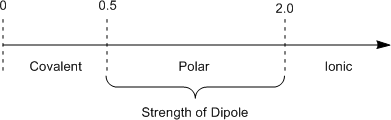
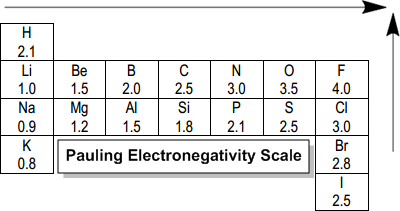
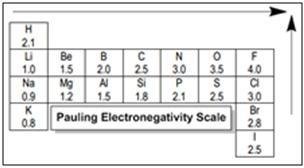
Electronegativity is the tendency of an atom to attract electrons in a bond. The difference in electronegativity between atoms determines bond polarity.
Polar Bonds: Unequal sharing of electrons creates dipoles.
Nonpolar Bonds: Equal sharing, typically between identical atoms or C-H bonds.
Dipole Moment: Measure of bond polarity; net dipoles affect molecular properties.
Constitutional Isomers
Constitutional isomers are molecules with the same molecular formula but different connectivity of atoms.
Identification: Compare atom count and index of hydrogen deficiency (IHD); check connectivity from a reference atom.
Types: Identical compounds, constitutional isomers, or different compounds.
Skeletal (Bondline) Structure
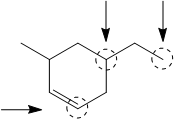
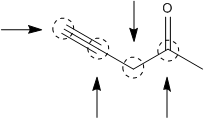
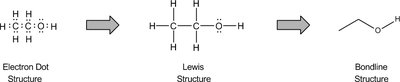
The bondline method simplifies organic structures by representing carbon atoms at vertices and omitting hydrogens unless attached to heteroatoms.
Implied Atoms: Corners represent carbons; hydrogens and lone pairs are implied unless attached to heteroatoms.
Explicit Hydrogens: Hydrogens on heteroatoms must be drawn.
Condensed Structural Formula
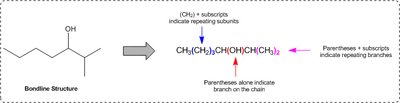
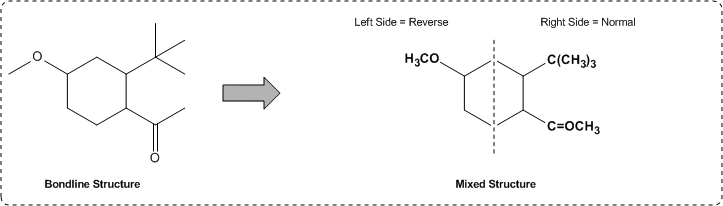
The condensed method uses text to describe the connectivity of atoms in a molecule, allowing quick interconversion with bondline structures.
Notation: Parentheses and subscripts indicate branches and repeating units.
Application: Useful for representing complex molecules in a compact form.
Formal Charges
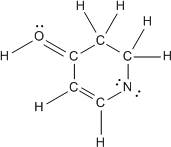
Formal charge is the difference between the number of valence electrons assigned to an atom and its group number. The sum of formal charges gives the net charge of the molecule.
Calculation: Formal Charge = Group Number - Valence Electrons
Importance: Helps identify reactive sites and stability of molecules.
Resonance Structures
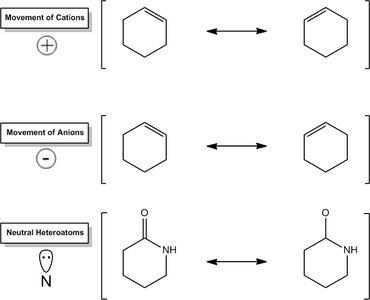
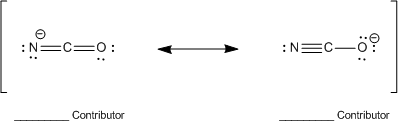
Resonance theory describes the delocalization of electrons in molecules where multiple valid Lewis structures exist. Only electrons move, not atoms.
Contributing Structures: Linked by double-sided arrows; use curved arrows to show electron movement.
Resonance Hybrid: Mathematical combination of all contributors, showing electron delocalization.
Major Contributors: Most stable, usually with filled octets and minimal charges.

Hybridization
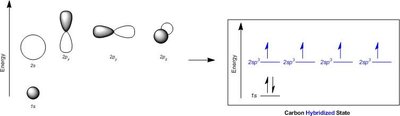
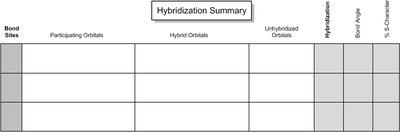
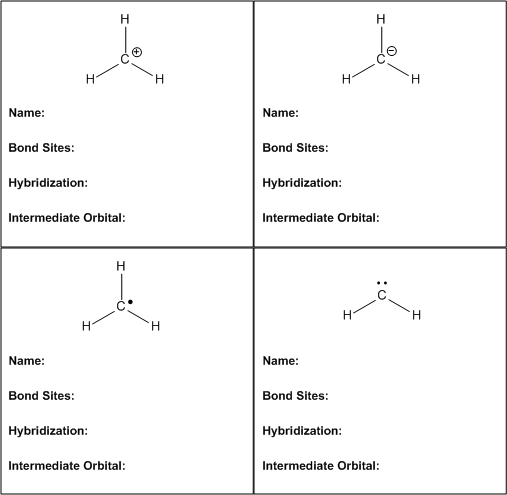
Hybridization is the mixing of atomic orbitals to form new orbitals suitable for bonding. The number of bond sites determines the hybridization state.
sp3 Hybridization: Four bond sites, tetrahedral geometry.
sp2 Hybridization: Three bond sites, trigonal planar geometry.
sp Hybridization: Two bond sites, linear geometry.
Prediction: Count bond sites (bonds and lone pairs) to determine hybridization.
Functional Groups
Functional groups are specific groups of atoms within molecules that determine the chemical properties and reactivity of those molecules. Organic compounds are classified based on their functional groups.
Hydrocarbons: Alkanes (single bonds), alkenes (double bonds), alkynes (triple bonds).
Alkyl Groups: Symbolized as R; suffix changes when attached to larger chains.
Degree: Primary, secondary, tertiary, quaternary based on the number of carbons attached.
Other Functional Groups: Alkyl halides, alcohols, amines, ethers, carboxylic acids, amides, esters, ketones, aldehydes, nitriles, benzene derivatives, acyl chlorides, anhydrides, sulfur compounds.
Example: Identifying functional groups and their degrees in complex molecules.
Additional info: Functional groups are central to organic chemistry, as they dictate the reactivity and interactions of molecules in biological and industrial contexts.
