 Indietro
Haloalkanes and Haloarenes: Structure, Properties, and Reactions
Guida di studio - Note intelligenti
 Appunti personalizzati basati sui tuoi materiali, ampliati con definizioni chiave, esempi e contesto.
Haloalkanes and Haloarenes
Introduction
Haloalkanes and haloarenes are organic compounds in which one or more hydrogen atoms of aliphatic or aromatic hydrocarbons are replaced by halogen atoms. These compounds are important in both industrial and biological contexts, serving as solvents, intermediates in synthesis, and pharmaceuticals.
Haloalkanes (Alkyl halides): Halogen atom(s) attached to an sp3 hybridized carbon of an alkyl group.
Haloarenes (Aryl halides): Halogen atom(s) attached to an sp2 hybridized carbon of an aromatic ring.
Examples include chloramphenicol (antibiotic), thyroxine (hormone), chloroquine (antimalarial), and halothane (anesthetic).
Classification of Haloalkanes and Haloarenes
By Number of Halogen Atoms
Monohalogen compounds: One halogen atom
Dihalogen compounds: Two halogen atoms
Polyhalogen compounds: Three or more halogen atoms
By Nature of Carbon-Halogen Bond
Alkyl halides (R–X): Halogen bonded to sp3 carbon. Classified as primary (1°), secondary (2°), or tertiary (3°) based on the carbon's connectivity.
Allylic halides: Halogen bonded to sp3 carbon adjacent to a C=C double bond.
Benzylic halides: Halogen bonded to sp3 carbon attached to an aromatic ring.
Vinylic halides: Halogen bonded to sp2 carbon of a C=C double bond.
Aryl halides: Halogen directly bonded to sp2 carbon of an aromatic ring.
Nomenclature
IUPAC and Common Names
Alkyl halides: Named as halosubstituted hydrocarbons (e.g., 2-chlorobutane).
Aryl halides: For monosubstituted derivatives, common and IUPAC names are often the same (e.g., chlorobenzene).
Dihalides: Classified as geminal (gem-) if both halogens are on the same carbon, or vicinal (vic-) if on adjacent carbons.
Structure | Common Name | IUPAC Name |
|---|---|---|
CH3CH2CH(Cl)CH3 | sec-Butyl chloride | 2-Chlorobutane |
(CH3)3CBr | tert-Butyl bromide | 2-Bromo-2-methylpropane |
CH2=CHCl | Vinyl chloride | Chloroethene |
CH2Cl2 | Methylene chloride | Dichloromethane |
CHCl3 | Chloroform | Trichloromethane |
CCl4 | Carbon tetrachloride | Tetrachloromethane |
Nature of the C–X Bond
The carbon-halogen bond in alkyl halides is polarized due to the higher electronegativity of halogens compared to carbon. As the halogen atom increases in size (F < Cl < Br < I), the bond length increases and bond enthalpy decreases.
Bond | Bond Length (pm) | Bond Enthalpy (kJ/mol) | Dipole Moment (D) |
|---|---|---|---|
CH3–F | 139 | 452 | 1.847 |
CH3–Cl | 178 | 351 | 1.860 |
CH3–Br | 193 | 293 | 1.830 |
CH3–I | 214 | 234 | 1.636 |
Methods of Preparation
From Alcohols
Alcohols react with concentrated halogen acids, phosphorus halides, or thionyl chloride to form alkyl halides.
Thionyl chloride is preferred as by-products are gaseous (SO2 and HCl), yielding pure alkyl halides.
From Hydrocarbons
Alkanes: Free radical halogenation yields mixtures of mono- and polyhaloalkanes.
Alkenes: Addition of hydrogen halides (Markovnikov's rule) or halogens (e.g., Br2 in CCl4).
Halogen Exchange
Finkelstein reaction: Alkyl chlorides/bromides react with NaI in dry acetone to form alkyl iodides.
Swarts reaction: Alkyl chlorides/bromides heated with metallic fluorides (AgF, Hg2F2, etc.) to form alkyl fluorides.
Preparation of Haloarenes
Electrophilic substitution of arenes with halogens in the presence of Lewis acids (e.g., FeCl3).
Sandmeyer reaction: Aromatic amines converted to diazonium salts, then replaced by halogen using CuCl or CuBr.
Physical Properties
Melting and Boiling Points
Boiling points increase with molecular mass and number of halogen atoms: RI > RBr > RCl > RF.
Isomeric haloalkanes: Boiling point decreases with increased branching.
Para-isomers of dihalobenzenes have higher melting points due to symmetry.
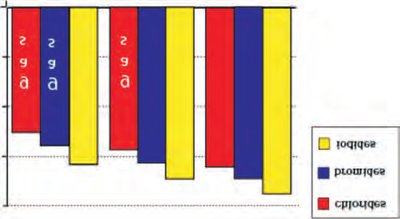
Solubility and Density
Haloalkanes are slightly soluble in water but dissolve well in organic solvents.
Bromo, iodo, and polychloro derivatives are denser than water; density increases with more halogen atoms and higher atomic mass.
Chemical Reactions
Nucleophilic Substitution Reactions
Haloalkanes undergo nucleophilic substitution, where a nucleophile replaces the halogen atom (leaving group). Two main mechanisms are observed:
SN2 (Bimolecular): One-step mechanism; rate depends on both substrate and nucleophile. Favored by primary halides, less steric hindrance.
SN1 (Unimolecular): Two-step mechanism via carbocation intermediate; rate depends only on substrate. Favored by tertiary halides, stabilized carbocations.

Order of reactivity for SN2: Primary > Secondary > Tertiary Order for SN1: Tertiary > Secondary > Primary
Stereochemical Aspects
Optical activity: Compounds that rotate plane-polarized light are optically active (dextrorotatory or laevorotatory).
Chirality: Molecules with a non-superimposable mirror image (asymmetric carbon) are chiral and optically active.
Enantiomers: Non-superimposable mirror images; have identical physical properties except for optical rotation.
Racemisation: Formation of a 1:1 mixture of enantiomers, resulting in optical inactivity.
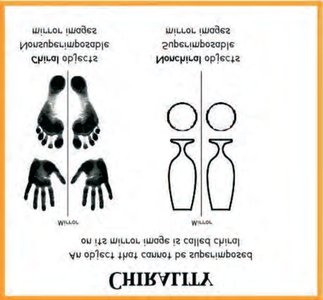
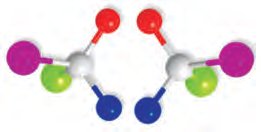
SN2 reactions: Lead to inversion of configuration at the chiral center.
SN1 reactions: Lead to racemisation due to planar carbocation intermediate.
Elimination Reactions
When haloalkanes with β-hydrogen are heated with alcoholic KOH, they undergo β-elimination to form alkenes. The major product is usually the more substituted alkene (Zaitsev's rule).
Reactions with Metals
Grignard Reagents: Alkyl halides react with Mg in dry ether to form RMgX, important for organic synthesis.
Wurtz Reaction: Alkyl halides react with Na in dry ether to form higher alkanes.
Reactions of Haloarenes
Less reactive towards nucleophilic substitution due to resonance, sp2 hybridization, and instability of phenyl cation.
Electrophilic substitution (halogenation, nitration, sulphonation, Friedel-Crafts) occurs at ortho and para positions due to resonance effects.
Wurtz-Fittig and Fittig reactions: Formation of alkylarenes and diaryls via reaction with sodium in dry ether.
Polyhalogen Compounds and Environmental Impact
Dichloromethane (CH2Cl2): Solvent, paint remover, toxic to CNS.
Chloroform (CHCl3): Solvent, precursor to refrigerants, toxic and potentially carcinogenic.
Carbon tetrachloride (CCl4): Solvent, cleaning agent, ozone-depleting, toxic to liver and CNS.
Freons (CCl2F2, etc.): Refrigerants, propellants, cause ozone depletion.
DDT: Insecticide, persistent environmental pollutant, bioaccumulates in fat tissues.
Summary Table: Key Reactions of Haloalkanes
Reaction Type | Reagent | Product |
|---|---|---|
Nucleophilic substitution | NaOH (aq) | Alcohol |
Elimination | KOH (alc.) | Alkene |
Grignard formation | Mg/ether | RMgX |
Wurtz reaction | Na/ether | Alkane (doubled C atoms) |
Additional info: This guide covers the classification, nomenclature, physical and chemical properties, stereochemistry, and environmental aspects of haloalkanes and haloarenes, as well as their industrial and biological significance.
