 Indietro
Hybridization, Lewis Structures, and Molecular Geometry in Organic Chemistry
Guida di studio - Note intelligenti
 Appunti personalizzati basati sui tuoi materiali, ampliati con definizioni chiave, esempi e contesto.
Hybridization Theory
Introduction to Hybridization
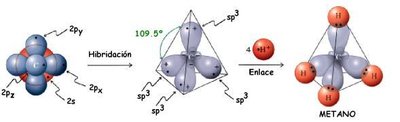
Hybridization is a fundamental concept in organic chemistry that explains the formation of equivalent bonds in molecules, particularly those involving carbon. It describes the mixing of atomic orbitals to form new hybrid orbitals, which are used to create covalent bonds with specific geometries.
Hybrid Orbitals: Formed by combining s and p orbitals (and sometimes d orbitals) from the same atom.
Types of Hybridization: sp, sp2, sp3 (for carbon), and expanded octet types (sp3d, sp3d2).
Geometric Implications: The type of hybridization determines the molecular geometry and bond angles.

Objectives of Hybridization Study
Learning Goals
Understanding hybridization is essential for predicting molecular structure, bond types, and polarity in organic compounds.
Recognize the theory of carbon hybridization.
Identify sp, sp2, and sp3 hybridization and their main characteristics (number of hybrid orbitals, geometry, bond angles, sigma and pi bonds).
Determine molecular geometry around a carbon atom based on its hybridization.
Assess whether an organic molecule is polar or nonpolar.

Lewis Structures in Organic Chemistry
Drawing and Interpreting Lewis Structures
Lewis structures are indispensable for understanding the connectivity and electron distribution in organic molecules. They help visualize bonding and lone pairs, and are the basis for predicting reactivity and molecular properties.
Valence Electrons: Count the total valence electrons for the molecule or ion.
Octet Rule: Calculate the electrons needed for each atom to satisfy the octet rule (except hydrogen, which needs two).
Bond Calculation:
Lone Pairs:
Formal Charge:

Examples of Lewis Structures
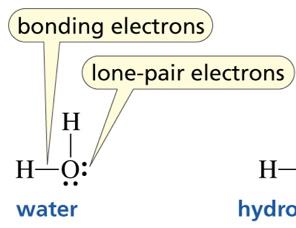
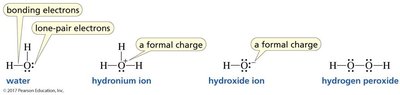
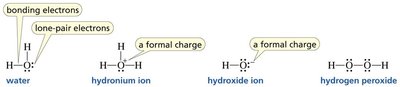
Lewis structures illustrate bonding and lone pairs for common molecules and ions, such as water, hydronium, hydroxide, and hydrogen peroxide.
Bonding Electrons: Shared between atoms to form covalent bonds.
Lone-Pair Electrons: Non-bonding electrons localized on a single atom.
Formal Charge: Indicates the charge distribution within the molecule.

Bonding Patterns and Formal Charges
Common Bonding Patterns in Organic Molecules
Recognizing typical bonding patterns for carbon, nitrogen, and oxygen is crucial for drawing correct Lewis structures and predicting formal charges.
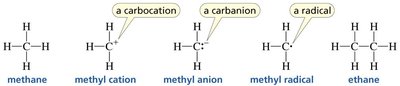
Carbon: Usually forms four bonds; deviations indicate charge or radical.
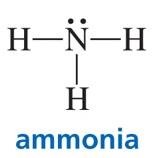
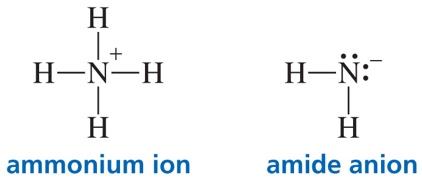
Nitrogen: Typically forms three bonds; more or fewer bonds result in a charged species.
Oxygen: Normally forms two bonds; deviations lead to charged species.
Hybridization Types and Molecular Geometry
sp3 Hybridization
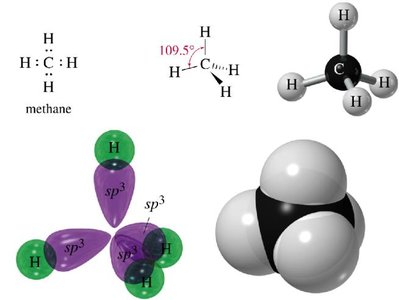
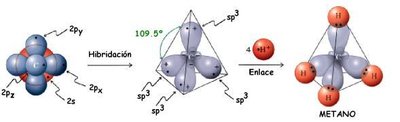
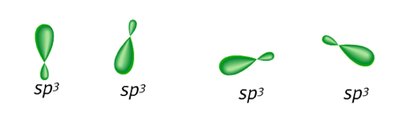
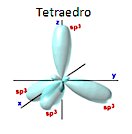
sp3 hybridization occurs when one s orbital and three p orbitals mix to form four equivalent sp3 hybrid orbitals. This is typical for carbon in methane (CH4), resulting in a tetrahedral geometry with bond angles of 109.5°.
Geometry: Tetrahedral
Bond Angles: 109.5°
Number of Sigma Bonds: 4
Example: Methane (CH4)
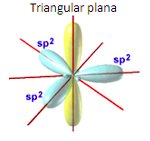
sp2 Hybridization
sp2 hybridization involves the mixing of one s orbital and two p orbitals, forming three sp2 hybrid orbitals and one unhybridized p orbital. This is seen in ethylene (C2H4), resulting in a trigonal planar geometry with bond angles of 120°.
Geometry: Trigonal planar
Bond Angles: 120°
Number of Sigma Bonds: 3
Number of Pi Bonds: 1
Example: Ethylene (C2H4)
sp Hybridization
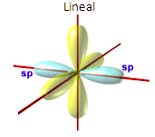
sp hybridization occurs when one s orbital and one p orbital mix to form two sp hybrid orbitals, leaving two unhybridized p orbitals. This is typical for carbon in acetylene (C2H2), resulting in a linear geometry with bond angles of 180°.
Geometry: Linear
Bond Angles: 180°
Number of Sigma Bonds: 2
Number of Pi Bonds: 2
Example: Acetylene (C2H2)
Expanded Octet Hybridizations
Hybridization Beyond Carbon
Elements in period 3 and beyond can exhibit expanded octet hybridizations, such as sp3d and sp3d2, allowing for geometries like trigonal bipyramidal and octahedral.
Trigonal Bipyramidal: sp3d hybridization, bond angles 90° and 120°
Octahedral: sp3d2 hybridization, bond angles 90°

Predicting Hybridization and Molecular Geometry
Steps to Determine Hybridization
To predict the hybridization of an atom in a molecule:
Draw the Lewis structure, focusing on the atom of interest.
Count the number of sigma bonds and lone pairs (regions of electron density) around the atom.
Correlate the number of regions with the type of hybridization:
Regions of Electron Density | Hybridization | Geometry | Bond Angle |
|---|---|---|---|
2 | sp | Linear | 180° |
3 | sp2 | Trigonal planar | 120° |
4 | sp3 | Tetrahedral | 109.5° |
5 | sp3d | Trigonal bipyramidal | 90°, 120° |
6 | sp3d2 | Octahedral | 90° |
Examples of Hybridization Prediction
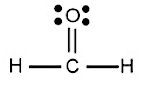
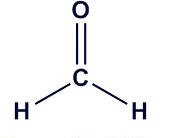
For molecules like formaldehyde (H2C=O) and hydrogen cyanide (HC≡N):
Formaldehyde: Carbon is sp2 hybridized, trigonal planar geometry.
Hydrogen cyanide: Carbon is sp hybridized, linear geometry.

Polarity and Molecular Geometry
Determining Molecular Polarity
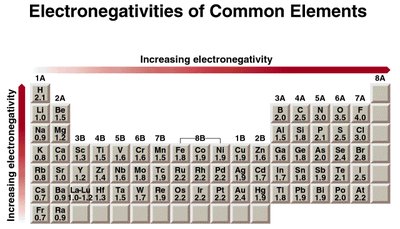
Molecular polarity depends on the arrangement of bonds and the presence of lone pairs. The vector sum of bond dipoles determines if a molecule is polar or nonpolar.
Draw the Lewis structure and identify hybridization.
Draw the geometry and indicate bond dipoles (vectors pointing toward more electronegative atoms).
If the vector sum is nonzero, the molecule is polar.
Examples of Polarity
Ethylene (C2H4): sp2, trigonal planar, nonpolar
Acetylene (C2H2): sp, linear, nonpolar
Benzene (C6H6): sp2, trigonal planar, nonpolar
Methanol (CH4O): sp3 for C (tetrahedral), sp3 for O (angular), polar
Summary Table: Hybridization, Geometry, and Bond Angles
Hybridization | Number of Regions | Geometry | Bond Angle | Example |
|---|---|---|---|---|
sp | 2 | Linear | 180° | Acetylene (C2H2) |
sp2 | 3 | Trigonal planar | 120° | Ethylene (C2H4) |
sp3 | 4 | Tetrahedral | 109.5° | Methane (CH4) |
Additional info:
Expanded explanations and context were added to clarify hybridization, Lewis structures, and molecular geometry, ensuring the notes are self-contained and suitable for exam preparation in Organic Chemistry.
