Indietro
Introduction to Organic Chemistry: Structure, Bonding, and Properties
Guida di studio - Note intelligenti
 Appunti personalizzati basati sui tuoi materiali, ampliati con definizioni chiave, esempi e contesto.
Introduction to Organic Chemistry
Definition and Importance
Organic chemistry is the branch of chemistry that studies compounds containing the element carbon. Organic compounds are fundamental to life and are found in a wide range of products, including clothes, foods, medicines, fuels, and synthetic materials. Some are derived from natural sources, while others are synthetically produced.
Organic compounds are essential in daily life, forming the basis of materials such as cotton, wool, silk, nylon, and polyester.
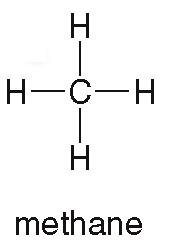
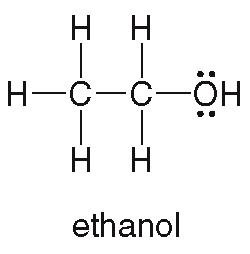
Examples include methane (main component of natural gas) and ethanol (alcohol in beverages).
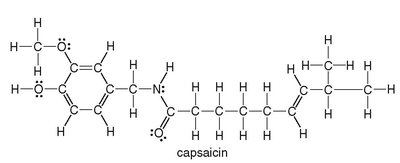
Capsaicin is responsible for the spiciness of peppers and is used in topical pain-relief medicines.
Caffeine is a stimulant found in coffee, tea, cola, and chocolate.
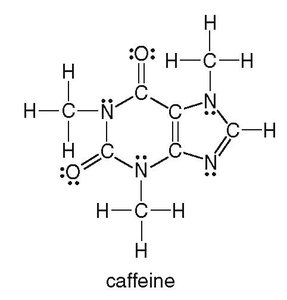
Characteristics of Organic Compounds
Common Features
All organic compounds contain carbon atoms; most also contain hydrogen atoms.
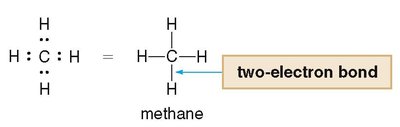
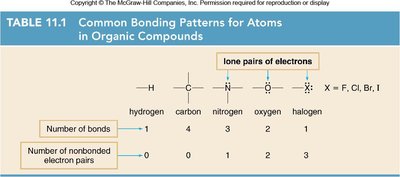
Carbon forms four covalent bonds; hydrogen forms one covalent bond.
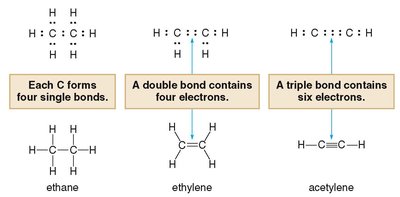
Carbon can form single, double, and triple bonds with other carbon atoms.
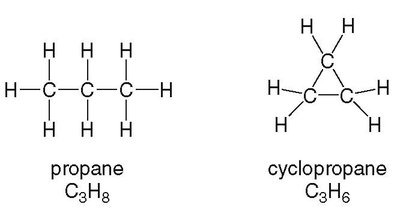
Organic compounds may have chains or rings of atoms.
Organic compounds may contain elements other than carbon and hydrogen, called heteroatoms (e.g., N, O, F, Cl, Br, I).
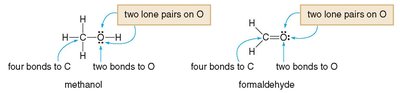
Each heteroatom forms a characteristic number of bonds and has lone pairs, resulting in an octet of electrons.
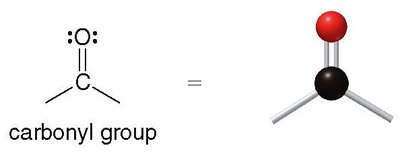
The most common multiple bond between carbon and a heteroatom is the carbon–oxygen double bond (carbonyl group).
Shapes of Organic Molecules
VSEPR Theory and Molecular Geometry
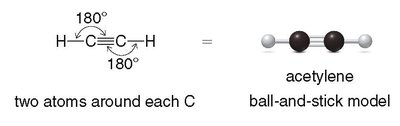
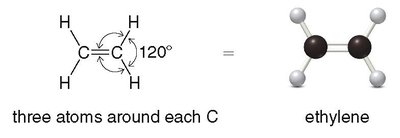
The Valence Shell Electron Pair Repulsion (VSEPR) theory states that the most stable arrangement of groups around a central atom keeps them as far apart as possible.
Two groups: Linear geometry, bond angle 180°.
Three groups: Trigonal planar geometry, bond angle 120°.
Four groups: Tetrahedral geometry, bond angle 109.5°.
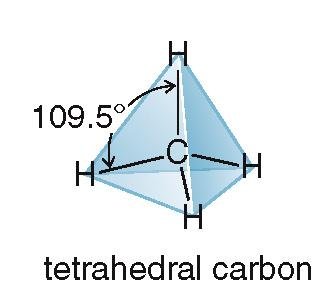
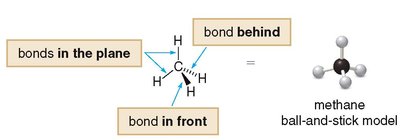
To represent 3D tetrahedral geometry in 2D, use solid lines (in-plane), wedges (in front), and dashed lines (behind).
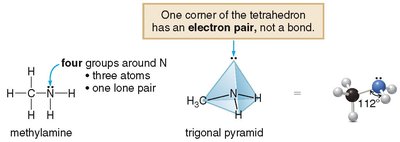
Nitrogen with three atoms and one lone pair forms a trigonal pyramid shape.
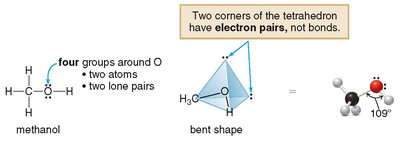
Oxygen with two atoms and two lone pairs forms a bent shape.
Drawing Organic Molecules
Condensed Structures
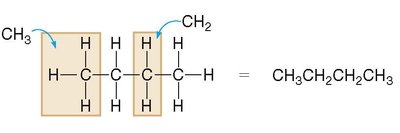
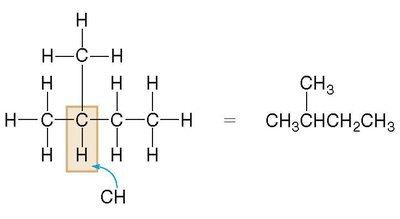
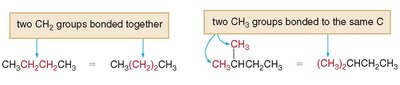
Condensed structures show all atoms but often omit bond lines and lone pairs. Groups of atoms can be further condensed for simplicity.
CH3 for a carbon bonded to three hydrogens, CH2 for two hydrogens, CH for one hydrogen.
Skeletal Structures
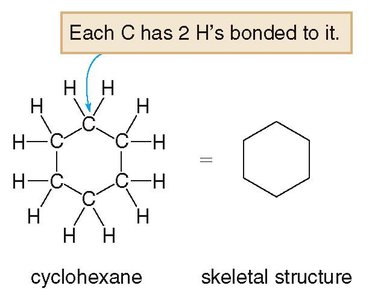
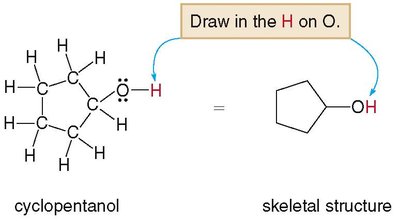
Skeletal structures are simplified representations where carbon atoms are implied at line ends and junctions, and hydrogens are assumed to complete four bonds for each carbon. Heteroatoms and their hydrogens are explicitly drawn.
Functional Groups
Definition and Importance
A functional group is an atom or group of atoms with characteristic chemical and physical properties. Functional groups often contain heteroatoms or multiple bonds and determine the reactivity of organic molecules. The letter R is used to represent the carbon and hydrogen portion of a molecule.

Hydrocarbons
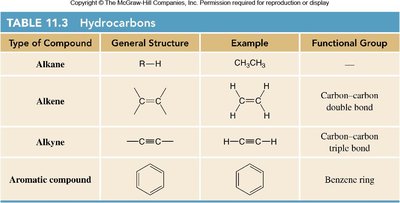
Hydrocarbons are compounds containing only carbon and hydrogen. They are classified by the types of bonds present:
Alkanes: Only C–C single bonds (no functional group).
Alkenes: Contain a C–C double bond.
Alkynes: Contain a C–C triple bond.
Aromatic hydrocarbons: Contain a benzene ring (six-membered ring with three double bonds).
Compounds Containing a Single Bond to a Heteroatom
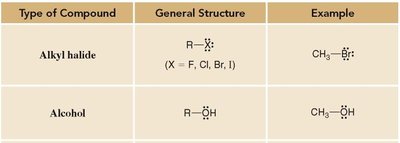
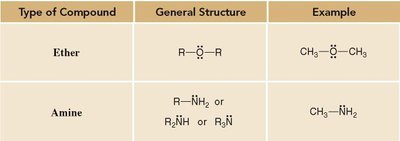
These compounds include alkyl halides, alcohols, ethers, and amines. The presence of heteroatoms imparts unique reactivity and properties.
Type of Compound | General Structure | Example |
|---|---|---|
Alkyl halide | R–X (X = F, Cl, Br, I) | CH3Br |
Alcohol | R–OH | CH3OH |
Ether | R–O–R | CH3OCH3 |
Amine | RNH2, R2NH, or R3N | CH3NH2 |
Compounds Containing a C=O Group (Carbonyl Compounds)
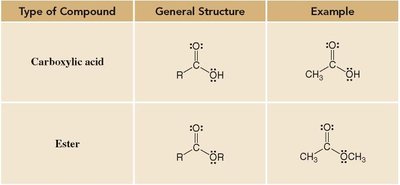
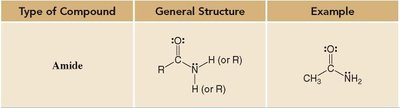
The carbonyl group (C=O) is a key functional group found in several classes of organic compounds, including carboxylic acids, esters, and amides.
Type of Compound | General Structure | Example |
|---|---|---|
Carboxylic acid | R–COOH | CH3COOH |
Ester | R–COOR | CH3COOCH3 |
Amide | R–CONH2 (or R) | CH3CONH2 |
Properties of Organic Compounds
Covalent Bonding and Physical Properties
Organic compounds are composed of covalent bonds and exist as discrete molecules.
They have weaker intermolecular forces than ionic compounds, resulting in lower boiling and melting points.
Organic compounds are often liquids or gases at room temperature, while ionic compounds are typically solids.
Polarity
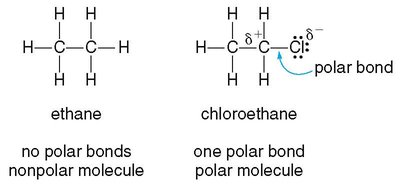
A covalent bond is nonpolar when two atoms of identical or similar electronegativity are bonded (e.g., C–C, C–H).
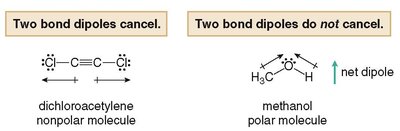
A covalent bond is polar when atoms of different electronegativity are bonded (e.g., C–N, C–O, C–halogen).
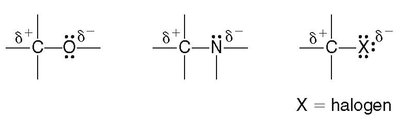
Hydrocarbons are nonpolar molecules due to only C–C and C–H bonds.
If a molecule contains a net dipole, it is polar; if the dipoles cancel, the molecule is nonpolar.
Solubility
The general rule for solubility is "like dissolves like." Most organic compounds are soluble in organic solvents. Nonpolar organic compounds are insoluble in water, while small polar organic compounds containing N or O can hydrogen bond and may be water soluble.
Hexane (C6H14): Nonpolar, insoluble in water, soluble in organic solvents.
Ethanol (C2H5OH): Small, polar, soluble in both water and organic solvents.
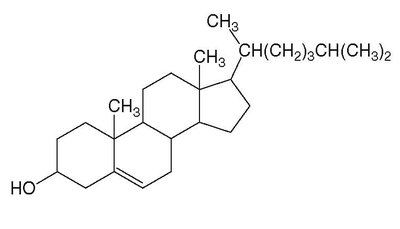
Cholesterol: Large, mostly nonpolar, insoluble in water, soluble in organic solvents.