 Indietro
IUPAC Nomenclature of Alkanes: Systematic Naming and Substituent Identification
Guida di studio - Note intelligenti
 Appunti personalizzati basati sui tuoi materiali, ampliati con definizioni chiave, esempi e contesto.
Naming Compounds
Introduction to IUPAC Nomenclature
The International Union of Pure and Applied Chemistry (IUPAC) nomenclature provides systematic rules for naming organic compounds, ensuring clarity and consistency in chemical communication. The process begins with identifying the parent chain and proceeds through naming substituents and assembling the full compound name.
Selecting the Parent Chain
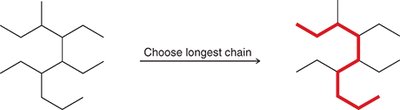
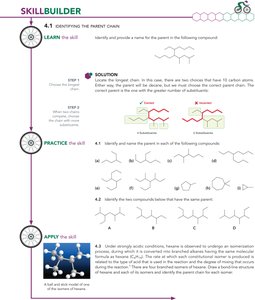
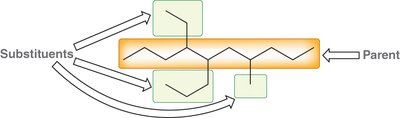
The parent chain is the longest continuous chain of carbon atoms in an alkane. This chain determines the base name of the compound, and its length is crucial for proper nomenclature.
Longest Chain Rule: Always select the chain with the greatest number of carbon atoms as the parent chain.
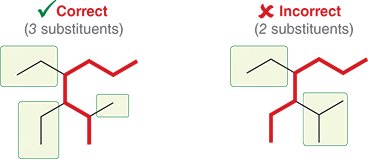
Substituent Maximization: If two chains of equal length are present, choose the chain with the most substituents.
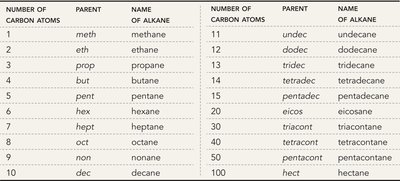
Parent Names: The names for parent chains up to ten carbons are: methane, ethane, propane, butane, pentane, hexane, heptane, octane, nonane, decane.
Naming Substituents
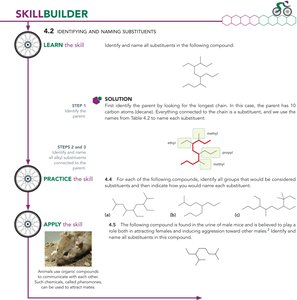
Identifying and Naming Substituents
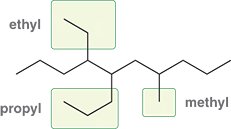
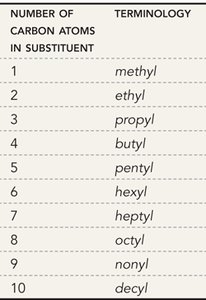
Substituents are groups attached to the parent chain. They are named using the same root as the parent chain, with the suffix "-yl" added. For example, a one-carbon substituent is called methyl, and a two-carbon substituent is ethyl.
Alkyl Groups: Substituents derived from alkanes are called alkyl groups.
Terminology: The first ten alkyl groups are methyl, ethyl, propyl, butyl, pentyl, hexyl, heptyl, octyl, nonyl, decyl.
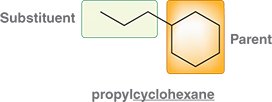
Ring Systems: When an alkyl group is attached to a ring, the ring is usually treated as the parent.
Naming Complex Substituents
Branched Alkyl Groups and Common Names
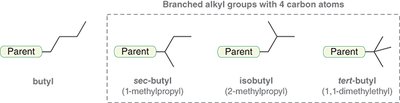
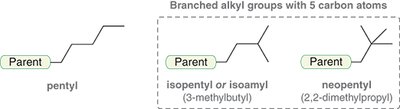
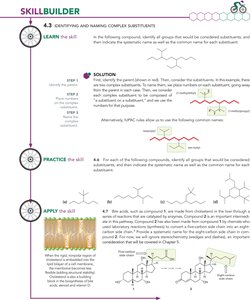
Complex substituents are branched alkyl groups that require special naming conventions. The longest chain within the substituent is identified, and additional groups are named as substituents of this miniparent. Parentheses are used to avoid confusion with the main chain numbering.
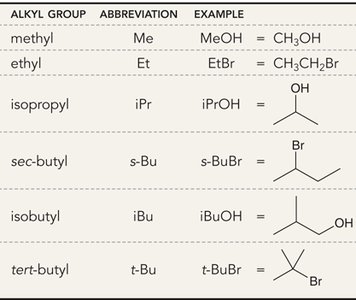
Common Names: Some branched alkyl groups have common names accepted by IUPAC, such as isopropyl, sec-butyl, isobutyl, tert-butyl, isopentyl, and neopentyl.
Abbreviations: These groups often have standard abbreviations (e.g., Me for methyl, Et for ethyl).
Assembling the Systematic Name of an Alkane
Numbering and Ordering Substituents
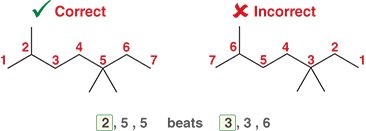
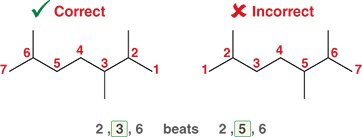
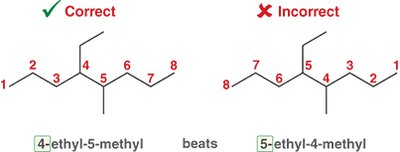
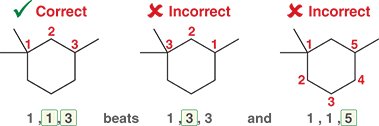
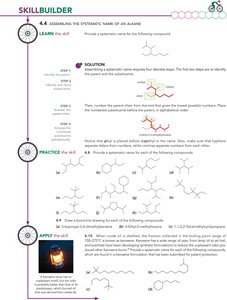
To assemble the systematic name, the parent chain is numbered to give substituents the lowest possible locants. The substituents are then listed in alphabetical order, with prefixes (di, tri, tetra, etc.) used for multiple identical groups.
Numbering: Start numbering from the end closest to a substituent.
Tie-breaking: If a tie occurs, the second substituent should have the lowest number. If still tied, use alphabetical order.
Prefixes: Prefixes are not considered in alphabetization, except for "iso".
Steps:
Identify the parent chain.
Identify and name the substituents.
Number the parent chain and assign locants.
Arrange substituents alphabetically.
Naming Bicyclic Compounds
Bicycloalkanes and Bridgehead Numbering
Bicyclic compounds contain two rings joined at bridgehead carbons. The parent name includes the term "bicyclo" and a set of numbers in brackets indicating the number of carbons in each bridge connecting the bridgeheads.
Bridgehead Identification: Locate the two carbons where the rings are joined.
Path Counting: Count the number of carbons in each path connecting the bridgeheads, excluding the bridgeheads themselves.
Parent Name: The numbers are listed in descending order within brackets, e.g., bicyclo[2.2.1]heptane.
Numbering: Begin numbering at a bridgehead, proceed along the longest path, then the second longest, and finally the shortest.

Summary Table: Steps for Naming Alkanes
Step | Description |
|---|---|
1 | Identify the parent chain (longest chain, most substituents) |
2 | Identify and name substituents |
3 | Number the parent chain for lowest locants |
4 | Arrange substituents alphabetically |
Additional info: The notes above expand on the brief points in the original materials, providing definitions, examples, and stepwise procedures for systematic alkane nomenclature, including special cases for rings and bicyclic systems.
