Indietro
Monosaccharides, Disaccharides, and Polysaccharides: Structure, Reactions, and Biological Roles
Guida di studio - Note intelligenti
 Appunti personalizzati basati sui tuoi materiali, ampliati con definizioni chiave, esempi e contesto.
Monosaccharides: Oxidation, Reduction, and Reducing Sugars
Oxidation of Monosaccharides
Monosaccharides are simple carbohydrates that can undergo oxidation and reduction reactions. In aqueous solution, a small proportion of monosaccharides exist in their open-chain form, which contains an aldehyde group capable of being oxidized to a carboxylic acid by oxidizing agents such as Benedict’s solution.
Oxidation is the loss of electrons (LEO: Lose Electrons = Oxidation).
Reduction is the gain of electrons (GER: Gain Electrons = Reduction).
Sugar acids are produced from the oxidation of the aldehyde group, and are named by replacing the “-ose” ending with “-onic acid.”
Reducing sugars are carbohydrates that can reduce other substances, such as the open-chain form of D-glucose.
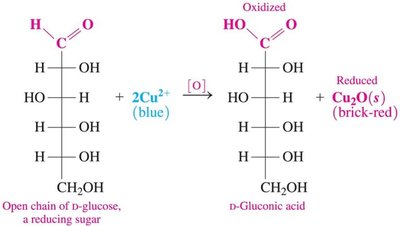
Example: D-glucose is oxidized by Cu2+ (blue) to D-gluconic acid, reducing Cu2+ to Cu2O (brick-red).
Oxidation: Fructose to Glucose
Fructose, a ketohexose, typically cannot be oxidized directly due to its ketone group. However, in basic solutions such as Benedict’s reagent, fructose can rearrange to form glucose, which then undergoes oxidation.
Rearrangement occurs between the ketone group on C2 and the hydroxyl group on C1.
This process allows fructose to act as a reducing sugar in basic conditions.
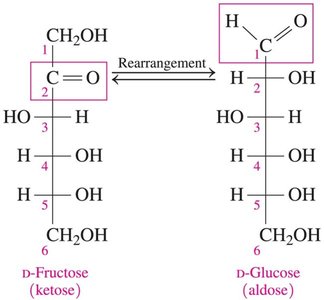
Example: D-fructose rearranges to D-glucose, which is then oxidized in Benedict’s solution.
Reduction of Monosaccharides
Reduction of the carbonyl group in monosaccharides produces sugar alcohols, also known as alditols. This process involves the addition of hydrogen (H2) in the presence of a catalyst such as platinum (Pt).
Sugar alcohols are named by replacing “-ose” with “-itol” (e.g., D-glucose → D-sorbitol).
Common sugar alcohols include D-sorbitol, D-xylitol, and D-mannitol.
Sugar alcohols are used as sweeteners in various food products.
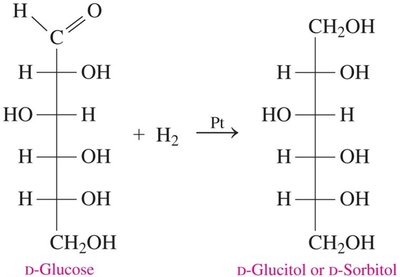
Example: D-glucose is reduced to D-glucitol (sorbitol) using hydrogen and a platinum catalyst.
Applications: Sugar Alcohols in Food
Sugar alcohols such as sorbitol and mannitol are commonly used as sweeteners in sugar-free gums and candies. They provide sweetness with fewer calories than sucrose and do not promote tooth decay.
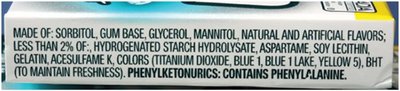
Example: Ingredient label of a sugar-free gum listing sorbitol and mannitol as sweeteners.
Clinical Link: Glucosuria
Glucosuria is the presence of glucose in the urine, which occurs when blood glucose levels are too high for the kidneys to reabsorb all the glucose. This condition can be detected using urine test strips containing dyes and enzymes such as glucose oxidase and peroxidase.
The intensity of the color change on the strip correlates with the glucose concentration in urine.
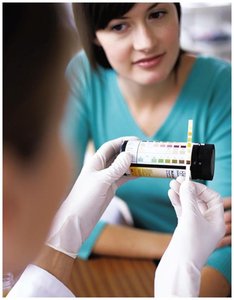
Example: A healthcare professional using a urine test strip to detect glucosuria.
Disaccharides: Structure and Linkages
Formation and Types of Disaccharides
Disaccharides are carbohydrates composed of two monosaccharide units joined by a glycosidic bond, formed through a dehydration (condensation) reaction.
Maltose: glucose + glucose
Lactose: glucose + galactose
Sucrose: glucose + fructose
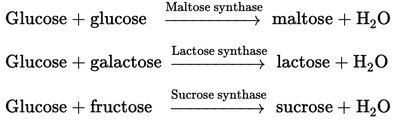
Example: Enzymatic synthesis of maltose, lactose, and sucrose from their respective monosaccharides.
Maltose
Maltose, also known as malt sugar, is formed from two glucose units joined by an α-1,4-glycosidic bond. It is produced during the hydrolysis of starch and is found in cereals, candies, and brewing.
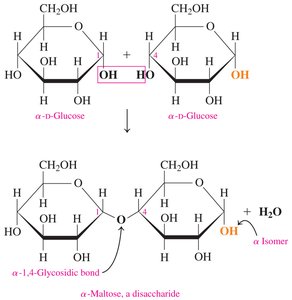
Example: Formation of α-maltose from two α-D-glucose molecules.
Lactose
Lactose is composed of glucose and galactose joined by a β-1,4-glycosidic bond. It is the primary sugar in milk, making up 6-8% of human milk and 4-5% of cow’s milk.
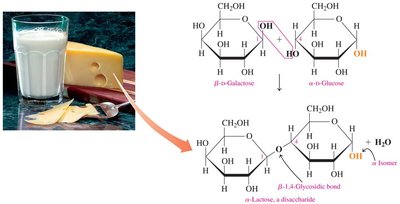
Example: Formation of β-lactose from β-D-galactose and α-D-glucose.
Sucrose
Sucrose, or table sugar, consists of glucose and fructose joined by an α,β-1,2-glycosidic bond. It is obtained from sugar cane and sugar beets. Sucrose is not a reducing sugar because it does not have a free anomeric carbon capable of acting as a reducing agent.
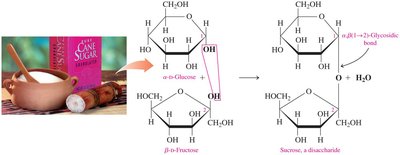
Example: Formation of sucrose from α-D-glucose and β-D-fructose.
Sweeteners and Sweetness
Relative Sweetness of Carbohydrates and Sweeteners
The sweetness of various carbohydrates and artificial sweeteners is measured relative to sucrose, which is assigned a value of 100. Artificial sweeteners can be thousands of times sweeter than sucrose.
Type | Sweetness Relative to Sucrose (= 100) |
|---|---|
Galactose | 30 |
Glucose | 75 |
Fructose | 175 |
Lactose | 16 |
Maltose | 33 |
Sucrose | 100 |
Sorbitol | 60 |
Maltitol | 80 |
Xylitol | 100 |
Stevia | 15,000 |
Aspartame | 18,000 |
Saccharin | 45,000 |
Sucralose | 60,000 |
Neotame | 1,000,000 |
Advantame | 2,000,000 |
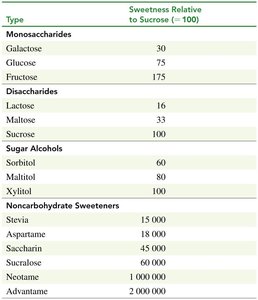
Example: Fructose is sweeter than sucrose, while artificial sweeteners like aspartame and sucralose are much sweeter.
Artificial Sweeteners: Structure and Use
Artificial sweeteners are used as sugar substitutes in foods and beverages. Two common examples are sucralose and aspartame.
Sucralose (Splenda): Derived from sucrose by replacing some hydroxyl groups with chlorine atoms, making it non-caloric and much sweeter than sucrose.
Aspartame (NutraSweet, Equal): A non-carbohydrate sweetener made from the amino acids aspartate and phenylalanine. It is used in diet sodas and sugar-free products.
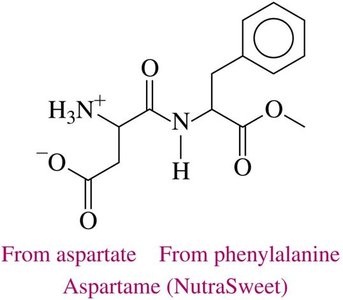
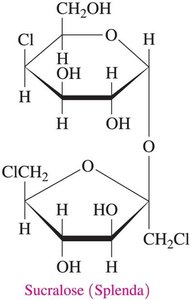
Example: Chemical structures of aspartame and sucralose, two widely used artificial sweeteners.
Biological Relevance: Blood Types and Carbohydrates
Blood Types and Terminal Saccharides
Blood types (A, B, AB, O) are determined by the specific terminal saccharides attached to the surface of red blood cells. These saccharides act as antigens and are critical for blood transfusion compatibility.
Type O: Lacks additional terminal saccharides.
Type A: Has N-acetylgalactosamine as the terminal saccharide.
Type B: Has galactose as the terminal saccharide.
Type AB: Has both A and B terminal saccharides.
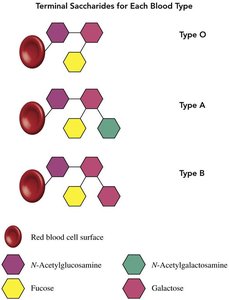
Example: Diagram showing the saccharide structures that define blood types.
Polysaccharides: Structure and Function
Overview of Polysaccharides
Polysaccharides are large carbohydrate polymers composed of many monosaccharide units. They serve as energy storage and structural components in living organisms.
Amylose and amylopectin: Storage polysaccharides in plants, both polymers of α-D-glucose.
Glycogen: Storage polysaccharide in animals, also a polymer of α-D-glucose.
Cellulose: Structural polysaccharide in plants, composed of β-D-glucose units.
Glycogen
Glycogen is a highly branched polymer of glucose stored in the liver and muscles of animals. It is hydrolyzed to maintain blood glucose levels and provide energy between meals. Glycogen is joined by α-1,4-glycosidic bonds with α-1,6 branches.
Cellulose
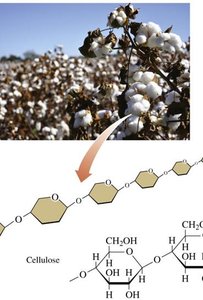
Cellulose is the major structural component of plant cell walls and wood. It is a linear polymer of glucose units joined by β-1,4-glycosidic bonds, making it insoluble in water and resistant to hydrolysis. Humans cannot digest cellulose due to the lack of enzymes to break β-1,4-glycosidic bonds.
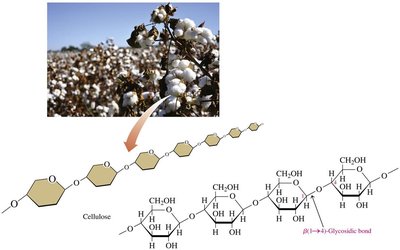
Example: Cellulose structure and its role in plant rigidity and dietary fiber.
Summary Table: Sources of Energy and Structural Support
Function | Animals | Plants |
|---|---|---|
Structural Support | Chitin | Cellulose |
Energy Storage | Glycogen | Starch |
Summary: Carbohydrate Classification
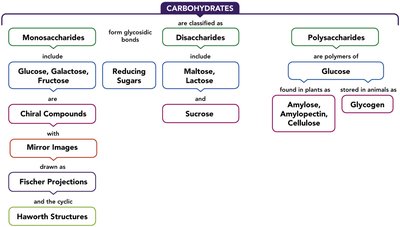
Carbohydrates are classified as monosaccharides, disaccharides, or polysaccharides based on the number of sugar units. They play essential roles in energy storage, structural support, and biological recognition.