 Indietro
Nucleophilic Substitution and β-Elimination: Mechanisms, Factors, and Competition
Guida di studio - Note intelligenti
 Appunti personalizzati basati sui tuoi materiali, ampliati con definizioni chiave, esempi e contesto.
Nucleophilic Substitution and β-Elimination
Introduction to Nucleophilic Substitution and β-Elimination
Nucleophilic substitution and β-elimination are fundamental reactions in organic chemistry, particularly involving haloalkanes. In nucleophilic substitution, a nucleophile replaces a leaving group, while β-elimination involves the removal of a hydrogen and a leaving group from adjacent carbons, forming an alkene. These reactions often compete under similar conditions.
Nucleophile: Electron-rich species (Lewis base) that donates a pair of electrons.
Electrophile: Electron-deficient species (Lewis acid) that accepts a pair of electrons.
Leaving Group: The group displaced in substitution or lost in elimination, ideally forming a stable anion.
β-Elimination: Removal of a hydrogen (β to the leaving group) and the leaving group, forming a double bond.

Example: Hydroxide ion attacks chloromethane, replacing Cl- with OH-.
Competing Reactions: Substitution vs. Elimination
When a haloalkane is treated with a nucleophile/base, both substitution and elimination can occur. The outcome depends on the nature of the nucleophile/base, the substrate, and the reaction conditions.
Substitution: Nucleophile attacks the carbon bearing the leaving group.
Elimination: Base removes a β-hydrogen, leading to alkene formation.
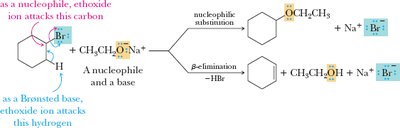
Example: Ethoxide ion can act as a nucleophile (substitution) or as a base (elimination).
Types of Nucleophilic Substitution Reactions
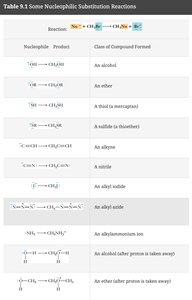
Nucleophilic substitution reactions can produce a variety of products depending on the nucleophile used. The following table summarizes common nucleophilic substitution reactions:
Nucleophile | Product | Class of Compound Formed |
|---|---|---|
HO- | CH3OH | An alcohol |
CH3O- | CH3OCH3 | An ether |
HS- | CH3SH | A thiol (a mercaptan) |
CH3S- | CH3SCH3 | A sulfide (a thioether) |
CN- | CH3CN | A nitrile |
I- | CH3I | An alkyl iodide |
N3- | CH3N3 | An alkyl azide |
CH3CO2- | CH3CO2CH3 | An alkylammonium ion |
NH3 | CH3NH3+ | An alkylammonium ion (other proton is taken away) |
Mechanisms of Nucleophilic Aliphatic Substitution
SN2 Mechanism
The SN2 (bimolecular nucleophilic substitution) mechanism occurs in a single step, with the nucleophile attacking the substrate as the leaving group departs. Both reactants are involved in the rate-determining step.
Backside attack: Nucleophile attacks from the side opposite the leaving group.
Transition state: Bond formation and bond breaking occur simultaneously.
Rate law:
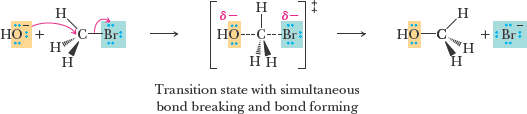
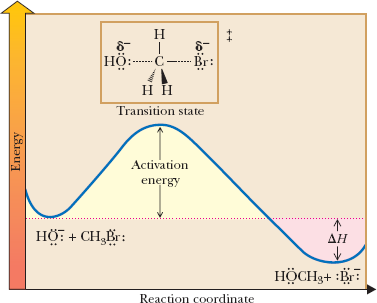
Example: Hydroxide ion attacks methyl bromide, forming methanol and bromide ion.
SN1 Mechanism
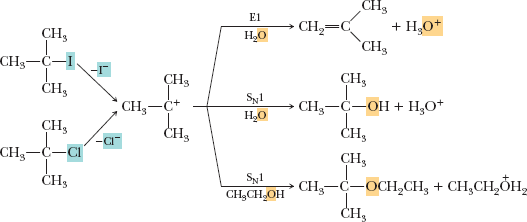
The SN1 (unimolecular nucleophilic substitution) mechanism occurs in two steps: first, the leaving group departs, forming a carbocation intermediate; second, the nucleophile attacks the carbocation. Only the substrate is involved in the rate-determining step.
Carbocation intermediate: Formed after leaving group departs.
Rate law:
Solvolysis: The solvent acts as the nucleophile.
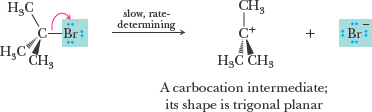
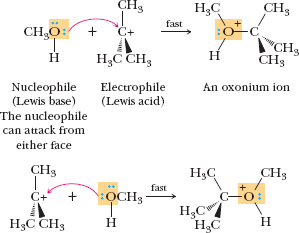
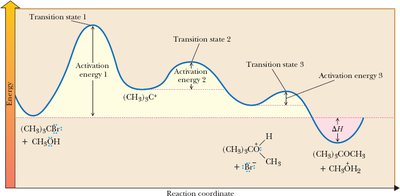
Example: tert-Butyl bromide reacts with methanol, forming tert-butyl methyl ether.
Key Mechanism Differences: SN1 vs. SN2
SN2: One-step, simultaneous bond breaking/forming, inversion of configuration.
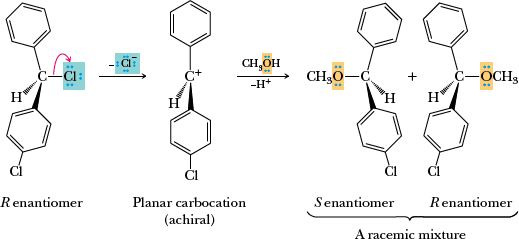
SN1: Two-step, carbocation intermediate, possible racemization.
Experimental Evidence and Stereochemistry
Kinetics and Stereochemistry
Kinetic studies and stereochemical outcomes help distinguish SN1 and SN2 mechanisms.
SN1: First-order kinetics, partial racemization, ion pair formation.
SN2: Second-order kinetics, complete inversion of configuration.
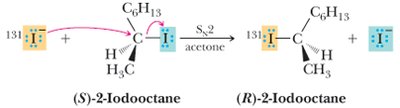
Example: Displacement of iodine-127 by iodine-131 in 2-iodooctane proceeds with inversion, confirming SN2.
Factors Affecting Nucleophilic Substitution and Elimination
Structure of Haloalkane
The structure of the alkyl portion affects the mechanism:
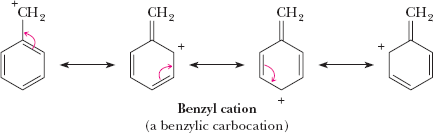
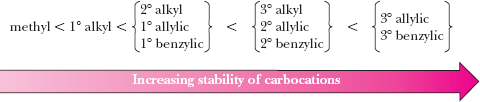
SN1: Favored by tertiary, allylic, and benzylic carbocations due to stability.
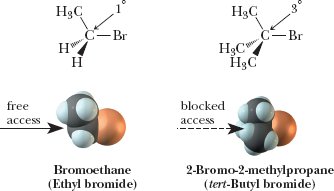
SN2: Favored by primary haloalkanes; hindered by bulky groups (steric hindrance).
The Leaving Group
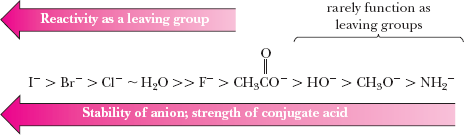
The leaving group's ability is determined by the stability of the anion formed:
Good leaving groups: I-, Br-, Cl-
Poor leaving groups: HO-, CH3O-, NH2-
The Solvent
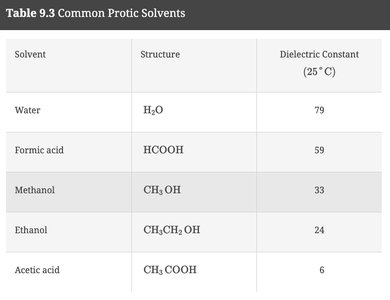
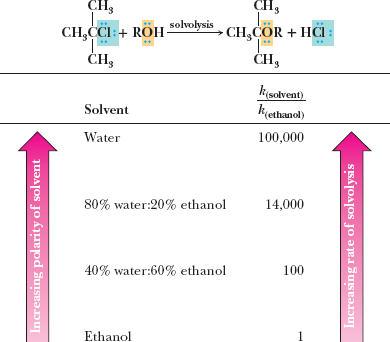
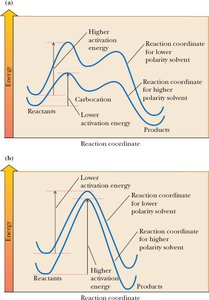
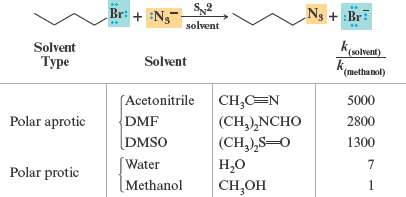
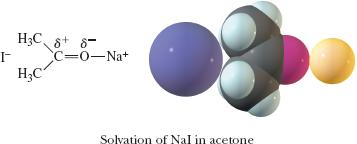
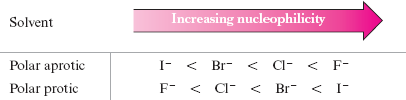
Solvents are classified as protic (hydrogen-donating) or aprotic, and as polar or nonpolar. Solvent choice affects reaction rate, nucleophilicity, and mechanism balance.
Polar protic solvents: Stabilize carbocations and anions, favor SN1.
Polar aprotic solvents: Favor SN2 by weakly solvating anions.
Structure of the Nucleophile
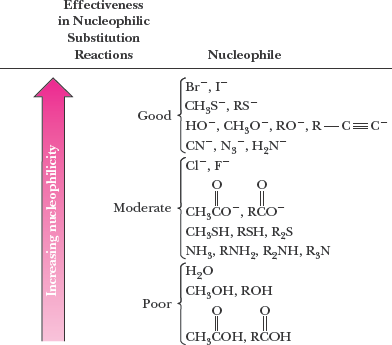
Nucleophilicity is a kinetic property, while basicity is an equilibrium property. Strong, sterically unhindered bases are good nucleophiles. Solvent interactions also affect nucleophilicity.
Good nucleophiles: Br-, I-, HO-, CH3O-, RS-
Moderate nucleophiles: CH3CO-, RCO-, NH3
Poor nucleophiles: H2O, ROH, CH3COOH
Skeletal Rearrangement
Carbocation Rearrangement in SN1
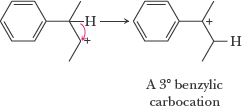
Skeletal rearrangement occurs in SN1 reactions when carbocation intermediates rearrange to more stable forms. SN2 reactions do not involve rearrangement.
Hydride shift: Hydrogen moves with its electrons to stabilize the carbocation.
Result: Formation of more stable tertiary or benzylic carbocations.

Analysis and Prediction of Nucleophilic Substitution Reactions
Factors to Consider
Structure of the haloalkane
The nucleophile
The leaving group
The solvent
β-Elimination Mechanisms
E1 Mechanism
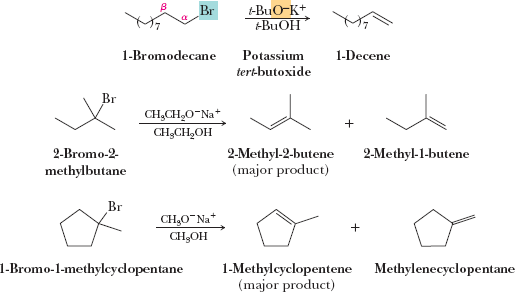
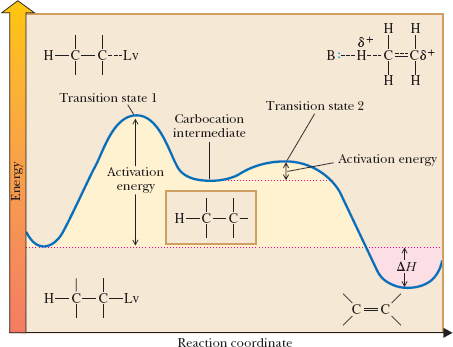
E1 (unimolecular elimination) involves formation of a carbocation intermediate before the base removes a proton. The rate-determining step is carbocation formation.
E2 Mechanism
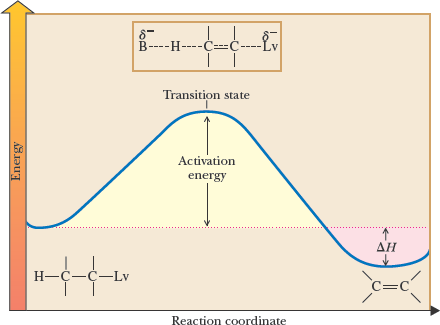
E2 (bimolecular elimination) occurs in a single step: the base removes a proton as the leaving group departs, forming a double bond.
Zaitsev's Rule
Zaitsev's rule states that the major product of a β-elimination is the most substituted (stable) alkene.

Substitution vs. Elimination: Competition and Prediction
SN1 vs. E1 Reactions
Tertiary haloalkanes in polar protic solvents yield mixtures of substitution and elimination products. SN1 predominates with weak bases.
SN2 vs. E2 Reactions
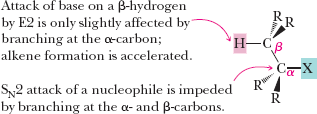
Branching at α- or β-carbons increases steric hindrance, retarding SN2 and accelerating E2. Nucleophilicity and basicity of the reagent, as well as temperature, influence the outcome.
Summary Tables
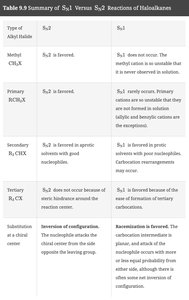
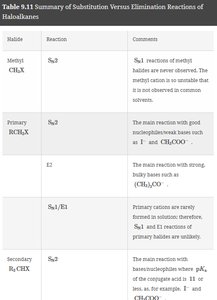
The following tables summarize the characteristics and outcomes of SN1, SN2, E1, and E2 reactions:
Type of Alkyl Halide | SN2 | SN1 |
|---|---|---|
Methyl CH3X | SN2 is favored | SN1 does not occur |
Primary RCH2X | SN2 is favored | SN1 rarely occurs |
Secondary R2CHX | SN2 is favored in aprotic solvents | SN1 is favored in protic solvents |
Tertiary R3CX | SN2 does not occur | SN1 is favored |
Halide | Reaction | Comments |
|---|---|---|
Methyl CH3X | SN2 | SN1 reactions never observed |
Primary RCH2X | SN2/E1 | Main reaction with good nucleophiles/bases |
Secondary R2CHX | SN2/E1 | Main reactions with strong, bulky bases |
Conclusion
Nucleophilic substitution and β-elimination are central to organic chemistry, with their mechanisms and outcomes determined by substrate structure, nucleophile/base strength, leaving group ability, and solvent effects. Understanding these factors allows prediction and control of reaction pathways, essential for synthesis and analysis in organic chemistry.
