 Indietro
Nucleophilic Substitution and β-Elimination: Mechanisms, Factors, and Competition
Guida di studio - Note intelligenti
 Appunti personalizzati basati sui tuoi materiali, ampliati con definizioni chiave, esempi e contesto.
Nucleophilic Substitution and β-Elimination
Introduction
Nucleophilic substitution and β-elimination are fundamental reaction types in organic chemistry, particularly for haloalkanes. These reactions involve the replacement of a leaving group by a nucleophile or the removal of a hydrogen and a leaving group from adjacent carbons, respectively. Understanding their mechanisms, factors affecting their rates, and the competition between them is essential for predicting organic reaction outcomes.
Nucleophilic Substitution: Concepts and Mechanisms
Key Definitions
Nucleophile: An electron-rich species (Lewis base) that donates a pair of electrons to an electrophile.
Electrophile: An electron-deficient species (Lewis acid) that accepts a pair of electrons.
Leaving Group: The atom or group that is displaced during a substitution or elimination reaction, ideally forming a stable anion.
In nucleophilic substitution, new bonds are formed between the nucleophile and the electrophile, while bonds to the leaving group are broken.

Types of Nucleophilic Substitution Mechanisms
SN2 Mechanism (Bimolecular)
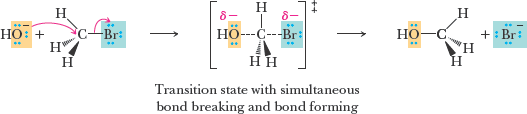
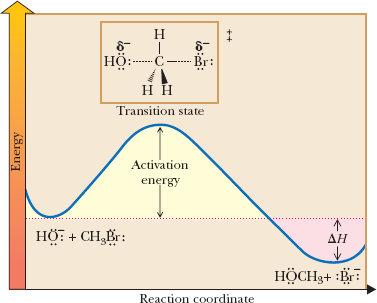
The SN2 mechanism occurs in a single step, with the nucleophile attacking the electrophilic carbon from the opposite side of the leaving group (backside attack). Bond formation and bond breaking happen simultaneously, resulting in a transition state but no intermediate.
Rate Law: Second order, dependent on both nucleophile and substrate concentrations.
Stereochemistry: Inversion of configuration at the reaction center.
SN1 Mechanism (Unimolecular)
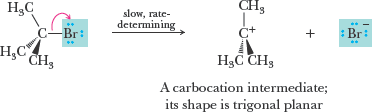
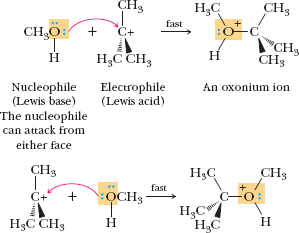
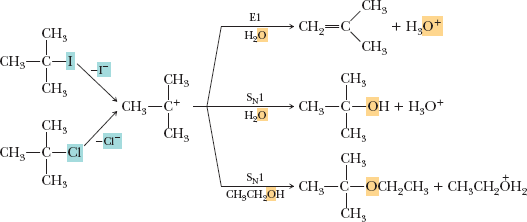
The SN1 mechanism involves two steps: first, the leaving group departs, forming a carbocation intermediate; second, the nucleophile attacks the carbocation. The rate-determining step is the formation of the carbocation, making the reaction first order with respect to the substrate.
Rate Law: First order, dependent only on substrate concentration.
Stereochemistry: Racemization or partial racemization due to planar carbocation intermediate.
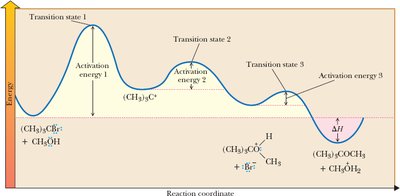
Comparison of SN1 and SN2 Mechanisms
SN2: One-step, simultaneous bond making and breaking, inversion of configuration.
SN1: Two-step, carbocation intermediate, racemization or partial racemization.
Experimental Evidence and Kinetics
Kinetic Analysis
SN1: Rate depends only on substrate concentration.
SN2: Rate depends on both substrate and nucleophile concentrations.
Example: Doubling the nucleophile concentration in an SN1 reaction does not affect the rate.
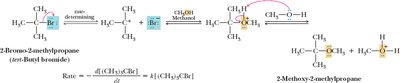
Stereochemistry of Substitution Reactions
SN1 Stereochemistry
Carbocation intermediate is planar, allowing nucleophilic attack from either face.
Results in racemization or partial racemization.
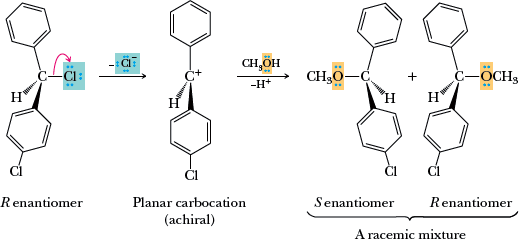
SN2 Stereochemistry
Backside attack leads to inversion of configuration.
Complete inversion observed in reactions with chiral centers.
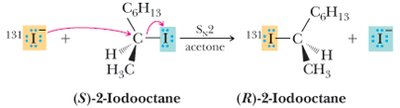
Factors Affecting Substitution Mechanisms
Structure of the Alkyl Portion
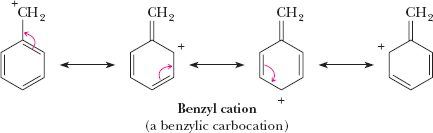
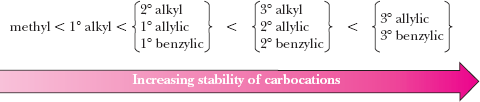
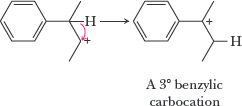
SN1 favored by tertiary, allylic, and benzylic carbocations due to stability.
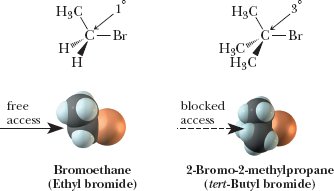
SN2 favored by primary haloalkanes due to less steric hindrance.
Steric hindrance blocks SN2 reactions at tertiary centers.
The Leaving Group
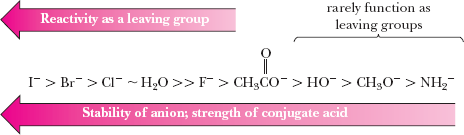
Good leaving groups form stable anions (weak bases).
Order of leaving group ability: I- > Br- > Cl- > H2O > F- > CH3CO- > HO- > CH3O- > NH2-
The Solvent
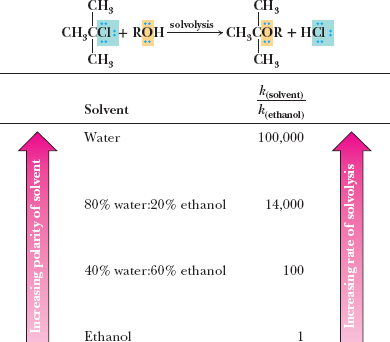
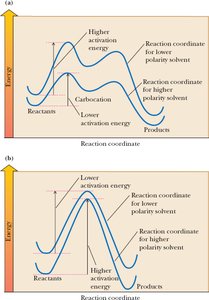
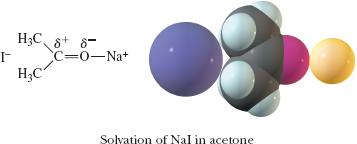
Protic solvents (e.g., water, alcohols) stabilize carbocations and anions, favoring SN1.
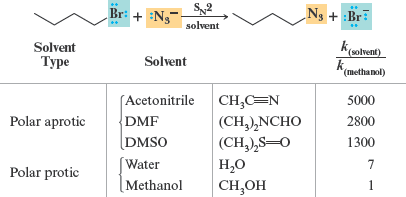
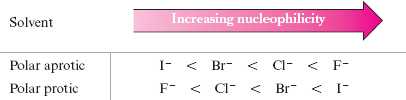
Aprotic solvents (e.g., DMSO, acetonitrile) favor SN2 by weakly solvating anions.
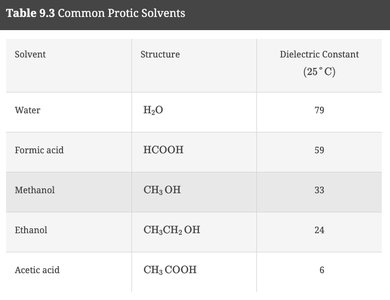
Dielectric constant measures solvent polarity; higher values indicate greater polarity.
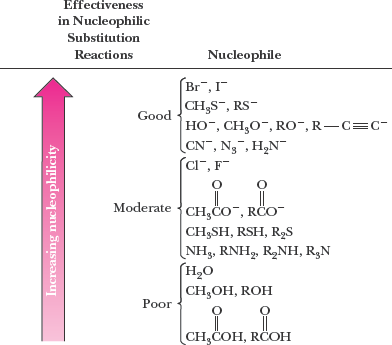
Structure of the Nucleophile
Nucleophilicity is a kinetic property; basicity is an equilibrium property.
Strong, sterically unhindered bases are good nucleophiles.
Polar aprotic solvents enhance nucleophilicity of anions; polar protic solvents decrease it.
Skeletal Rearrangement
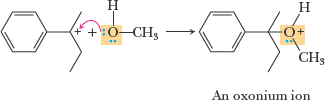
Skeletal rearrangement occurs in reactions involving carbocation intermediates (SN1), allowing migration to more stable carbocations. SN2 reactions do not undergo rearrangement.

Analysis and Prediction of Nucleophilic Substitution Reactions
To predict products and mechanisms, consider the structure of the haloalkane, nucleophile, leaving group, and solvent.
β-Elimination: Concepts and Mechanisms
Definition and Mechanism
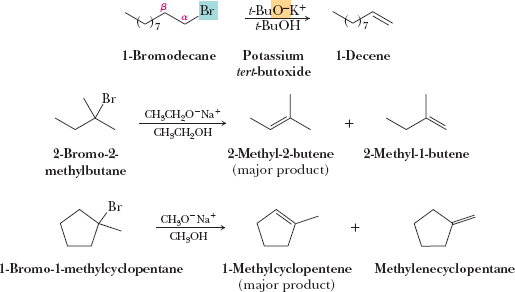
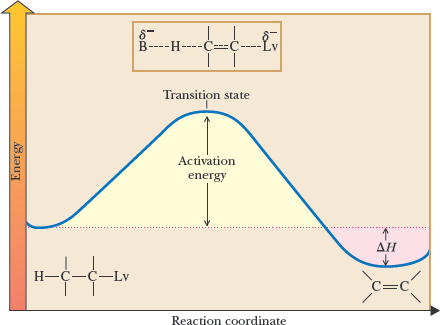
β-elimination involves removal of a hydrogen and a leaving group from adjacent carbons, forming an alkene.
Dehydrohalogenation is a common β-elimination, promoted by strong bases.
Zaitsev’s rule: The most substituted alkene is the major product.

E1 and E2 Mechanisms
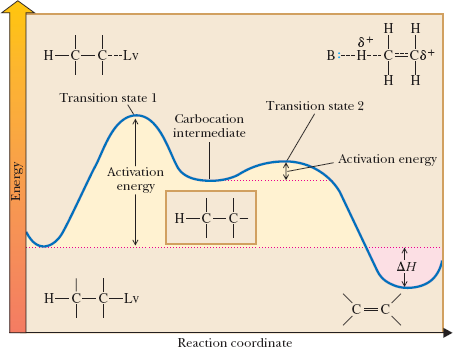
E1: Unimolecular elimination; carbocation intermediate forms before base removes a proton.
E2: Bimolecular elimination; base removes a proton and leaving group departs simultaneously.
Competition Between Substitution and Elimination
SN1 vs E1
Tertiary haloalkanes in polar protic solvents yield mixtures of substitution and elimination products.
SN1 predominates with weak bases; E1 increases with strong bases and higher temperatures.
SN2 vs E2
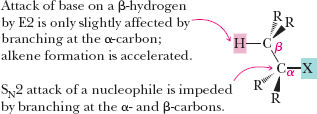
Branching at α- or β-carbons increases steric hindrance, retarding SN2 and accelerating E2.
Strong nucleophiles favor SN2; strong bases favor E2.
Higher temperatures favor elimination.
Decision Flowchart and Summary Tables
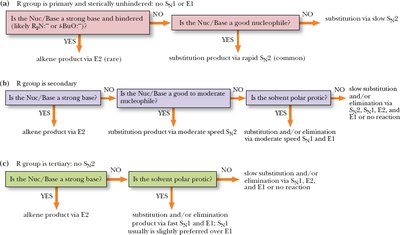
Use flowcharts and summary tables to predict whether substitution or elimination will dominate based on substrate, nucleophile/base, and solvent.
Summary Table: Nucleophilic Substitution Reactions
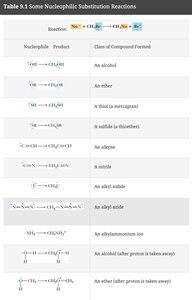
The following table summarizes common nucleophilic substitution reactions, their products, and the class of compound formed.
Nucleophile | Product | Class of Compound Formed |
|---|---|---|
HO- | CH3OH | An alcohol |
CH3O- | CH3OCH3 | An ether |
SH- | CH3SH | A thiol (a mercaptan) |
SCN- | CH3SCN | A sulfide (a thioether) |
CN- | CH3CN | A nitrile |
I- | CH3I | An alkyl iodide |
N3- | CH3N3 | An alkyl azide |
CH3CO2- | CH3CO2CH3 | An alkylammonium ion |
NH2 | CH3NH2 | An amine (other proton is taken away) |
RNH2 | CH3RNH | An amine (other proton is taken away) |
Summary Table: Common Protic Solvents
Solvent | Structure | Dielectric Constant (25°C) |
|---|---|---|
Water | H2O | 79 |
Formic acid | HCOOH | 59 |
Methanol | CH3OH | 33 |
Ethanol | CH3CH2OH | 24 |
Acetic acid | CH3COOH | 6 |
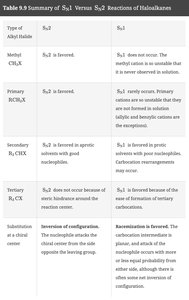
Summary Table: SN1 vs SN2 Reactions of Haloalkanes
Type of Alkyl Halide | SN2 | SN1 |
|---|---|---|
Methyl CH3X | SN2 is favored | SN1 does not occur |
Primary RCH2X | SN2 is favored | SN1 rarely occurs |
Secondary R2CHX | SN2 is favored in aprotic solvents | SN1 is favored in protic solvents |
Tertiary R3CX | SN2 does not occur | SN1 is favored |
Substitution at a chiral center | Inversion of configuration | Racemization is favored |
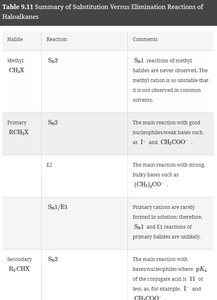
Summary Table: Substitution vs Elimination Reactions of Haloalkanes
Halide | Reaction | Comments |
|---|---|---|
Methyl CH3X | SN2 | SN1 reactions of methyl halides are never observed |
Primary RCH2X | SN2/E1 | Main reaction with good nucleophiles/bases |
Secondary R2CHX | SN2/E1 | Main reactions with strong, bulky bases |
Tertiary R3CX | SN1/E1 | Primary carbocation rarely formed in solution |
Additional info: These notes expand on the original content by providing definitions, mechanistic details, kinetic analysis, stereochemical outcomes, and summary tables for exam preparation. All images included are directly relevant to the adjacent explanations and reinforce key concepts.
