 Indietro
Organic Chemistry Foundations: Atomic Structure, Bonding, Molecular Representations, and Acids/Bases
Guida di studio - Note intelligenti
 Appunti personalizzati basati sui tuoi materiali, ampliati con definizioni chiave, esempi e contesto.
What is Organic Chemistry?
Introduction to Organic Chemistry
Organic chemistry is the study of the structure, properties, and reactions of compounds containing carbon. It forms the basis for understanding biological molecules, pharmaceuticals, and many materials used in daily life.
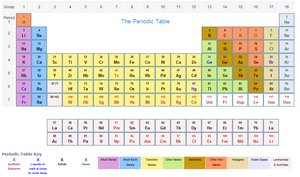
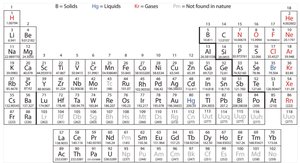
The Atom and the Periodic Table
Atomic Structure
Atoms are composed of three fundamental particles:
Protons: Positively charged, mass = 1.6726 × 10⁻²⁷ kg
Neutrons: Neutral, mass = 1.6750 × 10⁻²⁷ kg
Electrons: Negatively charged, mass = 9.1096 × 10⁻³¹ kg
The atomic number (Z) is the number of protons in the nucleus and defines the element. The mass number (A) is the sum of protons and neutrons.
Electron Configuration and Orbitals
Electrons occupy shells and subshells according to the Aufbau Principle, filling lower energy levels first. The Pauli Exclusion Principle states that no two electrons in the same atom can have the same set of four quantum numbers.
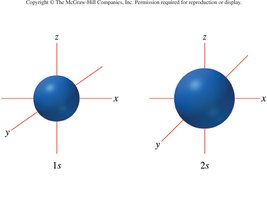
s Orbitals: Spherical shape
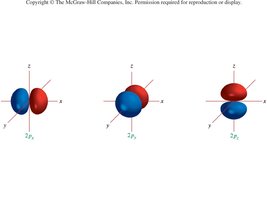
p Orbitals: Dumbbell shape
d Orbitals: More complex shapes
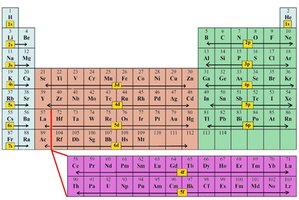
Electronic Configurations in the Periodic Table
Electronic configurations describe the arrangement of electrons in an atom. For example, carbon is 1s22s22p2.
Valence Electrons
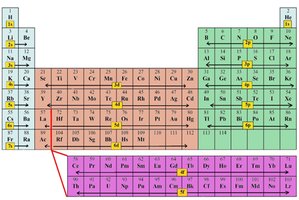
Valence electrons are the outermost electrons and are crucial for chemical bonding. For main group elements, the number of valence electrons equals the group number.
Bonding and Molecular Structure
The Octet Rule
Atoms gain, lose, or share electrons to achieve a stable configuration with eight valence electrons (the octet rule).
Types of Bonds
Ionic Bonding: Electrostatic attraction between oppositely charged ions.
Covalent Bonding: Sharing of electron pairs between atoms.
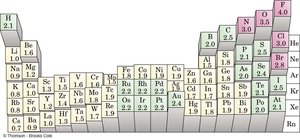
Electronegativity and Bond Polarity
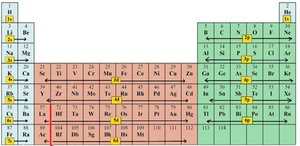
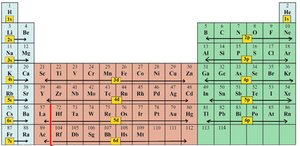
Electronegativity is a measure of an atom's ability to attract electrons. The difference in electronegativity (Δχ) determines bond type:
Δχ < 0.5: Non-polar covalent
0.5 < Δχ < 1.7: Polar covalent
Δχ > 1.7: Ionic
Bond Dipoles and Molecular Dipole Moments
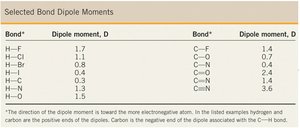
Bond dipoles arise from differences in electronegativity and bond distance. The dipole moment is a vector quantity indicating charge separation.
Bond | Dipole moment, D |
|---|---|
H–F | 1.7 |
H–Cl | 1.1 |
H–Br | 0.8 |
H–I | 0.4 |
H–C | 0.3 |
H–N | 1.3 |
C–F | 1.4 |
C–O | 0.7 |
C–N | 0.2 |
C≡N | 3.6 |
Molecular Representations
Types of Molecular Representations
Molecular Formula: Shows the number of each atom type, no structural info.
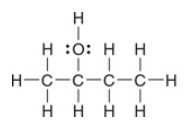
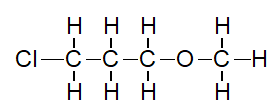
Lewis Structures: Explicitly show atoms and bonds, practical for small molecules.
Condensed Structures: Groups atoms together, omits some bonds.
Bond-Line Formulas: Carbon atoms are implied at intersections/ends; hydrogens on carbon are not shown.
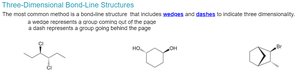
Three-Dimensional Bond-Line Structures
Wedges and dashes indicate three-dimensionality: wedges come out of the page, dashes go behind.
Identifying Functional Groups
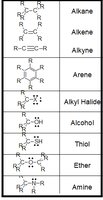
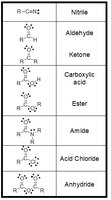
Functional groups are structural units responsible for characteristic chemical behavior.
Functional Group | Structure |
|---|---|
Alkane | R–C–C–R |
Alkene | R–C=C–R |
Alkyne | R–C≡C–R |
Arene | R–Ar |
Alcohol | R–OH |
Ether | R–O–R |
Amine | R–NH2 |
Lewis Structures and Resonance
Lewis Structures
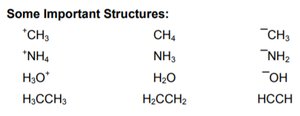
Lewis structures represent molecules pictorially, showing valence electrons as dots. Steps to determine Lewis structures:
Predict connectivity
Count valence electrons
Add electrons for bonds
Calculate unused electrons
Add electrons to fill valences
Add multiple bonds if needed
Check formal charges

Resonance Structures
Resonance occurs when more than one valid Lewis structure exists for a molecule. Rules for resonance:
Connectivity must remain the same
Same number of electrons and net charge
Same number of unpaired electrons
Second-row elements cannot exceed the octet rule
Major contributors maximize bonds, minimize charge, and place negative charge on the most electronegative atom
Resonance stabilizes molecules by electron delocalization.
VSEPR Theory and Molecular Geometry
Valence Shell Electron Pair Repulsion (VSEPR) Theory
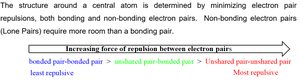
VSEPR theory predicts molecular shape by minimizing repulsions between electron pairs. Non-bonding pairs require more space than bonding pairs.

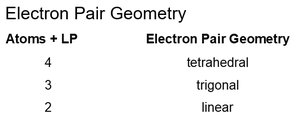
Atoms + LP | Electron Pair Geometry |
|---|---|
4 | Tetrahedral |
3 | Trigonal |
2 | Linear |
Molecular Dipole Moments
Predicting Dipole Moments
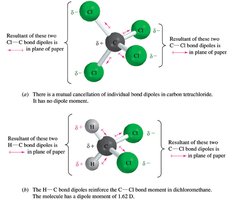
The shape and bond polarity determine the presence and direction of a molecular dipole moment. Examples: HF (polar), CO2 (nonpolar), H2O (polar).
Isomers
Types of Isomers
Isomers are compounds with the same molecular formula but different structures:
Constitutional Isomers: Different connectivity
Stereoisomers: Different spatial arrangement
Acids and Bases
Bronsted-Lowry and Lewis Definitions
Bronsted-Lowry Acid: Proton donor
Bronsted-Lowry Base: Proton acceptor
Lewis Acid: Electron pair acceptor
Lewis Base: Electron pair donor

Acid Strength and pKa
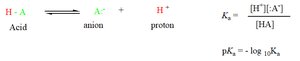
The strength of an acid is measured by its acid dissociation constant (Ka) and pKa value:
Stronger acid: larger Ka, smaller pKa
Weaker acid: smaller Ka, larger pKa
Factors Affecting Acid Strength
Atom: Charge location, electronegativity, size
Resonance: Stabilization of conjugate base
Induction: Presence of electronegative atoms or alkyl groups
Hybridization: s-character increases acidity
Acid-Base Equilibria
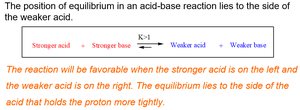
The equilibrium in an acid-base reaction lies to the side of the weaker acid. The reaction is favorable when the stronger acid is on the left and the weaker acid is on the right.
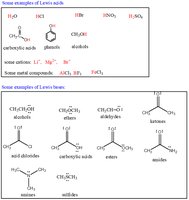
Examples of Lewis Acids and Bases
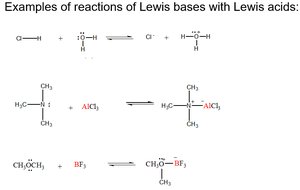
Examples of Lewis Acid-Base Reactions
Additional info: These notes cover foundational topics in organic chemistry, including atomic structure, bonding, molecular representations, and acid-base theory, which are essential for further study in organic reactions and mechanisms.
