 Indietro
Organic Compounds and Alkanes: Structure, Nomenclature, and Reactions
Guida di studio - Note intelligenti
 Appunti personalizzati basati sui tuoi materiali, ampliati con definizioni chiave, esempi e contesto.
Organic Compounds and Alkanes
Introduction to Organic Compounds
Organic compounds are molecules primarily composed of carbon (C) and hydrogen (H), and may also contain oxygen (O), sulfur (S), nitrogen (N), phosphorus (P), or halogens. The study of organic chemistry focuses on the structure, properties, nomenclature, and reactions of these compounds.
Key Elements: C, H, O, S, N, P, Halogens
Bonding: Carbon forms four bonds, nitrogen three, oxygen two, and hydrogen one.
Functional Groups: Specific groupings of atoms within molecules that determine the characteristic chemical reactions of those molecules.
Organic vs. Inorganic Compounds
Organic compounds contain carbon-hydrogen bonds, while inorganic compounds generally do not. Organic compounds are typically molecular, whereas inorganic compounds can be ionic or molecular.
Organic: C-H bonds, molecular structure, often flammable.
Inorganic: May lack C-H bonds, can be ionic, often non-flammable.
Alkanes
Structure and Properties of Alkanes
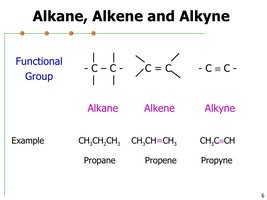
Alkanes are saturated hydrocarbons containing only single bonds between carbon atoms. Their general formula is . They are nonpolar and not soluble in water due to their lack of polar functional groups.
Only C and H atoms
All single bonds (C–C)
Suffix: -ane
Physical Properties: Nonpolar, insoluble in water, often used as fuels.

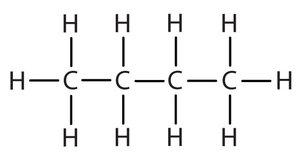

Nomenclature of Alkanes
Alkanes are named using prefixes that indicate the number of carbon atoms (e.g., meth-, eth-, prop-, but-, pent-, hex-, etc.) and the suffix -ane. The longest continuous chain of carbon atoms determines the base name.
Example: CH3CH2CH2CH3 is butane.
Branched Alkanes: Branches are named as alkyl groups (-yl ending), and their positions are indicated by numbers.
Multiple Branches: Use prefixes di-, tri-, tetra- for identical branches; list different branches alphabetically.
Branched and Cycloalkanes
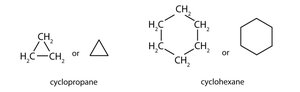
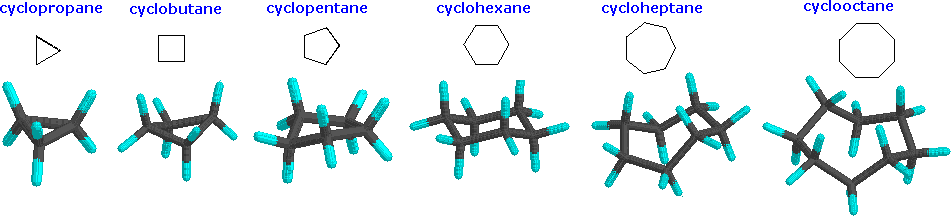
Branched alkanes have carbon chains that are not continuous; some carbons are attached as branches. Cycloalkanes are alkanes that form rings, named with the prefix cyclo-.
Branched Example: 2,3-dimethylpentane
Cycloalkanes: Cyclopropane (triangle), cyclobutane (square), cyclopentane (pentagon), cyclohexane (hexagon), etc.
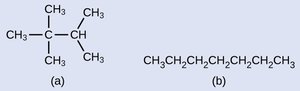
Isomerism in Alkanes
Structural Isomers
Isomers are compounds with the same molecular formula but different structural arrangements. Structural isomers differ in the connectivity of their atoms, leading to different physical and chemical properties.
Example: Pentane, 2-methylbutane, and 2,2-dimethylpropane all have the formula C5H12 but different structures.
Alkenes and Alkynes
Alkenes
Alkenes are unsaturated hydrocarbons containing at least one carbon-carbon double bond (C=C). They are nonpolar and not water soluble. The suffix -ene is used, and the position of the double bond is indicated by a number.
General formula:
Naming: Number the chain to give the double bond the lowest possible number.

Alkynes
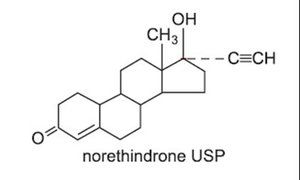
Alkynes are unsaturated hydrocarbons with at least one carbon-carbon triple bond (C≡C). They are nonpolar and not water soluble. The suffix -yne is used, and the position of the triple bond is indicated by a number.
General formula:
Naming: Number the chain to give the triple bond the lowest possible number.
Alcohols, Thiols, Ethers, and Amines
Alcohols
Alcohols contain a hydroxyl group (-OH) bonded to a carbon atom. They are polar and alcohols with four or fewer carbons are water soluble. Alcohols are classified as primary (1°), secondary (2°), or tertiary (3°) based on the number of carbon atoms attached to the carbon bearing the -OH group.
Naming: Suffix -anol (e.g., ethanol, 2-propanol)
Classification: 1° (one C attached), 2° (two Cs attached), 3° (three Cs attached)
Thiols
Thiols contain a sulfhydryl group (-SH) bonded to carbon. They are slightly polar and have strong odors. The suffix -thiol is used in naming.
Example: Propanethiol (CH3CH2CH2SH)
Ethers
Ethers have an oxygen atom connecting two alkyl or aryl groups (R-O-R'). They are slightly polar but generally not water soluble. Ethers are named by listing the alkyl groups in alphabetical order followed by 'ether'.
Example: Butyl ethyl ether
Amines
Amines contain nitrogen and are weak bases. They are named by listing the alkyl groups attached to nitrogen in alphabetical order followed by 'amine'.
Example: Butyl ethyl amine
Carbonyl Compounds: Aldehydes, Ketones, Carboxylic Acids, Esters, and Amides
Aldehydes and Ketones
Aldehydes have a carbonyl group (C=O) at the end of the carbon chain, while ketones have it within the chain. Both are polar and water soluble if they have four or fewer carbons.
Aldehyde Naming: -anal (e.g., pentanal)
Ketone Naming: -anone (e.g., 2-hexanone)
Carboxylic Acids
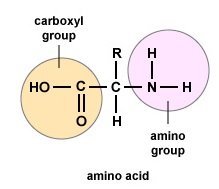
Carboxylic acids contain a carboxyl group (-COOH) at the end of the chain. They are polar, weak acids, and water soluble if they have four or fewer carbons. The suffix -anoic acid is used.
Example: 3-ethylpentanoic acid
Esters
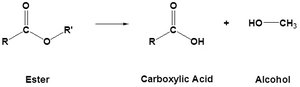
Esters are derived from carboxylic acids and alcohols. They are slightly polar, not water soluble, and have pleasant odors. The alcohol-derived part is named as an alkyl group, and the acid-derived part as an alkanoate.
Example: Methyl propanoate
Amides
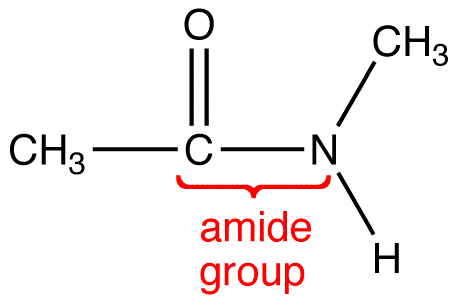
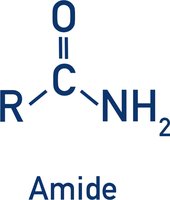
Amides are formed from the reaction of a carboxylic acid and an amine. They are important in protein structure, slightly polar, and not water soluble.
Example: Structure of a simple amide group
Organic Reactions
Combustion
All organic compounds are flammable and undergo combustion to produce carbon dioxide and water.
General equation:
Addition Reactions
Addition reactions typically occur with alkenes and alkynes, where new atoms are added to the carbons of a double or triple bond, converting them to single bonds.
Hydrogenation: Addition of H2
Halogenation: Addition of X2 (X = halogen)
Hydrohalogenation: Addition of HX
Oxidation of Alcohols, Aldehydes, and Ketones
Oxidation involves increasing the number of carbon-oxygen bonds and/or decreasing the number of carbon-hydrogen bonds. The outcome depends on the type of alcohol:
Primary alcohols: Oxidize to aldehydes, then to carboxylic acids
Secondary alcohols: Oxidize to ketones
Tertiary alcohols: Do not oxidize
Aldehydes: Oxidize to carboxylic acids
Ketones: Do not oxidize further
Oxidation of Thiols
Thiols oxidize to form disulfides through oxidative coupling, where two thiol molecules combine and form an S–S bond.
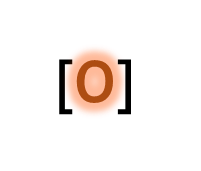
General reaction: 2 R–SH + [O] → R–S–S–R + H2O
Neutralization Reactions
Amines (weak bases) react with strong acids to form amine salts, while carboxylic acids (weak acids) react with strong bases to form carboxylic acid salts. These reactions are important in biological and synthetic contexts.
Ester and Amide Reactions
Esters are formed from the reaction of a carboxylic acid and an alcohol, while amides are formed from a carboxylic acid and an amine. Both can be hydrolyzed (broken down) by acids or bases, yielding different products depending on the conditions.
Ester hydrolysis (acid): Ester + H2O → Carboxylic acid + Alcohol
Ester hydrolysis (base): Ester + Base → Carboxylic acid salt + Alcohol
Amide hydrolysis (acid): Amide + Acid → Carboxylic acid + Amine salt
Amide hydrolysis (base): Amide + Base → Carboxylic acid salt + Amine
