 Indietro
Organic Compounds: Structure, Nomenclature, and Reactions
Guida di studio - Note intelligenti
 Appunti personalizzati basati sui tuoi materiali, ampliati con definizioni chiave, esempi e contesto.
Organic Compounds and Alkanes
Introduction to Organic Compounds
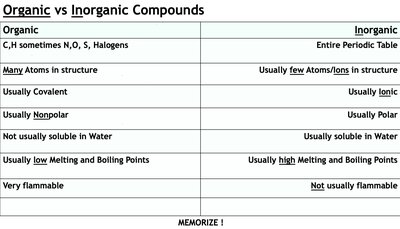
Organic chemistry is the study of compounds primarily composed of carbon and hydrogen, often containing other elements such as oxygen, nitrogen, sulfur, phosphorus, and halogens. Organic compounds are distinct from inorganic compounds in their structure, bonding, and properties.
Organic compounds contain mainly C and H, sometimes O, N, S, P, or halogens.
Inorganic compounds can contain elements from the entire periodic table.
Organic | Inorganic |
|---|---|
C, H, sometimes N, O, S, Halogens | Entire Periodic Table |
Many atoms in structure | Usually few atoms/ions in structure |
Usually covalent | Usually ionic |
Usually nonpolar | Usually polar |
Not usually soluble in water | Usually soluble in water |
Usually low melting and boiling points | Usually high melting and boiling points |
Very flammable | Not usually flammable |
Alkanes and Cycloalkanes
Structure and Nomenclature of Alkanes
Alkanes are saturated hydrocarbons containing only single bonds between carbon atoms. Their general formula is CnH2n+2. They are non-polar and not soluble in water due to their inability to interact with polar water molecules.
Suffix: -ane (e.g., methane, ethane, propane)
Used as fuels due to their flammability
Not water soluble because water is polar and alkanes are non-polar
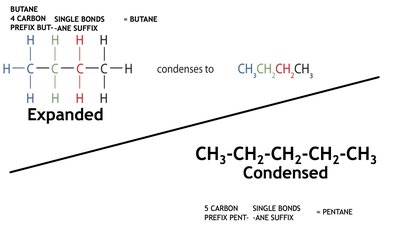
Alkanes can be represented in expanded or condensed structural formulas:
Branched Alkanes
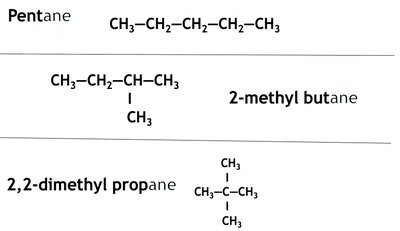
Branched alkanes contain carbon chains that are not continuous, with branches off the main chain. Naming involves identifying the longest continuous chain, naming branches as alkyl groups (-yl), and numbering the chain to give the lowest possible numbers to branches.
Branches are named in alphabetical order.
Numbers indicate the position of branches.
Multiple branches of the same type use prefixes (di-, tri-, etc.).
Cycloalkanes
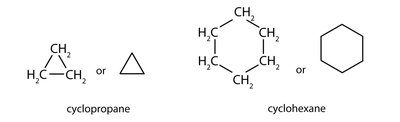
Cycloalkanes are alkanes that form rings or cycles. They are represented by geometric shapes, such as triangles for cyclopropane and hexagons for cyclohexane.
General formula: CnH2n
Named with the prefix 'cyclo-' (e.g., cyclopropane, cyclohexane)
Isomerism in Organic Compounds
Structural Isomers
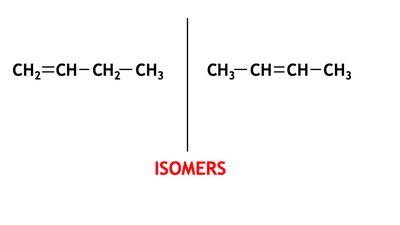
Isomers are compounds with the same molecular formula but different structural arrangements. This leads to differences in physical and chemical properties.
Physical properties: Melting point, boiling point, density, etc.
Chemical properties: Reactivity and types of reactions
Functional Groups in Organic Chemistry
Overview of Functional Groups
Functional groups are specific groups of atoms within molecules that determine the characteristic chemical reactions of those molecules. They are the basis for classifying organic compounds and predicting their reactivity.
Alkanes: C–C single bonds
Alkenes: C=C double bonds
Alkynes: C≡C triple bonds
Alcohols: –OH group
Thiols: –SH group
Ethers: R–O–R'
Aldehydes: –CHO group
Ketones: C=O on an interior carbon
Carboxylic acids: –COOH group
Esters: –COOR group
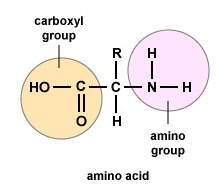
Amines: –NH2 group
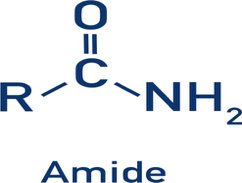
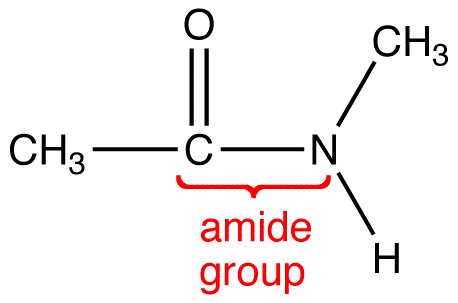
Amides: –CONH2 group
Properties and Nomenclature of Key Functional Groups
Alkenes: Non-polar, contain C=C, suffix -ene, require numbering for double bond location.
Alkynes: Non-polar, contain C≡C, suffix -yne, require numbering for triple bond location.
Alcohols: Polar, contain –OH, suffix -anol, classified as primary, secondary, or tertiary based on the number of carbons attached to the carbon bearing the –OH group.
Thiols: Slightly polar, contain –SH, suffix -thiol, often have strong odors.
Ethers: Slightly polar, R–O–R', named as separate word 'ether', branches named as alkyl groups.
Aldehydes: Polar, contain –CHO at end, suffix -anal, always on first carbon.
Ketones: Polar, contain C=O on interior carbon, suffix -anone, location must be specified.
Carboxylic acids: Polar, contain –COOH at end, suffix -anoic acid, weak acids, always on first carbon.
Esters: Slightly polar, contain –COOR, suffix -anoate, named from alcohol and acid components, often have fruity odors.
Amines: Weak bases, contain –NH2, suffix -amine, named as branches in alphabetical order.
Amides: Slightly polar, contain –CONH2, formed from carboxylic acid and amine, important in proteins.

Organic Reactions
Combustion
All organic compounds are flammable and undergo combustion to produce carbon dioxide and water:
Addition Reactions
Addition reactions typically occur with alkenes, where new atoms are added to the carbons of the double bond, converting it to a single bond.
Oxidation Reactions
Primary alcohols oxidize to aldehydes, then to carboxylic acids.
Secondary alcohols oxidize to ketones (which do not oxidize further).
Tertiary alcohols do not oxidize.
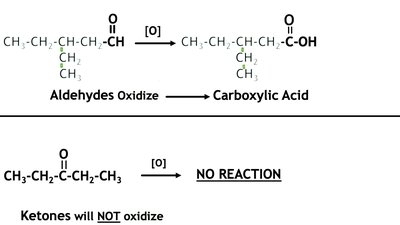
Aldehydes oxidize to carboxylic acids.
Ketones do not oxidize under normal conditions.
Neutralization Reactions
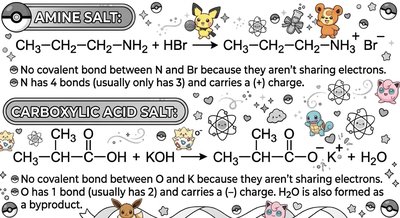
Amines (weak bases) react with strong acids to form amine salts. Carboxylic acids (weak acids) react with strong bases to form carboxylic acid salts.
Esterification and Hydrolysis
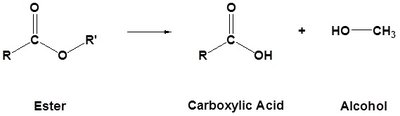
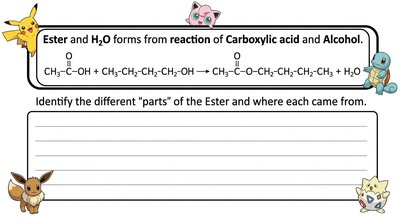
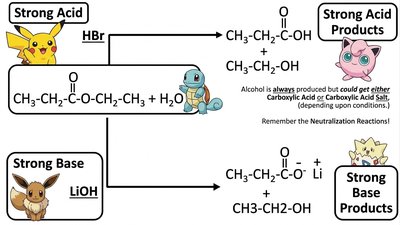
Esters are formed from the reaction of a carboxylic acid and an alcohol. Hydrolysis of esters (breaking with water) can be acid- or base-catalyzed, producing different products:
Acid hydrolysis: Ester + acid → carboxylic acid + alcohol
Base hydrolysis (saponification): Ester + base → carboxylic acid salt + alcohol
Amide Formation and Hydrolysis
Amides are formed from the reaction of a carboxylic acid and an amine. Hydrolysis of amides can also be acid- or base-catalyzed:
Acid hydrolysis: Amide + acid → carboxylic acid + amine salt
Base hydrolysis: Amide + base → carboxylic acid salt + amine
Summary Table: Typical Bonds in Organic Elements
Element | # of Bonds Typically Seen |
|---|---|
C (Carbon) | 4 |
N (Nitrogen) | 3 |
O (Oxygen) | 2 |
S (Sulfur) | 2 |
H (Hydrogen) | 1 |
Halogens | 1 |
Prefixes for Organic Nomenclature
Prefix | # of Carbons |
|---|---|
meth- | 1 |
eth- | 2 |
prop- | 3 |
but- | 4 |
pent- | 5 |
hex- | 6 |
hept- | 7 |
oct- | 8 |
non- | 9 |
dec- | 10 |
Additional info: These notes provide a foundational overview of organic chemistry, focusing on structure, nomenclature, functional groups, and key reactions. For further study, students should practice drawing structures, naming compounds, and predicting reaction products.
