 Indietro
Organic Molecules and Functional Groups: Structure, Properties, and Reactivity
Guida di studio - Note intelligenti
 Appunti personalizzati basati sui tuoi materiali, ampliati con definizioni chiave, esempi e contesto.
Organic Molecules and Functional Groups
Introduction to Functional Groups
Functional groups are specific groups of atoms within molecules that are responsible for the characteristic chemical reactions of those molecules. The presence and type of functional group in an organic molecule determine its bonding, shape, physical properties, nomenclature, and chemical reactivity.
Definition: A functional group is an atom or group of atoms within a molecule that shows a characteristic set of physical and chemical properties.
Importance: Functional groups are the reactive sites in molecules and dictate how molecules interact with each other.
General Structure: Organic molecules are often represented as R–Functional Group, where R is the carbon skeleton.
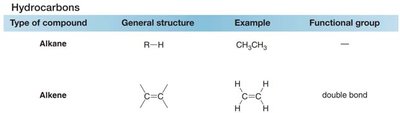
Properties Determined by Functional Groups:
Bonding and shape
Type and strength of intermolecular forces
Physical properties (boiling point, melting point, solubility)
Nomenclature
Chemical reactivity
Types of Organic Compounds and Functional Groups
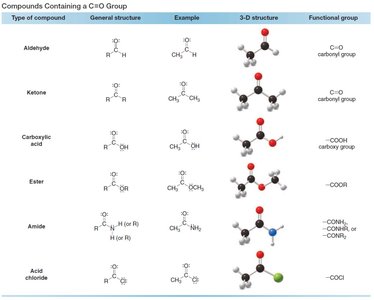
Hydrocarbons
Hydrocarbons are organic compounds composed only of carbon and hydrogen. They are classified based on the type of bonding between carbon atoms.
Type of compound | General structure | Example | Functional group |
|---|---|---|---|
Alkane | R–H | CH3CH3 | — |
Alkene | R2C=CR2 | H2C=CH2 | Double bond |
Alkyne | R–C≡C–R | HC≡CH | Triple bond |
Arene | Ar–H | C6H6 | Aromatic ring |
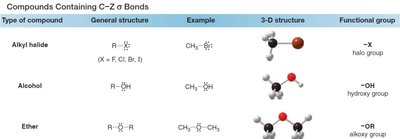
Compounds Containing C–Z Bonds
Organic compounds may also contain bonds between carbon and more electronegative elements (Z = halogen, O, N, S, etc.), leading to various functional groups:
Type of compound | General structure | Example | 3-D structure | Functional group |
|---|---|---|---|---|
Alkyl halide | R–X (X = F, Cl, Br, I) | CH3CH2Br | — | Halo group |
Alcohol | R–OH | CH3CH2OH | — | Hydroxy group |
Ether | R–O–R | CH3CH2OCH3 | — | Alkoxy group |
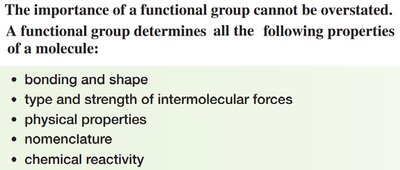
Compounds Containing a C=O Group
Carbonyl-containing compounds are a major class in organic chemistry, with the carbonyl group (C=O) as the functional group.
Type of compound | General structure | Example | 3-D structure | Functional group |
|---|---|---|---|---|
Aldehyde | R–CHO | CH3CHO | — | C=O (carbonyl group) |
Ketone | R2C=O | CH3COCH3 | — | C=O (carbonyl group) |
Carboxylic acid | R–COOH | CH3COOH | — | –COOH (carboxyl group) |
Ester | R–COOR | CH3COOCH3 | — | –COOR (ester group) |
Amide | R–CONH2 | CH3CONH2 | — | –CONH2 (amide group) |
Acid chloride | R–COCl | CH3COCl | — | –COCl (acid chloride group) |
Intermolecular Forces and Physical Properties
Types of Intermolecular Forces
Intermolecular forces are the forces of attraction between molecules, which significantly affect the physical properties of organic compounds.
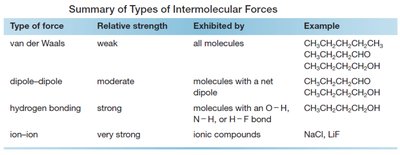
Type of force | Relative strength | Exhibited by | Example |
|---|---|---|---|
van der Waals | weak | all molecules | CH3CH2CH2CH3 |
dipole–dipole | moderate | molecules with a net dipole | CH3CH2CH2CHO |
hydrogen bonding | strong | molecules with O–H, N–H, or F–H bonds | CH3CH2CH2OH |
ion–ion | very strong | ionic compounds | NaCl, LiF |
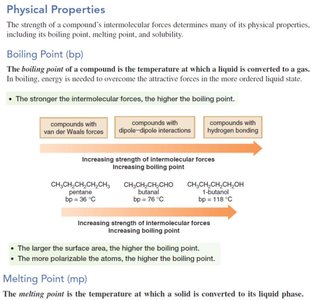
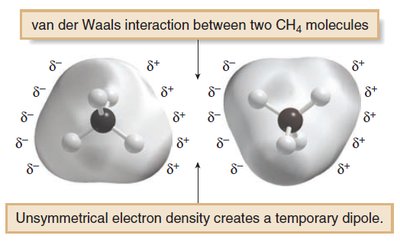
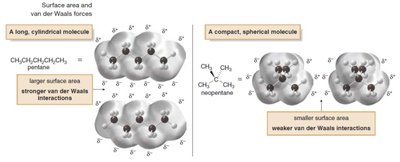
van der Waals (London) forces: Weak attractions due to temporary dipoles in all molecules. Larger surface area and higher polarizability increase strength.
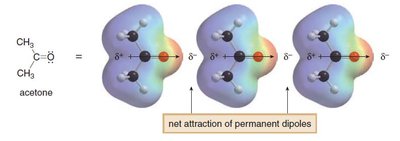
Dipole–dipole interactions: Moderate attractions between permanent dipoles of polar molecules.
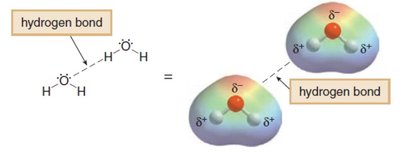
Hydrogen bonding: Strong attraction when H is bonded to O, N, or F and attracted to a lone pair on another O, N, or F.
Ion–ion interactions: Very strong attractions between oppositely charged ions.
Physical Properties: Boiling and Melting Points
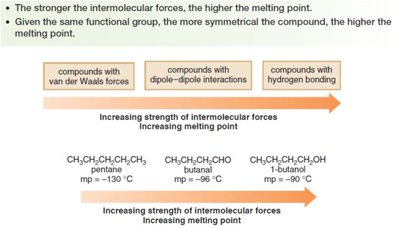
The strength of intermolecular forces directly affects boiling and melting points. Stronger forces result in higher boiling and melting points.
Boiling Point (bp): The temperature at which a liquid is converted to a gas. Stronger intermolecular forces require more energy to overcome, resulting in a higher bp.
Melting Point (mp): The temperature at which a solid is converted to a liquid. Stronger forces and greater molecular symmetry increase mp.
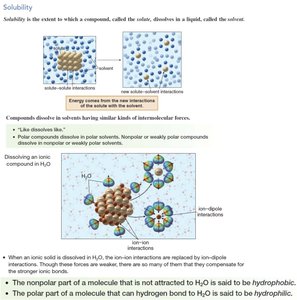
Solubility
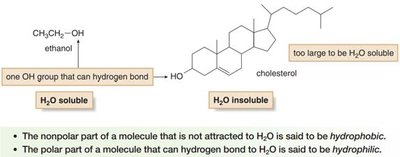
Solubility is the extent to which a compound (solute) dissolves in a liquid (solvent). Compounds dissolve best in solvents with similar types of intermolecular forces ("like dissolves like").
Polar compounds dissolve in polar solvents (e.g., water).
Nonpolar compounds dissolve in nonpolar solvents (e.g., hexane).
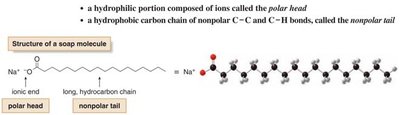
Hydrophilic: Molecules or parts of molecules that can hydrogen bond to water.
Hydrophobic: Nonpolar parts of molecules that do not interact with water.
Micelles and Biological Membranes
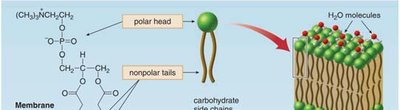
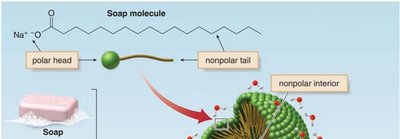
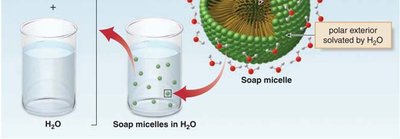
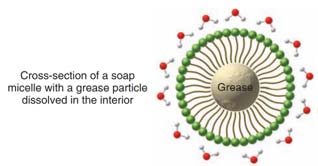
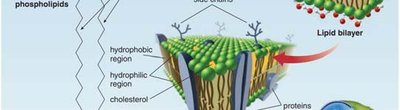
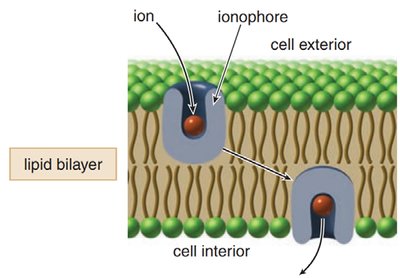
Amphipathic molecules, such as soaps and phospholipids, contain both hydrophilic and hydrophobic regions. In water, they form micelles or bilayers, which are essential for biological membranes.
Micelle: Spherical structure with hydrophobic tails inward and hydrophilic heads outward.
Lipid bilayer: Double layer of phospholipids forming the basis of cell membranes.
Reactivity of Functional Groups
General Principles of Reactivity
Functional groups create reactive sites in molecules. Chemical reactivity in organic molecules is largely determined by the presence of electron-rich (nucleophilic) and electron-poor (electrophilic) sites.
Nucleophiles react with electrophiles.
Electronegative heteroatoms (N, O, X) create electrophilic carbon atoms.
Lone pairs and π bonds are nucleophilic sites.
Types of Reactive Sites
Electrophilic site: Carbon atom bonded to an electronegative atom (e.g., C–Cl, C=O).
Nucleophilic site: Atoms with lone pairs (e.g., O, N) or π bonds.

Common Reaction Types
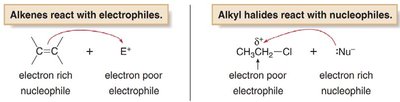
Alkenes react with electrophiles: The electron-rich double bond attacks an electron-poor species.
Alkyl halides react with nucleophiles: The electron-poor carbon (due to the halogen) is attacked by a nucleophile.
Summary of Notation
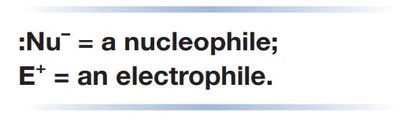
:Nu– = a nucleophile
E+ = an electrophile
Conclusion
Understanding functional groups and their associated physical and chemical properties is fundamental to mastering organic chemistry. The interplay between structure, intermolecular forces, and reactivity underpins the behavior of organic molecules in both laboratory and biological contexts.
