 Indietro
Week 9 Study Guide: Introduction to Organic Chemistry and Hydrocarbons
Guida di studio - Note intelligenti
 Appunti personalizzati basati sui tuoi materiali, ampliati con definizioni chiave, esempi e contesto.
Introduction to Organic Chemistry
General Knowledge
Organic chemistry is the branch of chemistry that studies carbon compounds, including their properties, preparation, identification, and modification. Carbon's unique ability to form stable bonds with itself and other elements results in an immense variety of molecules, with over 16 million organic compounds known. Organic molecules are prevalent in daily life, from foods and pharmaceuticals to fuels and fabrics.
Carbon Compounds: Carbon forms four bonds in most compounds, enabling complex structures.
Prevalence: Over 90% of newly synthesized compounds are organic.
Applications: Organic molecules are found in foods, fragrances, medicines, fuels, soaps, plastics, fabrics, dyes, and more.

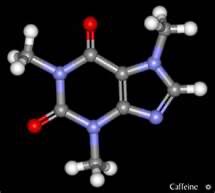


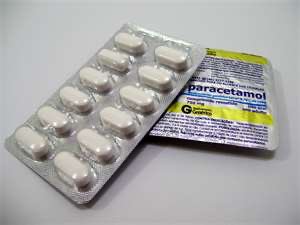
Organic Chemistry in Everyday Life
Body Composition: About 30% of the human body is organic molecules; the rest is water.
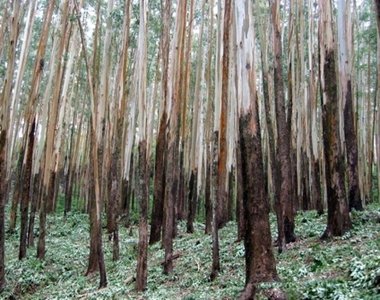
Materials: Wood (lignin), paper, paints, plastics, fabrics, and dyes are all composed of organic molecules.

Pollutants and Toxins
Many pollutants and toxins are organic molecules, including some of the most toxic substances known.


The Chemistry of Carbon
Carbon Bonding and Structure
Carbon's ability to form stable C–C bonds is a defining feature of organic compounds. With four valence electrons, carbon forms four bonds, allowing for branching and three-dimensional molecular structures. This structural diversity is crucial for determining the physical and chemical properties of organic molecules.
Tetravalence: Carbon forms four bonds, leading to varied molecular geometries.
Bond Types: Carbon can form single, double, or triple bonds.
Covalent Bonds
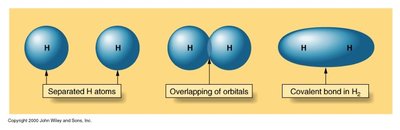
Covalent bonds are formed by sharing electrons between two nuclei, resulting in a stable electron pair that interacts with both nuclei. In organic compounds, carbon typically forms four covalent bonds.
Representation of Organic Molecules
Structural Representations
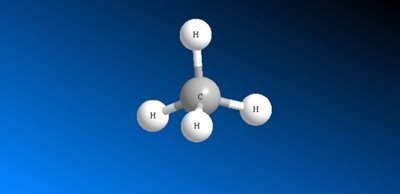
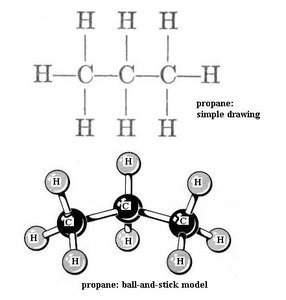
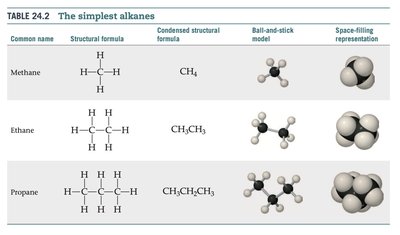
Organic molecules can be represented in several ways, including molecular formulas, condensed structural formulas, Lewis structures, line structures, space-filling models, and ball-and-stick models. Each representation provides different levels of detail and abstraction.
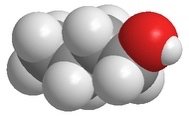
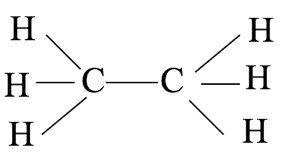
Molecular Formula: Shows the number and type of atoms (e.g., C4H10O).
Condensed Structural Formula: Groups atoms to show connectivity (e.g., CH3CH2CH2CH2OH).
Lewis Structure: Shows all atoms and bonds explicitly.
Line Structure: Omits carbon and hydrogen atoms attached to carbon; bonds are shown as lines.
Space-Filling Model: Shows the spatial arrangement of atoms.
Ball-and-Stick Model: Highlights the connectivity and geometry.
Hybridized Orbitals
Hybridization Overview
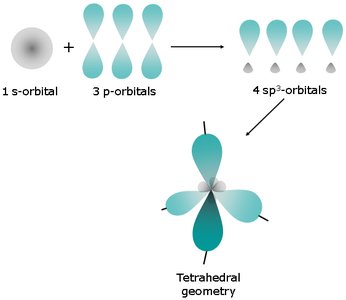
Hybridization describes the mixing of atomic orbitals to form new hybrid orbitals, which are used to form covalent bonds in molecules. The type of hybridization depends on the bonding and geometry around the carbon atom.
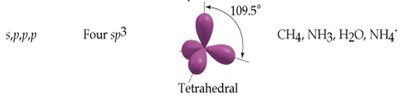
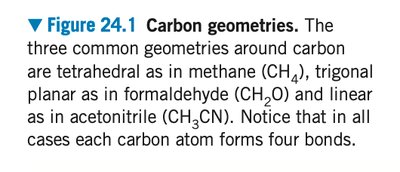
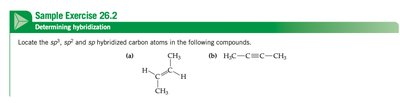
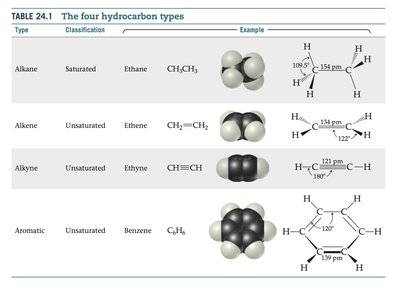
sp3 Hybridization: Four single bonds, tetrahedral geometry (e.g., methane).
sp2 Hybridization: One double bond, trigonal planar geometry (e.g., ethene).
sp Hybridization: One triple bond, linear geometry (e.g., ethyne).
sp3 Hybrid Orbitals: Methane
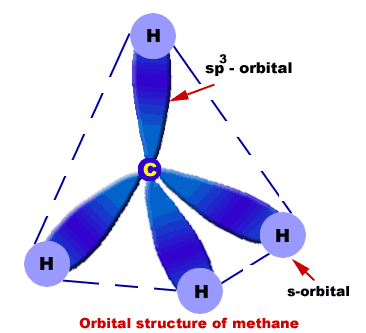
When four atoms bond with carbon, four valence orbitals combine to form four sp3 hybridized orbitals, arranged tetrahedrally. The bonds formed are sigma (σ) bonds.
Molecular Geometry: Tetrahedral, bond angle 109.5°.
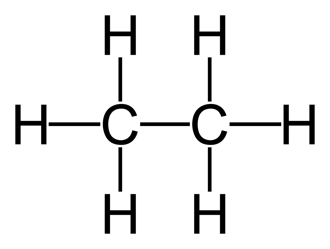
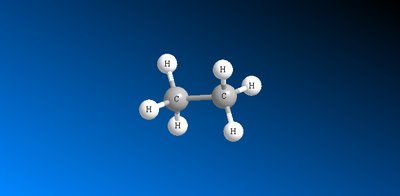
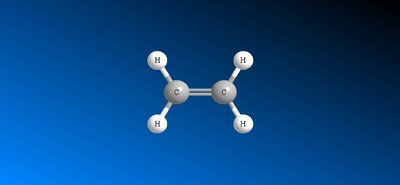
sp2 Hybrid Orbitals: Ethene
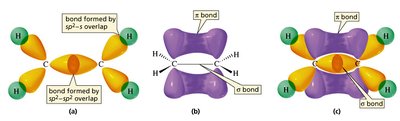
In ethene, three valence orbitals combine to form three sp2 hybridized orbitals, resulting in a trigonal planar geometry. The double bond consists of one sigma (σ) bond and one pi (π) bond.
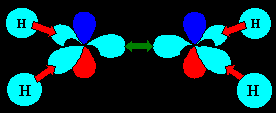
sp Hybrid Orbitals: Ethyne
In ethyne, two valence orbitals combine to form two sp hybridized orbitals, resulting in a linear geometry. The triple bond consists of one sigma (σ) bond and two pi (π) bonds.
Summary of Hybridized Orbitals
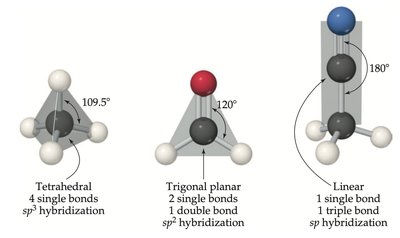
sp3 Hybridization: Four single bonds, tetrahedral geometry, bond angle 109.5°.
sp2 Hybridization: One double bond, trigonal planar geometry, bond angle 120°.
sp Hybridization: One triple bond, linear geometry, bond angle 180°.
Families of Organic Compounds
Hydrocarbons and Derivatives
Organic compounds are classified into families based on structural similarities. The two broad types are hydrocarbons (compounds of only carbon and hydrogen) and hydrocarbon derivatives (containing other elements such as O, N, S, and P).
Hydrocarbons: Examples include alkanes, alkenes, alkynes, and aromatic compounds.
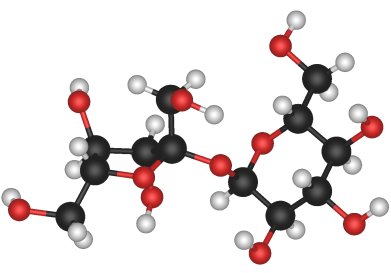
Derivatives: Examples include alcohols, sugars, and other functionalized molecules.
Alkanes
Definition and Properties
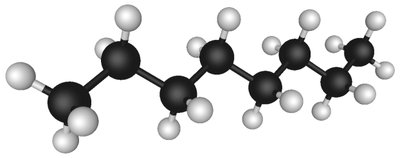
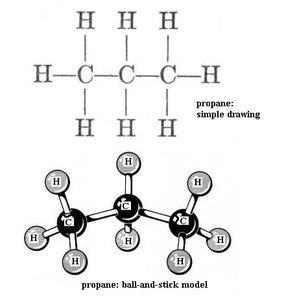
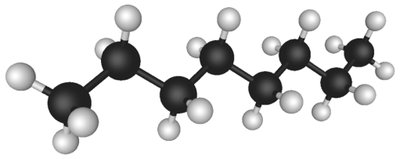
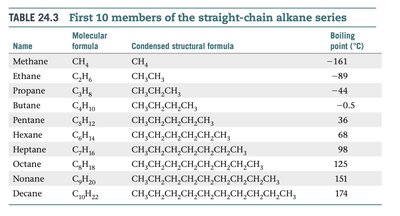
Alkanes are saturated hydrocarbons in which all carbons are bound to four other atoms, with no double or triple bonds. They have the general formula and can be straight-chain or branched-chain.
Saturated Hydrocarbons: Only single bonds between carbon atoms.
General Formula:
Nomenclature of Alkanes
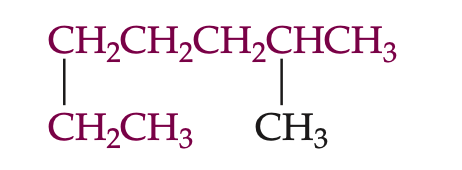
The IUPAC naming system for alkanes consists of three parts: prefix (number, type, and position of substituents), parent (number of carbons in the longest chain), and suffix (-ane for alkanes). The steps for naming alkanes are:
Find the longest continuous chain of carbon atoms and use its name as the base.
Number the chain from the end nearest a substituent.
Name and locate each substituent group.
List substituents alphabetically, using prefixes (di-, tri-, tetra-) for multiples.
Constitutional/Structural Isomers
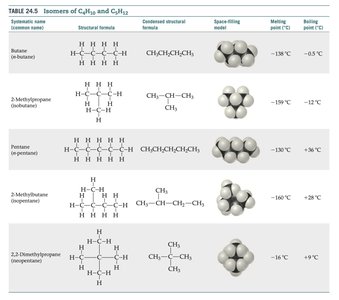
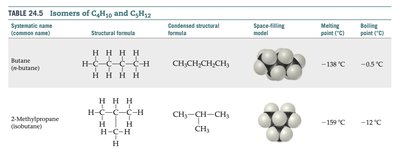
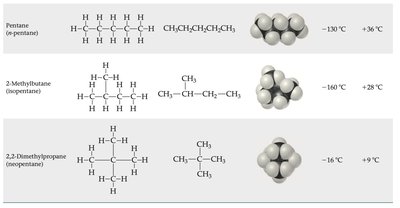
Structural (constitutional) isomers are compounds with the same molecular formula but different bonding arrangements. The number of possible structural isomers increases with the number of carbon atoms in the compound.
Example: Butane and 2-methylpropane (C4H10) are structural isomers.
Example: Pentane, 2-methylbutane, and 2,2-dimethylpropane (C5H12) are structural isomers.
Number of Carbons | Chemical Formula | Number of Structural Isomers |
|---|---|---|
1 | CH4 | 0 |
2 | C2H6 | 0 |
3 | C3H8 | 0 |
4 | C4H10 | 2 |
5 | C5H12 | 3 |
6 | C6H14 | 5 |
10 | C10H22 | 75 |
15 | C15H32 | 4347 |
25 | C25H52 | 36,797,588 |
30 | C30H62 | >4 billion |
Additional info: The number of structural isomers increases rapidly with chain length, highlighting the complexity and diversity of organic molecules.
