 Indietro
Week 3 kinesiology study guide pt2
Guida di studio - Note intelligenti
 Appunti personalizzati basati sui tuoi materiali, ampliati con definizioni chiave, esempi e contesto.
Physical Activity Guidelines for Americans
Introduction to Physical Activity
Physical activity is any movement of the body that increases energy expenditure above the basal level. It is essential for maintaining and improving overall health, reducing the risk of chronic diseases, and enhancing quality of life. The guidelines provide evidence-based recommendations for Americans of all ages and special populations.
Definitions and Types of Physical Activity
Key Definitions
Physical Activity (Hoffman Text): Activity that is intentional, voluntary, and directed towards achieving an identifiable goal.
Physical Activity (Guidelines Committee): Any bodily movement produced by the contraction of skeletal muscle that increases energy expenditure above a basal level.
Physical Activity Intensity
Moderate-intensity: Activities where breathing is harder but conversation is still possible (e.g., brisk walking, doubles tennis, raking leaves). Intensity is measured as 3.0 to 6.0 METs (Metabolic Equivalent of Task).
Vigorous-intensity: Activities where only a few words can be spoken before needing to breathe (e.g., jogging, shoveling snow, hiking a steep grade). Intensity is ≥ 6.0 METs.
MET (Metabolic Equivalent of Task): A unit used to estimate the amount of oxygen used by the body during physical activity, where 1 MET is the rate of energy expenditure at rest.
Benefits of Physical Activity
Health Benefits
Regular physical activity provides numerous health benefits across the lifespan, including improvements in physical, mental, and cognitive health, as well as reductions in the risk of chronic diseases.
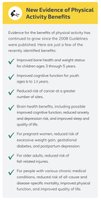
Improved bone health and weight status for children ages 3 through 5 years
Improved cognitive function for youth ages 6 to 13 years
Reduced risk of cancer at a greater number of sites
Brain health benefits, including possible improved cognitive function, reduced anxiety and depression risk, and improved sleep
For older adults, reduced risk of falls and injuries from falls
For pregnant women, reduced risk of excessive weight gain, gestational diabetes, and postpartum depression
For all groups, reduced risk of all-cause mortality
Purpose of the Physical Activity Guidelines
The guidelines serve as an essential resource for health professionals, providing recommendations for Americans ages 3 years and older. They offer evidence-based advice on promoting health and reducing the risk of chronic disease through physical activity participation, including recommendations for special populations.
Guidelines for Adults (Ages 18-64 Years)
Recommended Amounts
At least 150 minutes per week of moderate-intensity aerobic activity, or at least 75 minutes per week of vigorous-intensity aerobic activity.
Greater health benefits are seen with ≥300 minutes per week of moderate-intensity or ≥150 minutes per week of vigorous-intensity activity.
Muscle-strengthening activities should be included at least 2 days per week, involving all major muscle groups (legs, hips, back, chest, abdomen, shoulders, arms).
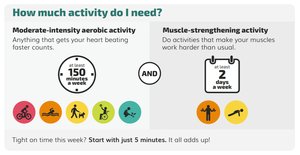
Examples of Muscle-Strengthening Activities
Weight lifting
Carrying heavy loads
Heavy manual labor
Special Populations
The guidelines provide tailored recommendations for:
Preschool-aged children (ages 3–5 years)
School-aged children (ages 6–17 years)
Older adults
Pregnant and postpartum women
Adults with chronic health conditions
Adults with disabilities
Relationship Between Physical Activity, Sitting Time, and Mortality
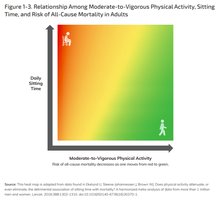
There is a clear relationship between the amount of moderate-to-vigorous physical activity, daily sitting time, and the risk of all-cause mortality. Increasing physical activity and reducing sitting time both contribute to lower mortality risk.
Summary and Key Messages
Move more and sit less throughout the day.
Any amount of physical activity is better than none; every minute counts.
Start with small amounts if necessary and gradually increase activity levels.
