 Indietro
Principles of Exercise Training for Personal Health
Guida di studio - Note intelligenti
 Appunti personalizzati basati sui tuoi materiali, ampliati con definizioni chiave, esempi e contesto.
Principles of Exercise Training for Personal Health
Physical Activity vs Exercise
Understanding the distinction between physical activity and exercise is essential for designing effective fitness programs. While both contribute to health, their definitions and applications differ:
Physical Activity: Any bodily movement produced by skeletal muscles that results in energy expenditure. Examples include walking, cycling, and playing sports.
Exercise: Planned, structured, and repetitive movement intended to improve or maintain physical fitness.
Physical activity and exercise often intersect, but exercise is more goal-oriented.


Using Physical Activity to Promote Health Benefits
Integrating physical activity into daily life is a key strategy for improving health and reducing sedentary behavior. Examples include:
Riding a bike to class or work
Lifting heavy objects at work
Demonstrating exercises as a personal trainer
Reducing time spent being sedentary is crucial for overall wellness.
Components of Fitness Programs
A comprehensive fitness program addresses multiple components of physical fitness:
Cardiorespiratory Endurance: The ability of the heart, lungs, and blood vessels to supply oxygen during sustained physical activity.
Muscular Strength: The maximum force a muscle or group of muscles can produce.
Muscular Endurance: The ability of muscles to perform repeated contractions over time.
Flexibility: The range of motion available at a joint.
Body Composition: The relative amounts of muscle, fat, bone, and other vital parts of the body.
Principles of Exercise Training to Improve Physical Fitness
Effective exercise training is guided by several foundational principles:
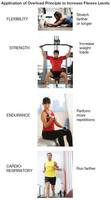
Overload: To improve fitness, the body must be challenged beyond its usual level.
Progression: Gradually increasing the intensity, duration, or frequency of exercise.
Specificity: Training should be relevant to the desired outcomes (e.g., strength vs endurance).
Recuperation: Adequate rest and recovery are necessary for adaptation and injury prevention.
Reversibility: Gains are lost when training stops; "if you don’t use it, you’ll lose it."
Progressive Overload
Progressive overload involves stressing body systems to encourage adaptation and improvement. This is achieved by increasing exercise intensity, but must be balanced to avoid exhaustion.
Endurance overload: Increasing duration or frequency of aerobic activities.
Strength overload: Increasing resistance or weight.
Overload must be gradual to prevent injury.
Extension of Overload: Progression
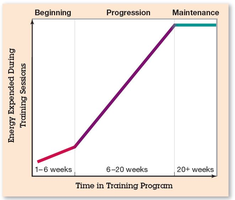
Progression refers to the gradual increase in exercise intensity, duration, or frequency. The ten percent rule suggests increasing training load by no more than 10% per week to avoid injury.
Progression too slow: Limited improvements.
Progression too fast: Increased risk of injury.
Maintenance programs are used once goals are achieved.
Specificity
The principle of specificity states that training should be tailored to the desired fitness outcome. For example, strength training increases muscle strength, while endurance training improves stamina.
Varied training is important for general fitness and wellness.
Choose exercises that match your goals (e.g., running for endurance, weightlifting for strength).

Recuperation
Recuperation, or recovery, allows the body to adapt to the stress of exercise and repair at the cellular level. Overtraining can lead to fatigue, soreness, and increased risk of injury.
Delayed Onset Muscle Soreness (DOMS): Temporary muscle soreness after intense exercise.
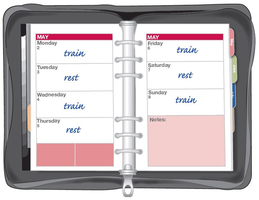
Rest days are essential to prevent injury and promote adaptation.

Exercise and Immune Response
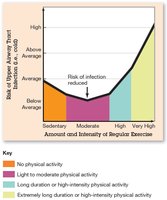
Exercise affects the immune system. Overtraining can reduce immune response, while light to moderate exercise boosts immunity and reduces risk of illness.
High levels of stress hormones from overtraining can increase susceptibility to sickness.
Moderate exercise is associated with reduced risk of upper respiratory infections.
Reversibility
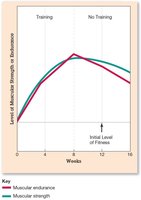
Reversibility refers to the loss of fitness gains when training stops. Extended inactivity leads to decreased strength and endurance.
Strength and stamina are lost at different rates.
Maintaining a consistent routine is key to preserving progress.
Designing an Exercise Prescription
An exercise prescription is a personalized plan that outlines the key elements of a fitness program:
Goals: Define specific, measurable objectives.
Warm-up: Prepare the body for exercise, reduce injury risk.
Conditioning: The main workout phase targeting fitness components.
Cool-down: Gradually reduce intensity to aid recovery.
Stretching: May be included to improve flexibility.
Components of an Effective Exercise Prescription
Warm-up: Increases blood flow, prepares muscles and joints.
Conditioning: Main exercise session; intensity can be measured in various ways.
Cool-down: Helps return the body to resting state.
Stretching: Enhances flexibility and reduces muscle tension.
FITT Principle
The FITT principle guides exercise prescription:
Frequency: How often exercise is performed (e.g., days per week).
Intensity: How hard the exercise is (most individualized component).
Time: Duration of each session (e.g., 30 minutes vs three 10-minute sessions).
Type: Mode of exercise (e.g., running, cycling, resistance training).
Measuring Exercise Intensity
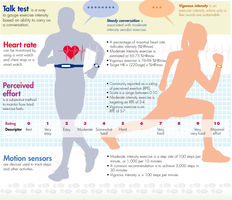
Intensity can be measured using several methods:
Heart Rate: Percentage of maximum heart rate or heart rate reserve.
Perceived Effort: Subjective rating of exercise difficulty.
Motion Sensors: Devices to track steps or activity.

Factors Affecting Heart Rate Accuracy
Environmental conditions (temperature, humidity)
Medications
Stress and fatigue
Measurement technique (e.g., counting for 10, 15, or 30 seconds)
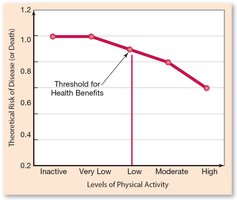
How Much Exercise Is Enough?
To achieve health benefits, a minimum threshold of exercise is required:
30-60 minutes of moderate to high intensity exercise, 3-5 days per week
Regular activity reduces risk of disease and improves overall health
Barriers to Physical Activity and Strategies to Overcome Them
Four major barriers to physical activity include:
Lack of time: Schedule exercise sessions, break activity into shorter bouts.
Lack of motivation: Set realistic goals, find enjoyable activities.
Lack of resources: Use bodyweight exercises, seek community programs.
Fear of injury: Start slowly, use proper technique, consult professionals.
Summary Table: Principles of Exercise Training
Principle | Description | Application |
|---|---|---|
Overload | Challenge the body beyond usual levels | Increase weight, reps, or duration |
Progression | Gradually increase training load | Follow the ten percent rule |
Specificity | Train for desired outcome | Choose exercises matching goals |
Recuperation | Allow time for recovery | Schedule rest days |
Reversibility | Loss of gains with inactivity | Maintain consistent routine |
