 Indietro
Chapter 11: Using Energy – Study Notes for College Physics with Algebra
Guida di studio - Note intelligenti
 Appunti personalizzati basati sui tuoi materiali, ampliati con definizioni chiave, esempi e contesto.
Using Energy
Energy Transformations and Efficiency
Energy cannot be created or destroyed, but it can be transformed from one form to another. In practical systems, some energy is always converted to less useful forms, often thermal energy, which limits the efficiency of energy use.
Energy Transformation: The process of converting energy from one form to another, such as chemical energy to kinetic energy or electrical energy to light.
Efficiency: The ratio of useful energy output to the total energy input. Efficiency is reduced by process limitations (practical details) and fundamental limitations (physical laws).
Work-Energy Equation: Includes all forms of energy transfer, including work, electric, and radiant energy.
Formula for Efficiency:
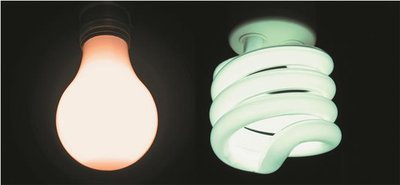
Example: Lightbulb efficiency: A compact fluorescent bulb uses less energy to produce the same light output as an incandescent bulb.
Energy in the Body
The human body obtains energy from food through digestion and metabolism. Chemical energy in food is released and stored in ATP, which powers cellular processes.
Digestion: Breaks down food into simple molecules like glucose.
Metabolism: Combines glucose with oxygen to release energy, stored in ATP.
ATP: Adenosine triphosphate, the energy currency of cells.
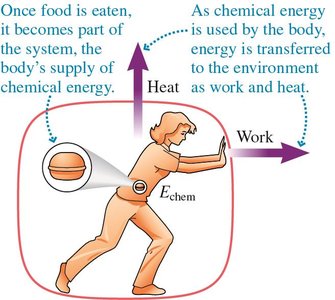
Example: The efficiency of converting glucose to ATP is about 41%.
Energy Content of Foods and Fuels
Different fuels and foods contain varying amounts of energy per gram. This energy can be measured by burning the substance and measuring the thermal energy released.
Carbohydrates: 17 kJ/g
Fat: 37 kJ/g
Gasoline: 44 kJ/g
Hydrogen: 121 kJ/g
Fuel | Energy in 1 g (kJ) |
|---|---|
Hydrogen | 121 |
Gasoline | 44 |
Fat (food) | 37 |
Coal | 27 |
Carbohydrates (food) | 17 |
Wood chips | 15 |
Energy Use in the Body
Even at rest, the body uses energy for essential functions. The energy is mostly converted to thermal energy and transferred to the environment.
Organ | Resting Power (W) |
|---|---|
Liver | 26 |
Brain | 19 |
Kidneys | 11 |
Heart | 7 |
Skeletal muscle | 18 |
Remainder | 19 |
Total | 100 |
Efficiency of the Human Body
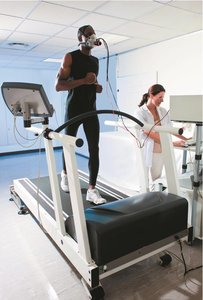
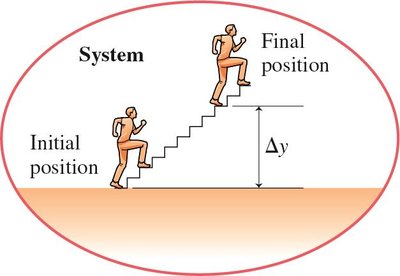
When performing tasks like climbing stairs, the efficiency of the body is typically about 25%. The change in potential energy is compared to the chemical energy used.
Energy and Locomotion
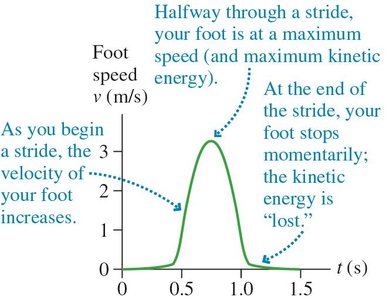
Walking at constant speed requires energy because kinetic energy is repeatedly gained and lost with each step, and much of it is transformed to thermal energy.
Temperature, Thermal Energy, and Heat
Relating Thermal Energy and Temperature
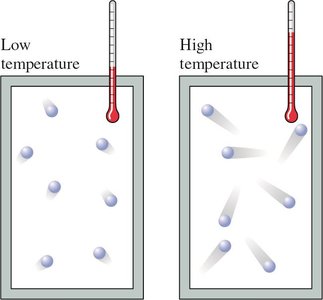
Temperature measures the average kinetic energy of atoms in an object, while thermal energy is the total energy of all atoms.
Temperature Scales
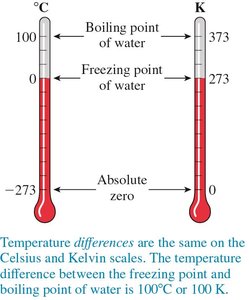
There are three main temperature scales: Celsius, Fahrenheit, and Kelvin. The Kelvin scale is absolute, with zero as the point where atomic motion ceases.
Celsius: Freezing point of water is 0°C, boiling point is 100°C.
Kelvin: Absolute zero is 0 K, equivalent to -273°C.
Conversion:
Heat and Thermodynamics
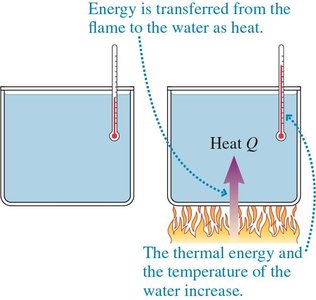
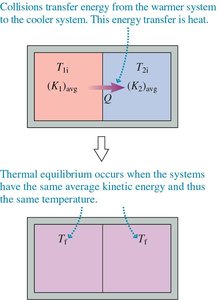
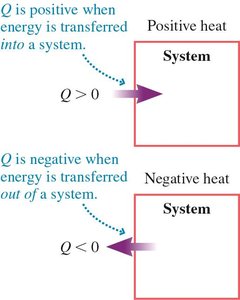
Heat is energy transferred between objects due to temperature difference. Thermodynamics studies these energy transfers and their effects.
Atomic Model of Heat
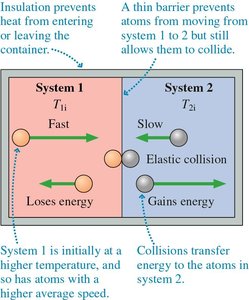
Thermal energy is transferred by collisions between atoms, moving from warmer to cooler regions until thermal equilibrium is reached.
The First Law of Thermodynamics
Statement and Application
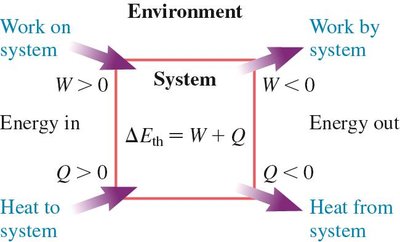
The first law of thermodynamics is a statement of energy conservation for systems where only thermal energy changes. The change in thermal energy equals the energy transferred as work and heat.
Heat Engines and Heat Pumps
Heat Engines
Heat engines convert thermal energy from a hot reservoir into useful work, exhausting some heat into a cold reservoir. Their efficiency is limited by the second law of thermodynamics.
Heat Pumps
Heat pumps transfer heat from a cold reservoir to a hot reservoir, often used for cooling or heating. Their performance is measured by the coefficient of performance (COP).
For cooling:
For heating:
Entropy and the Second Law of Thermodynamics
Entropy and Irreversibility
Entropy quantifies the dispersal of thermal energy. The second law states that the entropy of an isolated system never decreases; energy spontaneously spreads out, making processes irreversible.
Equilibrium: State of maximum entropy.
Second Law: Energy spreads out; isolated systems evolve toward maximum entropy.
Systems, Energy, and Entropy
No heat engine can be 100% efficient because some energy must be discharged to a cold reservoir to prevent a decrease in entropy.
Entropy and Life
Life does not violate the second law because living organisms are not isolated systems; they exchange energy with their environment, maintaining their own entropy while increasing the entropy of the surroundings.
Summary of Key Concepts
Energy Conservation: Energy cannot be created or destroyed, only transformed.
Efficiency: Limited by practical and fundamental constraints; more efficient devices use less energy for the same output.
Thermal Energy: Total kinetic energy of atoms; associated with entropy.
Temperature: Measure of average kinetic energy; systems in thermal equilibrium have the same temperature.
Heat Engines: Convert thermal energy to work, limited by the second law.
Heat Pumps: Transfer heat from cold to hot, measured by COP.
Entropy: Measures energy dispersal; increases in isolated systems.
Formula for Kelvin Conversion:
