 Indietro
Pearson Edexcel International Advanced Level Physics: Specification and Study Guide
Guida di studio - Note intelligenti
 Appunti personalizzati basati sui tuoi materiali, ampliati con definizioni chiave, esempi e contesto.
Pearson Edexcel International Advanced Level Physics Specification
Overview of the Qualification
The Pearson Edexcel International Advanced Subsidiary (IAS) and Advanced Level (IAL) in Physics are modular qualifications designed for students who have completed an International GCSE in Physics and wish to pursue advanced studies. The course covers major topics in physics, including mechanics, materials, waves, electricity, fields, thermodynamics, radiation, particles, oscillations, and cosmology. The qualification emphasizes both theoretical understanding and practical skills, with a minimum of 40% of assessment marks awarded for mathematics at Level 2 or above.
Key Features of the Qualification
Modular Structure: The IAS consists of three units (Units 1, 2, 3), while the IAL includes three additional units (Units 4, 5, 6).
Assessment: All units are externally assessed through written examinations, including multiple-choice, short open, calculations, and extended-writing questions.
Practical Skills: Sixteen core practical activities are integrated throughout the course, with dedicated practical skills units (Units 3 and 6).
Mathematical Skills: Students are expected to apply mathematical techniques, including algebra, trigonometry, and graphical analysis, to solve physics problems.
Progression: The qualification supports progression to higher education in physical sciences, engineering, and related fields.
Unit Structure and Content
Unit 1: Mechanics and Materials
This unit covers the fundamental principles of mechanics and materials, including motion, forces, energy, and properties of materials. Students develop practical and mathematical skills through experiments such as projectile motion analysis, conservation of momentum, Hooke’s law, and Young modulus determination.
Mechanics: Rectilinear motion, forces, energy, power, vector analysis, projectile motion, Newton’s laws, momentum, moments, work, kinetic and potential energy, conservation of energy, efficiency.
Materials: Density, upthrust, viscosity (Stokes’ Law), Hooke’s law, stress and strain, Young modulus, force-extension graphs, elastic strain energy.
Core Practicals: Acceleration of a freely-falling object, viscosity determination, Young modulus measurement.
Unit 2: Waves and Electricity
This unit explores the properties of waves, the particle nature of light, and electric circuits. Applications include medical physics and space technology. Experiments include speed of sound measurement, potential divider investigation, and resistivity determination.
Waves: Amplitude, frequency, period, speed, wavelength, longitudinal and transverse waves, standing waves, wavefronts, coherence, superposition, interference, phase, refraction, polarisation, diffraction, de Broglie wavelength, photon energy, photoelectric effect, atomic spectra.
Electricity: Current, potential difference, resistance, Ohm’s law, series and parallel circuits, power, resistivity, potential dividers, e.m.f., internal resistance, thermistors, LDRs.
Core Practicals: Speed of sound, vibrating string frequency, wavelength determination, resistivity, e.m.f. and internal resistance.
Unit 3: Practical Skills in Physics I
Students develop experimental skills by planning, implementing, and analyzing practical experiments related to Units 1 and 2. Assessment focuses on planning experiments, controlling variables, calibration, measurement techniques, data analysis, and uncertainty evaluation.
Planning: Apparatus selection, calibration, measurement techniques, variable control, repeat readings, health and safety, uncertainty reduction.
Implementation: Measurement range, significant figures, error reduction, experiment improvement.
Processing Results: Calculations, graph plotting, unit usage, relationship analysis, uncertainty determination.
Unit 4: Further Mechanics, Fields and Particles
This unit covers advanced mechanics, electric and magnetic fields, and nuclear and particle physics. Applications include transportation and communications. Experiments involve centripetal force, charge measurement, and collision analysis.
Further Mechanics: Impulse, momentum conservation in two dimensions, circular motion, angular velocity, centripetal acceleration and force.
Electric and Magnetic Fields: Electric field strength, Coulomb’s law, electric potential, capacitance, capacitor discharge, magnetic flux density, electromagnetic induction.
Nuclear and Particle Physics: Atomic structure, particle accelerators, quark-lepton model, conservation laws, mass-energy equivalence.
Core Practicals: Momentum-force relationship, collision analysis, capacitor discharge.
Unit 5: Thermodynamics, Radiation, Oscillations and Cosmology
This unit addresses thermal energy, nuclear decay, oscillations, astrophysics, and cosmology. Applications include space technology and nuclear power. Experiments include thermistor calibration, latent heat determination, and gamma radiation absorption.
Thermodynamics: Specific heat capacity, latent heat, internal energy, absolute zero, ideal gas equation, molecular kinetic theory.
Nuclear Decay: Binding energy, fusion and fission, background radiation, nuclear equations, half-life, radioactive decay equations.
Oscillations: Simple harmonic motion, resonance, damping, energy conservation, forced oscillations.
Astrophysics and Cosmology: Gravitational fields, black body radiation, Stefan-Boltzmann law, Wien’s law, intensity, parallax, standard candles, Hertzsprung-Russell diagram, Doppler effect, redshift, Hubble constant.
Core Practicals: Thermistor calibration, latent heat, pressure-volume relationship, gamma absorption, oscillation resonance.
Unit 6: Practical Skills in Physics II
Students further develop practical skills by planning, implementing, and analyzing experiments related to Units 4 and 5. Assessment includes apparatus selection, calibration, measurement techniques, data analysis, uncertainty compounding, and experiment improvement.
Planning: Apparatus selection, calibration, measurement techniques, variable control, repeat readings, health and safety.
Implementation: Measurement range, significant figures, error reduction, experiment improvement.
Analysis: Calculations, graph plotting (including logarithmic graphs), unit usage, trend analysis, uncertainty compounding.
Mathematical Skills and Equations
Mathematical Skills
Arithmetic and Computation: Units, decimal and standard form, ratios, percentages, estimation, calculator functions.
Data Handling: Significant figures, means, probability, order of magnitude, uncertainty determination.
Algebra: Symbols, equation manipulation, substitution, solving equations, logarithms.
Graphs: Graphical analysis, plotting, linear relationships, slope and intercept, rate of change, area under curves, logarithmic plots.
Geometry and Trigonometry: Angles, 2D/3D visualization, area and volume calculations, Pythagoras’ theorem, trigonometric functions, small angle approximations, degrees/radians conversion.
Key Equations (LaTeX Format)
Kinematic equations: , ,
Newton's second law:
Momentum:
Work:
Kinetic energy:
Density:
Hooke's law:
Young modulus:
Wave speed:
Intensity:
Refractive index:
Photoelectric effect:
Current:
Resistance:
Resistivity:
Impulse:
Centripetal force:
Coulomb's law:
Capacitance:
Energy stored in capacitor:
Ideal gas equation:
Radioactive decay:
Simple harmonic motion: , ,
Gravitational force:
Stefan-Boltzmann law:
Wien's law:
Redshift:
Hubble's law:
Assessment and Grading
Assessment Objectives: Knowledge and understanding, application, analysis and evaluation, experimental skills.
Grading: IAS graded A–E; IAL graded A*–E. Uniform mark scale used for grade thresholds.
Assessment Availability: Units assessed in January, June, and October.
Transferable Skills
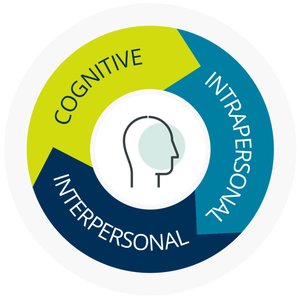
The qualification supports the development of cognitive, intrapersonal, and interpersonal skills, including critical thinking, problem solving, creativity, adaptability, responsibility, communication, teamwork, and leadership. These skills are essential for success in higher education and employment.
Uncertainties and Practical Work
Students are expected to understand and apply concepts of measurement uncertainty, accuracy, precision, repeatability, reproducibility, and error analysis. Practical work involves estimating uncertainties, compounding uncertainties in calculations, and using uncertainty to assess the validity and accuracy of experimental results.
Uncertainty Calculation: Use half the range, instrument resolution, or furthest value from the mean.
Percentage Uncertainty:
Compounding Uncertainties: Add percentage uncertainties for multiplication/division; multiply by power for exponentiation; add absolute uncertainties for addition/subtraction.
Use of Calculators
Calculators may be used in assessments, provided they do not have prohibited functions such as symbolic algebraic manipulation or communication capabilities. Students are responsible for ensuring calculators are cleared of stored information and are in working condition.
Progression and Further Study
The Pearson Edexcel International Advanced Level in Physics prepares students for further study in physics, engineering, and related fields, as well as for employment and training. The qualification is recognized by universities and employers worldwide.
