 Indietro
Potential Energy and Conservation of Energy: Structured Study Notes
Guida di studio - Note intelligenti
 Appunti personalizzati basati sui tuoi materiali, ampliati con definizioni chiave, esempi e contesto.
Potential Energy and Conservation of Energy
Conservative and Nonconservative Forces
In physics, forces are classified as conservative or nonconservative based on how they affect energy within a system. Conservative forces store energy that can be fully recovered, while nonconservative forces dissipate energy, often as heat.
Conservative Force: The work done is stored as potential energy and can be released as kinetic energy later. Examples: gravity, spring force.
Nonconservative Force: The work done is not fully recoverable; energy is lost, usually as heat or sound. Examples: friction, air resistance.
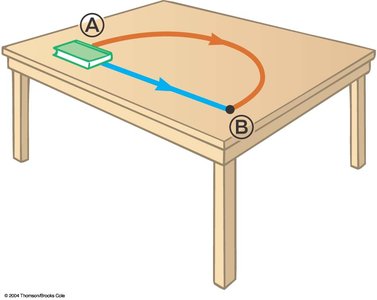
Work on a Closed Path: For conservative forces, the total work done around a closed path is zero. For nonconservative forces, it is not zero and depends on the path taken.
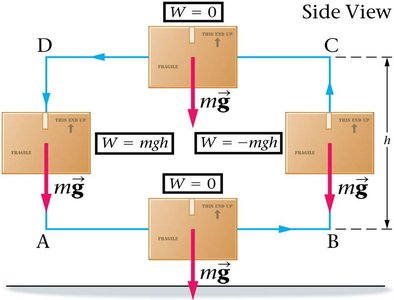
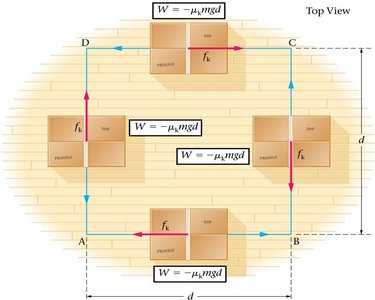
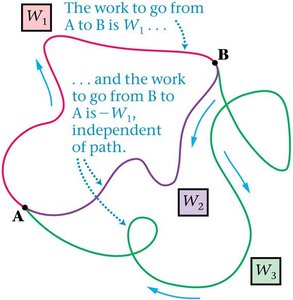
Conservation of Energy
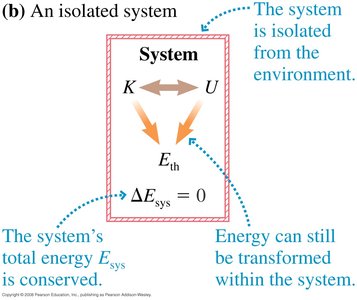
The principle of energy conservation states that energy cannot be created or destroyed, only transferred or transformed. The total energy in a system changes only if energy crosses the system boundary.
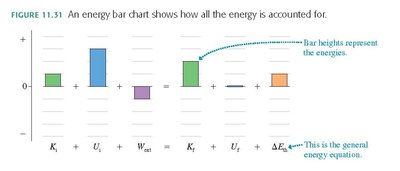
Energy Equation:
Energy Bar Charts: Visual representation of energy conservation using bar heights for different energy types.
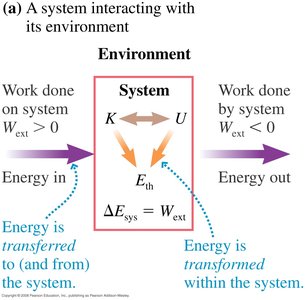
Conservative Forces and Potential Energy
Conservative forces allow us to define a potential energy function. The work done by a conservative force is equal to the negative change in potential energy.
Work by Conservative Force:
Examples: Gravity, spring force
Potential Energy Function:
Hooke's Law for Springs:
Nonconservative Forces
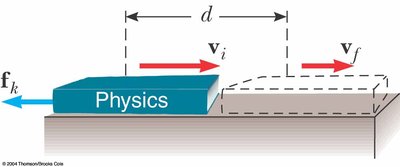
Nonconservative forces, such as friction, cause a change in the mechanical energy of a system. The work done depends on the path taken.
Work by Friction:
Thermal Energy:
Potential Energy
Potential energy is the energy associated with the configuration of a system of objects that exert forces on each other. It is only defined for conservative forces.
Types: Gravitational, elastic (spring), electromagnetic, chemical, nuclear
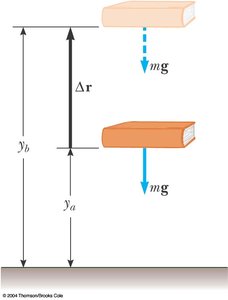
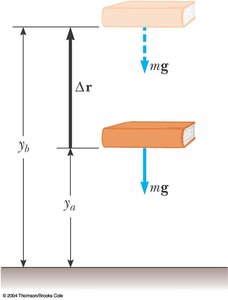
System Example: Lifting a book increases its gravitational potential energy.
Gravitational Potential Energy
Gravitational potential energy is associated with an object's height above Earth's surface.
Formula:
Reference Configuration: The choice of zero potential energy is arbitrary; only differences matter.
Elastic Potential Energy
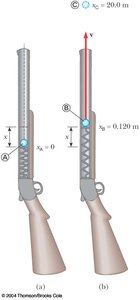
Elastic potential energy is stored in a spring when it is compressed or stretched.
Formula:
Maximum Energy: When the spring is at maximum extension or compression.
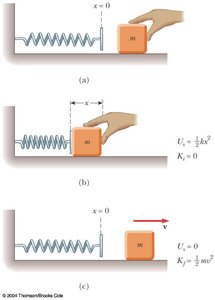
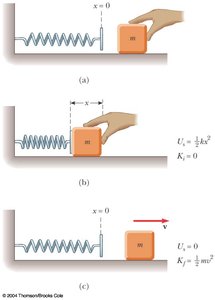
Conservation of Mechanical Energy
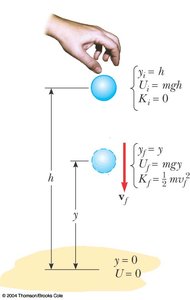
The mechanical energy of a system is the sum of its kinetic and potential energies. In an isolated system with only conservative forces, mechanical energy is conserved.
Formula:
Conservation Statement:
Work Done by Nonconservative Forces
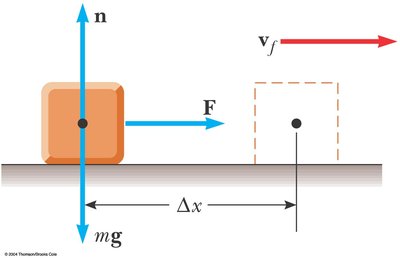
In non-isolated systems, energy can be transferred into or out of the system by work, heat, mechanical waves, matter transfer, electrical transmission, or electromagnetic radiation.
Work-Kinetic Energy Theorem: Applies to non-isolated systems.
Thermal Energy: Energy associated with temperature, often increased by friction.
Potential Energy Curves and Equipotentials
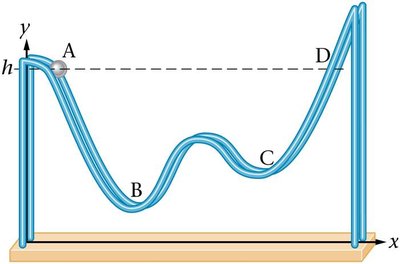
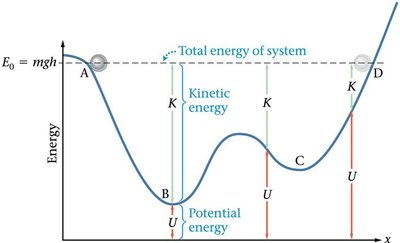
Potential energy curves graphically represent how potential energy varies with position. They are useful for analyzing motion and equilibrium.
Stable Equilibrium: Occurs at a minimum of the potential energy curve.
Unstable Equilibrium: Occurs at a maximum of the potential energy curve.
Neutral Equilibrium: Occurs where potential energy is constant over a region.
Summary Table: Conservative vs. Nonconservative Forces
Force Type | Work on Closed Path | Path Dependence | Examples |
|---|---|---|---|
Conservative | Zero | No | Gravity, Spring |
Nonconservative | Nonzero | Yes | Friction, Air Resistance |
Key Equations
Examples and Applications
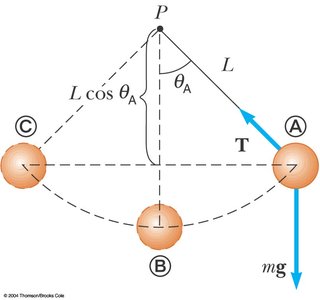
Energy transformations in pendulums, springs, and falling objects
Work done by friction and its effect on mechanical energy
Potential energy curves for analyzing equilibrium and motion
