 Indietro
Rotational Kinematics and Energy: Study Guide for Physics with Algebra
Guida di studio - Note intelligenti
 Appunti personalizzati basati sui tuoi materiali, ampliati con definizioni chiave, esempi e contesto.
Rotational Kinematics and Energy
Angular Position, Velocity, and Acceleration
Rotational motion describes the movement of objects around a fixed axis. The angular position, velocity, and acceleration are fundamental quantities used to analyze such motion.
Rigid Object: A rigid object is non-deformable, meaning the relative positions of its particles remain constant. This model is useful for analyzing rotational motion when deformation is negligible.
Angular Position (θ): The angular position is the angle between a reference line on the object and a fixed reference line in space, often the x-axis. It is measured in radians.
Arc Length Relation: The arc length s that a point moves through is related to the radius r and the angle θ by .
Radian: One radian is the angle subtended by an arc length equal to the radius of the circle.
Conversions: ,
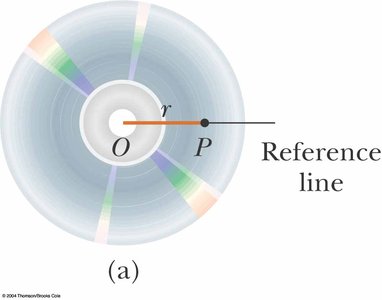
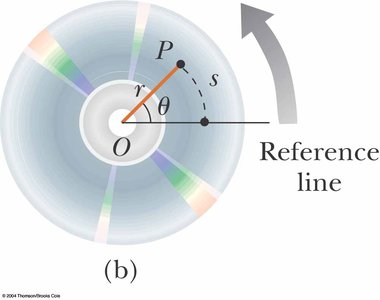
Angular Displacement, Speed, and Acceleration
Angular displacement is the change in angular position over a time interval. Angular speed and acceleration describe how quickly the object rotates and how its rotation rate changes.
Angular Displacement:
Average Angular Speed:
Instantaneous Angular Speed:
Average Angular Acceleration:
Instantaneous Angular Acceleration:
Sign Convention: Angular speed is positive for counterclockwise rotation and negative for clockwise. Angular acceleration is positive if the object speeds up counterclockwise or slows down clockwise.
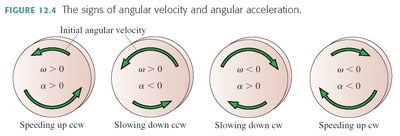
Rotational Kinematics
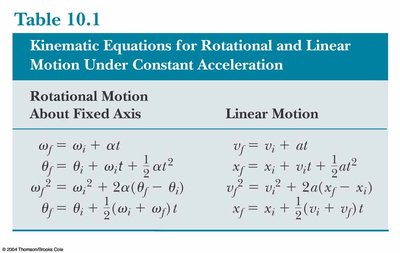
Rotational kinematics equations describe the motion of objects under constant angular acceleration, analogous to linear kinematics.
Kinematic Equations:
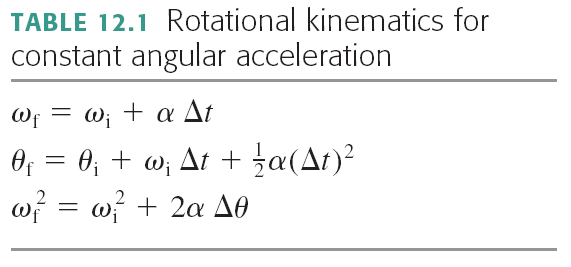
Connections Between Linear and Rotational Quantities
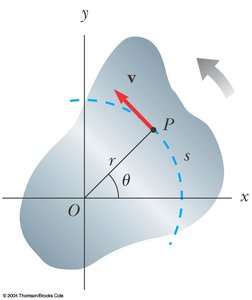
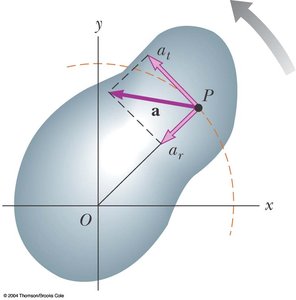
Rotational motion is closely related to linear motion. Tangential speed, centripetal acceleration, and tangential acceleration are linear quantities associated with rotational motion.
Tangential Speed:
Centripetal Acceleration:
Tangential Acceleration:
Linear vs. Angular Quantities: Every point on a rotating object has the same angular motion, but not the same linear motion. Linear quantities depend on the distance from the axis.
Moment of Inertia and Rotational Kinetic Energy
The moment of inertia quantifies how mass is distributed relative to the axis of rotation. Rotational kinetic energy depends on both the moment of inertia and angular speed.
Rotational Kinetic Energy:
Moment of Inertia:
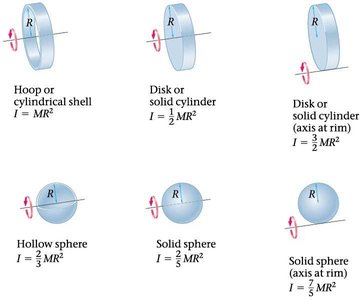
Common Moments of Inertia:
Hoop:
Solid Cylinder/Disk:
Solid Sphere:
Rod (center):
Center of Mass
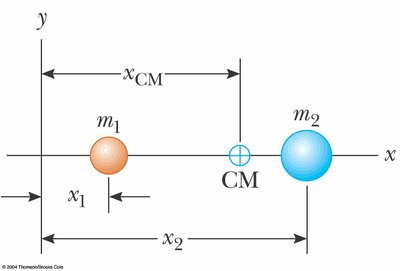
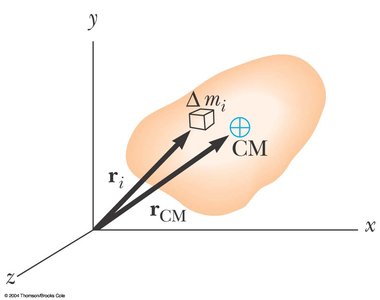
The center of mass is the point where the mass of a system or object can be considered to be concentrated for analysis of motion.
Coordinates of Center of Mass: , ,
Position Vector:
Continuous Mass Distribution:
Rolling Motion
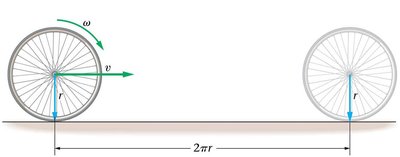
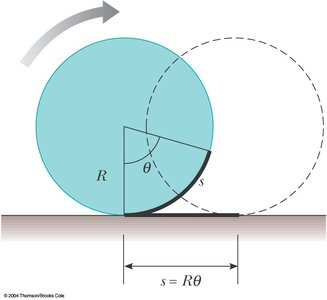
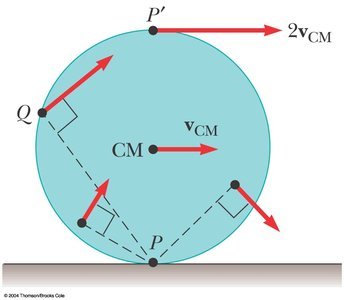
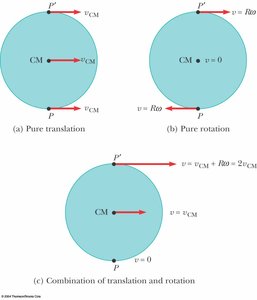
Rolling motion occurs when a round object rolls without slipping, combining translational and rotational motion.
Relationship:
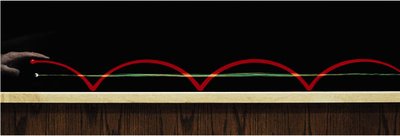
Path of a Point: The path traced by a point on the rim is called a cycloid.
Total Kinetic Energy:
Conservation of Energy in Rotational Motion
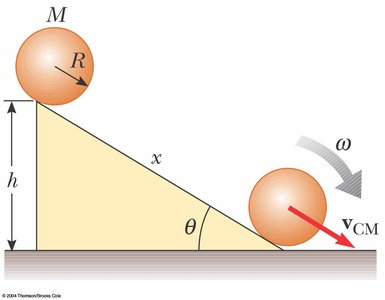
When analyzing rolling objects, both translational and rotational kinetic energy must be considered. The total mechanical energy is conserved if no energy is lost to friction or other forces.
Total Kinetic Energy:
For rolling without slipping:
Energy Conservation:
Summary Table: Rotational Kinematics vs. Linear Kinematics
Rotational Motion | Linear Motion |
|---|---|
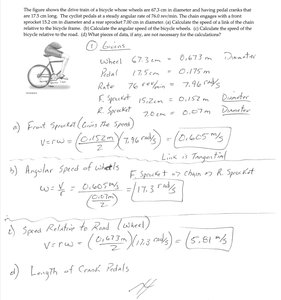
Example: Bicycle Drive Train
Analyzing the drive train of a bicycle involves calculating the speed of the chain, angular speed of the wheels, and speed of the bicycle relative to the road using rotational and linear relationships.
Speed of Chain:
Angular Speed of Wheels:
Speed of Bicycle:

Moments of Inertia for Various Objects
Object | Moment of Inertia (I) |
|---|---|
Hoop or cylindrical shell | |
Disk or solid cylinder | |
Disk or solid cylinder (axis at rim) | |
Hollow sphere | |
Solid sphere | |
Solid sphere (axis at rim) |
Additional info: The above study guide covers all major topics from Chapter 10: Rotational Kinematics and Energy, including definitions, equations, examples, and relevant images. It is structured for exam preparation and self-study for Physics with Algebra students.
