 Indietro
Chapter 1: About Science – Foundations of Physics with Calculus
Guida di studio - Note intelligenti
 Appunti personalizzati basati sui tuoi materiali, ampliati con definizioni chiave, esempi e contesto.
About Science
Introduction to Science
Science is a systematic approach to understanding the natural world through observation, experimentation, and reasoning. It is both a body of knowledge and an ongoing human activity that has evolved over centuries. The integration of mathematics with science has allowed for precise and unambiguous expression of scientific ideas.
Science is a collection of knowledge and a process for discovering new information about the universe.
It began before recorded history and continues to expand as new discoveries are made.
Mathematics is considered the language of science, providing clarity and structure to scientific concepts.
The Scientific Method and Scientific Theories
The scientific method is a logical process used to investigate phenomena, acquire new knowledge, or correct and integrate previous knowledge. Scientific theories are comprehensive explanations of aspects of the natural world that are supported by a large body of evidence.
Observation leads to the development of a theory.
Theory leads to predictions that can be tested by further observations and experiments.
If predictions are confirmed, the theory is strengthened; if not, the theory may be revised or replaced.
Scientific theories must be testable, simple, and elegant. They can be proven wrong but never proven right with absolute certainty.
Key Terms in Science
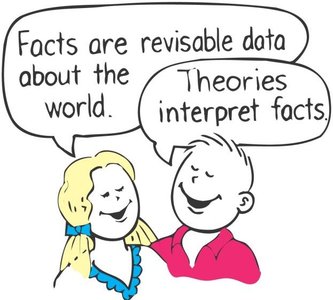
Fact: A close agreement by competent observers about the same phenomenon.
Hypothesis: An educated guess that is testable and can be proven wrong.
Theory: A synthesis of a large body of information that encompasses well-tested and verified hypotheses about certain aspects of the natural world.
Law or Principle: A scientific statement that describes a consistent relationship observed in nature, often expressed mathematically.
The Scientific Attitude
The scientific attitude is characterized by curiosity, skepticism, and a willingness to change one’s mind in light of new evidence. Scientists must be open to admitting errors and revising their beliefs based on experimental findings.
Inquiry and experimentation are central to scientific progress.
Scientists test for erroneous beliefs and consider objections and alternative viewpoints.
Mathematics—The Language of Science
Mathematics provides a precise language for expressing scientific ideas and relationships. Equations in physics are not just tools for calculation but also guides for thinking and understanding the structure of physical laws.
Equations express relationships between concepts and help clarify scientific ideas.
In conceptual physics, equations are used mainly as guides to thinking rather than just recipes for problem solving.
Examples and Applications
Example: The equation for the circumference of a circle, , expresses the relationship between the radius and the circumference, providing a mathematical guide to understanding circular geometry.
Application: Eratosthenes’ calculation of the Earth’s circumference used observations and geometry, demonstrating the power of scientific reasoning and mathematics.
Study and Success Strategies
Effective study habits are essential for mastering physics with calculus. Students are encouraged to read chapters before class, ask questions, review homework, and start exam preparation early.
Read each chapter before class discussions.
Highlight and ask about unclear concepts.
Review homework assignments multiple times.
Study with a partner if possible and use available study aids.
Sample Questions for Review
The synthesis of a large collection of information that contains well-tested and verified hypotheses about certain aspects of the world is known as a scientific theory.
A scientific statement that can never be changed is a scientific law or principle.
Equations in Conceptual Physics are used mainly as guides to thinking.
Visual Evidence and the Shape of the Earth
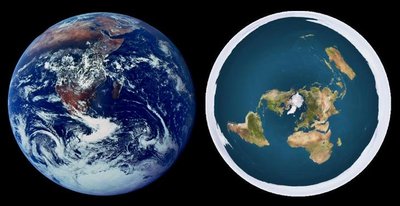
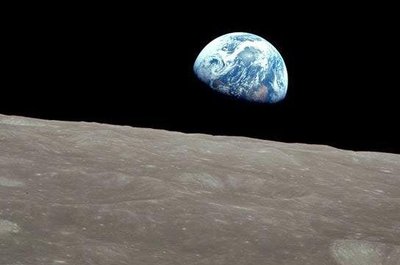
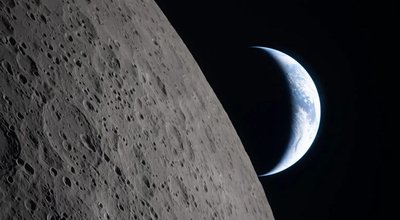
Scientific evidence, including satellite imagery and observations from space missions, confirms that the Earth is round. Historical experiments, such as those by Eratosthenes, used geometry and observation to estimate the Earth's circumference.

Additional info:
These foundational concepts are essential for understanding all subsequent topics in Physics with Calculus, including motion, forces, energy, and the nature of matter.
