 Indietro
Kinematics in One Dimension: Structured Study Notes
Guida di studio - Note intelligenti
 Appunti personalizzati basati sui tuoi materiali, ampliati con definizioni chiave, esempi e contesto.
Describing Motion: Kinematics in One Dimension
Introduction to Kinematics
Kinematics is the branch of physics that describes the motion of objects without considering the causes of motion. In one-dimensional kinematics, we analyze how objects move along a straight line, focusing on position, velocity, and acceleration.
Reference Frame: All measurements of position, distance, and speed are made relative to a reference frame, which is a coordinate system used to specify the location and movement of objects.
Descriptors of Motion: The three main descriptors are: how far (distance/displacement), how fast (speed/velocity), and how fast "how fast" changes (acceleration).
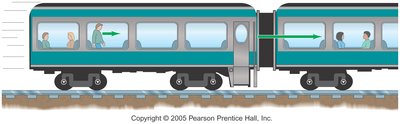
Reference Frames and Displacement
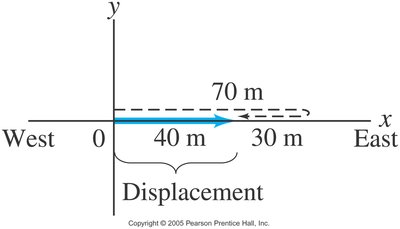
Position and movement are always measured relative to a chosen reference frame. Displacement is a vector quantity representing the change in position from the starting point to the ending point, regardless of the path taken.
Distance: The total length of the path traveled, a scalar quantity.
Displacement: The straight-line change in position, a vector quantity.
Sign of Displacement: Positive or negative depending on direction relative to the coordinate system.
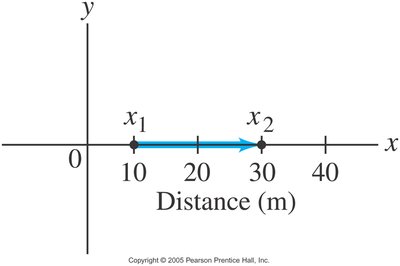
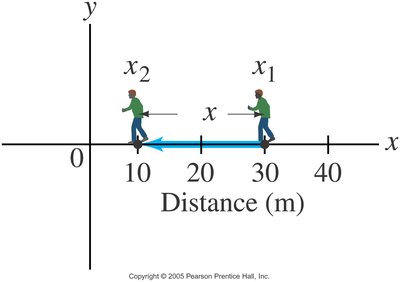
Average Velocity and Speed
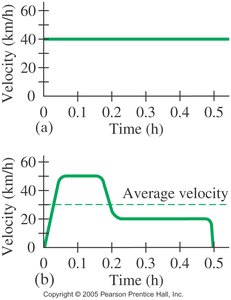
Speed and velocity describe how fast an object moves. Speed is a scalar, while velocity is a vector and includes direction.
Average Speed: Total distance traveled divided by the time elapsed.
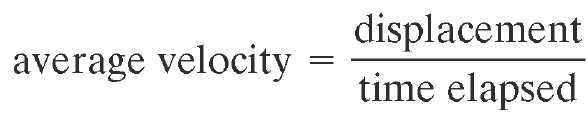
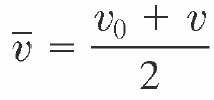
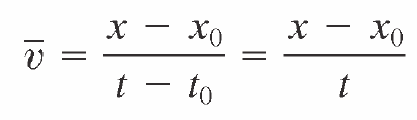
Average Velocity: Displacement divided by the time elapsed.
Formulas:

Instantaneous Velocity
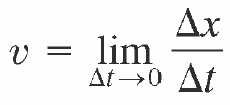
Instantaneous velocity is the velocity of an object at a specific moment in time. It is the limit of the average velocity as the time interval approaches zero.
Definition: The derivative of position with respect to time.
Graphical Representation: The slope of the tangent to the position vs. time curve at a given point.
Acceleration
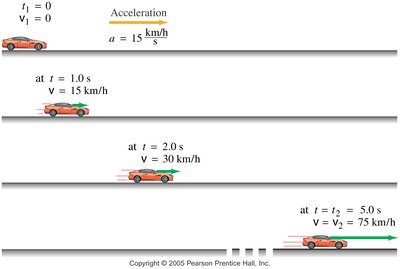
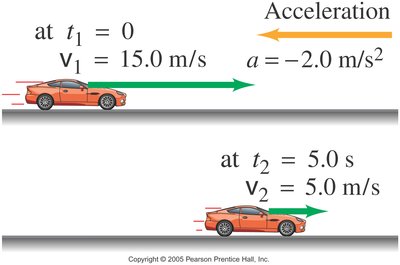
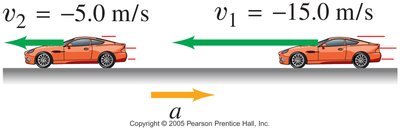
Acceleration is the rate of change of velocity with respect to time. It is a vector quantity, and in one-dimensional motion, its sign indicates direction.
Positive Acceleration: Velocity increases in the positive direction.
Negative Acceleration: Velocity increases in the negative direction.
Deceleration: Acceleration opposite to the direction of velocity.
Motion at Constant Acceleration
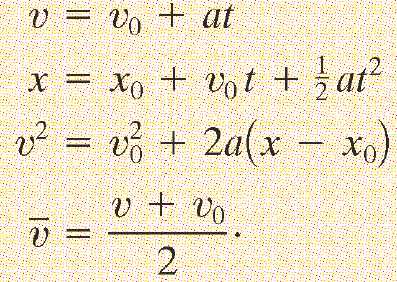
When acceleration is constant, the motion of an object can be described by a set of kinematic equations. These equations relate position, velocity, acceleration, and time.
Kinematic Equations:
Solving Kinematics Problems
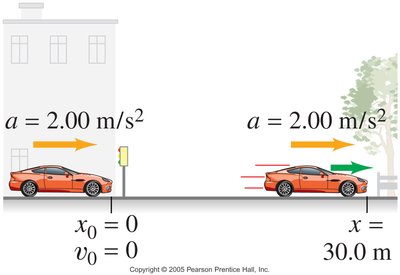
Solving problems in kinematics involves a systematic approach:
Read and understand the problem.
Identify the objects and time intervals involved.
Draw diagrams and choose coordinate axes.
List known and unknown quantities.
Determine which physics principles and equations apply.
Solve algebraically and check units.
Calculate and round answers appropriately.
Check if the result is reasonable.
Falling Objects
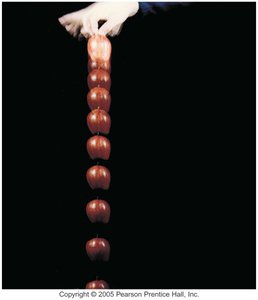
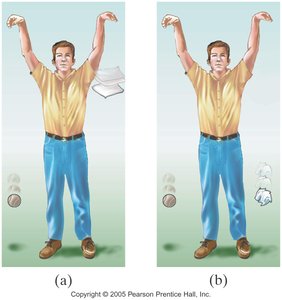
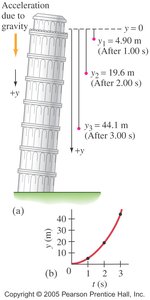
Objects near the surface of the Earth experience a constant acceleration due to gravity, denoted as g. In the absence of air resistance, all objects fall with the same acceleration.
Acceleration due to gravity:
Free Fall: Motion under the influence of gravity alone.
Graphical Analysis of Linear Motion
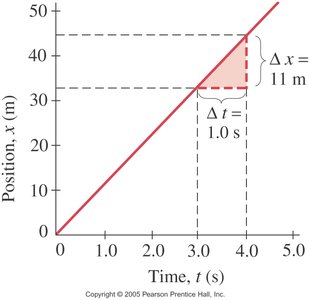
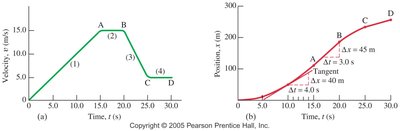
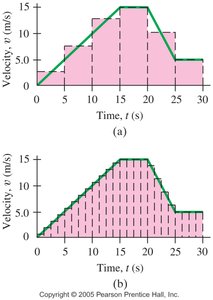
Graphs are powerful tools for analyzing motion. The slope of a position vs. time graph gives velocity, while the slope of a velocity vs. time graph gives acceleration. The area under a velocity vs. time graph represents displacement.
x vs. t Graph: Slope gives velocity.
v vs. t Graph: Slope gives acceleration; area gives displacement.
Summary Table: Key Kinematic Quantities
Quantity | Definition | Formula | Units |
|---|---|---|---|
Displacement | Change in position | m | |
Average Speed | Distance / time | m/s | |
Average Velocity | Displacement / time | m/s | |
Acceleration | Change in velocity / time | m/s2 | |
Gravity (g) | Acceleration due to gravity | m/s2 |
Summary of Chapter 2
Kinematics describes how objects move relative to a reference frame.
Displacement is the change in position; distance is the total path length.
Average speed and velocity are calculated over a time interval; instantaneous values are limits as the interval approaches zero.
Acceleration is the rate of change of velocity.
Constant acceleration motion is described by four kinematic equations.
Objects near Earth's surface experience a gravitational acceleration of .
