 Indietro
Motion Along a Straight Line: Displacement, Velocity, and Acceleration
Guida di studio - Note intelligenti
 Appunti personalizzati basati sui tuoi materiali, ampliati con definizioni chiave, esempi e contesto.
CHAPTER 2: Motion Along a Straight Line
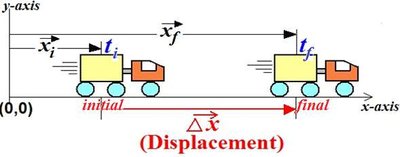
Displacement and Position Vectors
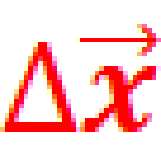
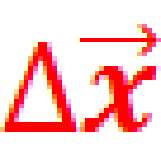
In kinematics, the position vector \( \vec{x} \) describes the location of an object along a straight line, typically the x-axis. The initial position is denoted as \( \vec{x}_i \) and the final position as \( \vec{x}_f \). The displacement is the change in position and is a vector quantity, meaning it has both magnitude and direction.
Displacement Formula:
Displacement is different from distance; it considers only the straight-line change from initial to final position, not the path taken.
Units: Displacement is measured in meters (m) in the SI system.

Distance vs. Displacement
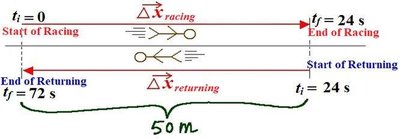
Distance is a scalar quantity representing the total length of the path traveled, regardless of direction. Displacement is a vector and can be zero if the object returns to its starting point, even if a distance was covered.
Example: If a runner goes 50 m east and then 50 m west, the total distance is 100 m, but the displacement is 0 m.
Average Velocity and Average Speed
Average velocity is defined as the displacement divided by the time interval. It is a vector quantity and can be positive, negative, or zero. Average speed is the total distance traveled divided by the time interval and is always positive.
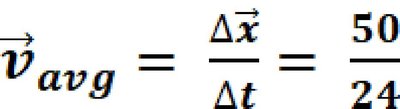
Average Velocity Formula:
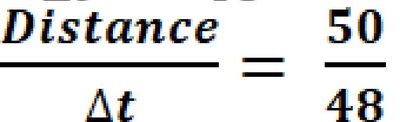
Average Speed Formula:
Units: Both are measured in meters per second (m/s).
Worked Example: Racing and Returning
For a 50 m race completed in 24 s:
Displacement = 50 m (if only one way)
Average velocity = m/s
Average speed = m/s
For a round trip (out and back, total 100 m in 72 s):
Displacement = 0 m (returns to start)
Average velocity = 0 m/s
Average speed = m/s
Position-Time and Velocity-Time Graphs
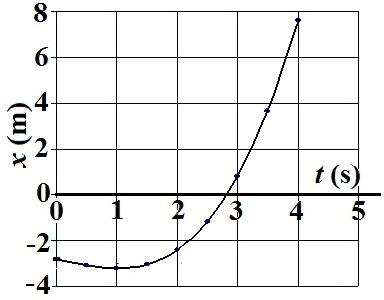
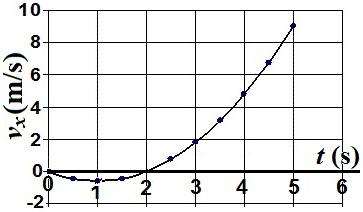
Graphs are essential tools for visualizing motion. A position-time graph shows how position changes with time, while a velocity-time graph shows how velocity changes with time.
Slope of position-time graph: Gives the velocity.
Slope of velocity-time graph: Gives the acceleration.

Instantaneous Velocity and Acceleration
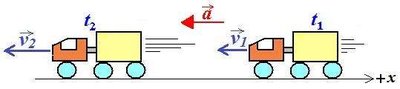
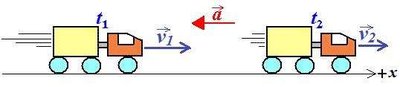
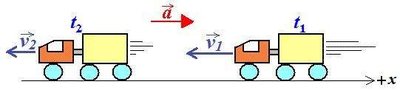
Instantaneous velocity is the velocity at a specific instant, found as the slope of the tangent to the position-time curve at that point. Acceleration is the rate of change of velocity with respect to time.
Instantaneous Velocity:
Acceleration:

Equations of Motion for Constant Acceleration
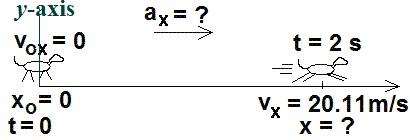
When acceleration is constant, the following kinematic equations apply:
Relative Motion and Multiple Objects
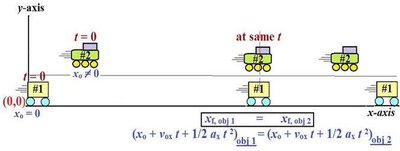
When analyzing the motion of multiple objects, their positions as functions of time can be set equal to find when and where they meet. This is especially useful in pursuit or collision problems.
For two objects moving along the same line:
Piecewise Motion
Sometimes, motion is divided into segments with different accelerations or velocities. The final position and velocity from one segment become the initial conditions for the next.
Analyze each part separately, then combine results for the total motion.
Vertical Motion Under Gravity
Objects moving vertically under gravity experience a constant acceleration downward, . The same kinematic equations apply, with appropriate signs for direction.
Upward motion: ,
Downward motion: ,
Summary Table: Distance vs. Displacement, Speed vs. Velocity
Quantity | Type | Definition | SI Unit |
|---|---|---|---|
Distance | Scalar | Total path length | m |
Displacement | Vector | Change in position | m |
Speed | Scalar | Distance / time | m/s |
Velocity | Vector | Displacement / time | m/s |
