 Indietro
Physics 100: Foundations and Mathematical Tools for Physics with Calculus
Guida di studio - Note intelligenti
 Appunti personalizzati basati sui tuoi materiali, ampliati con definizioni chiave, esempi e contesto.
Introduction to Physics
Course Overview and Motivation
Physics 100 is designed for students in health professions, chemistry, environmental science, and those fulfilling science core requirements. The course aims to provide a broad survey of physics topics, develop problem-solving skills, and prepare students for exams such as the MCAT. The approach is fast-paced and encourages independent learning, with support available through office hours and discussion platforms.
Target Audience: Pre-med, pre-dental, chemistry majors, environmental science majors, and general science students.
Course Structure: Includes lectures, assignments, and labs (with lab meetings starting in week two).
Textbook: Physics by Walker (5th or 6th edition), available in e-text and hardcover formats.
Fundamental Knowledge in Physics
Physics explores the fundamental principles governing the natural world, including mechanics, energy, waves, fluids, and more. These concepts are essential for understanding physical phenomena in health and environmental contexts.
Physical Leverage: The study of forces and motion, crucial for understanding biomechanics and rehabilitation exercises.

Data Correlation: Physics uses data analysis to identify relationships between variables, supporting evidence-based practice.
Energies: Energy concepts underpin many physiological and environmental processes.
Waveforms: Wave phenomena, such as heartbeats and sound, are central to medical diagnostics.

Fluids and Pressure: Understanding fluid dynamics and pressure is vital for medical applications like IV drips and blood flow.

Mathematical Tools in Physics
Algebra in Physics
Algebra is a foundational mathematical tool in physics, used to solve equations, manipulate variables, and analyze relationships between physical quantities.
Solving for Variables: Rearranging equations to isolate unknowns.
Adding/Subtracting Terms: Balancing equations by moving terms across the equals sign.
Multiplying Both Sides: Used to clear denominators or scale equations.
Units and Unit Analysis
Unit analysis ensures that calculations in physics are dimensionally consistent. Converting between units is a critical skill, especially in health sciences where measurements may use different systems.
Unit Conversion Example: Converting velocity from km/hr to m/s.
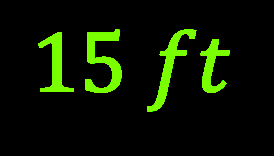
Formula:
Conversion Factor:
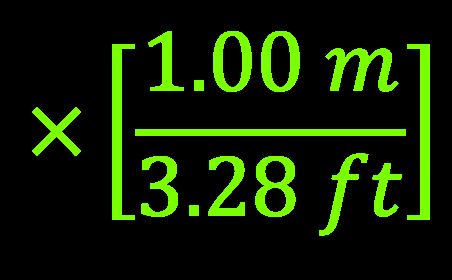
Result:
Decimal Notation and Powers of Ten
Scientific notation is used to express very large or small numbers efficiently, which is common in physics calculations.
Example: represents 1500.
Trigonometry in Physics
Trigonometry is essential for analyzing vectors and solving problems involving angles, especially in kinematics and forces.
Right Triangles: Used to relate sides and angles.
Key Functions:
Sine:
Cosine:
Coordinate Systems in Physics
Choosing a Coordinate System
Establishing a coordinate system is a crucial first step in solving physics problems. It provides a reference for measuring positions, directions, and movements.
Example: The concept of "upside down" depends on the chosen coordinate system, as illustrated by people on opposite sides of the globe.

Applications and Relevance
Physics in Health Professions
Physics principles are directly applicable to health sciences, including biomechanics, medical diagnostics, and fluid management.
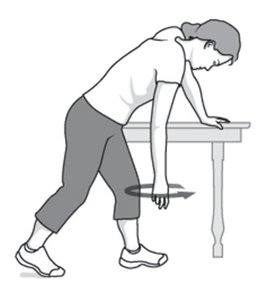
Biomechanics: Understanding leverage and motion aids in physical therapy and rehabilitation.
Medical Diagnostics: Waveforms such as ECGs are used to monitor heart activity.
Fluid Dynamics: IV drips and blood flow are governed by principles of fluids and pressure.
Summary Table: Mathematical Pillars in Physics
The following table summarizes the key mathematical tools used in Physics 100:
Tool | Purpose | Example |
|---|---|---|
Algebra | Solve equations, manipulate variables | |
Unit Analysis | Convert and check units | |
Trigonometry | Analyze angles and vectors | |
Decimal Notation | Express large/small numbers |
Additional info: The notes expand on brief points from the original slides, providing academic context and examples relevant to physics with calculus and health professions.
