 Indietro
Physics with Calculus: Motion, Vectors, and Coordinate Systems
Guida di studio - Note intelligenti
 Appunti personalizzati basati sui tuoi materiali, ampliati con definizioni chiave, esempi e contesto.
Math Review and Coordinate Systems
Cartesian Coordinate Systems
The Cartesian coordinate system is fundamental for describing positions and vectors in physics. It consists of perpendicular axes, typically labeled x, y, and z in two or three dimensions. Any point in space can be specified by its coordinates along these axes.
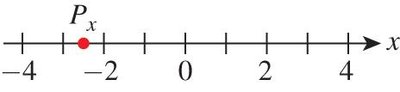
1D System: Only the x-axis is used, suitable for straight-line motion.
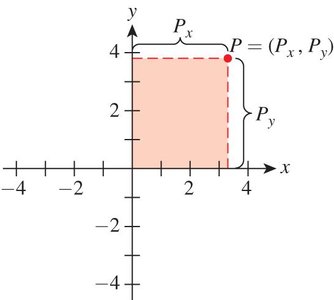
2D System: Uses x and y axes; points are described as (Px, Py).
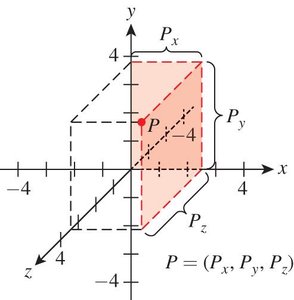
3D System: Uses x, y, and z axes; points are described as (Px, Py, Pz).
Example: The position of a point P in 2D is given by (Px, Py), where Px is the horizontal distance and Py is the vertical distance from the origin.
Vectors and Their Representation
Vector Basics
Vectors are quantities that have both magnitude and direction, such as displacement, velocity, and acceleration. In physics, vectors are often represented graphically as arrows and algebraically using their components.
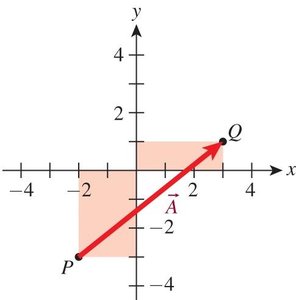
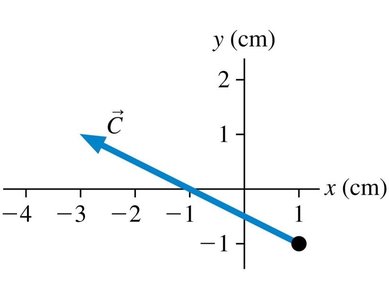
Displacement Vector: Shows the change in position from point P to Q.
Vector Components: Any vector can be decomposed into components along the coordinate axes.
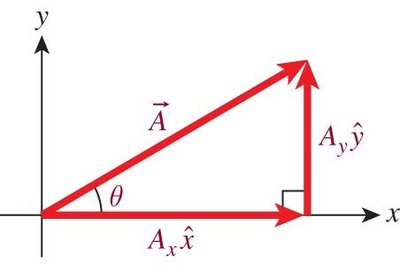
Example: The vector A from P to Q in 2D can be written as A = Ax x̂ + Ay ŷ, where Ax and Ay are the components along x and y.
Unit Vectors
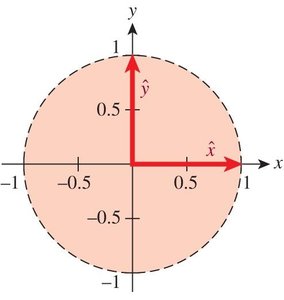
Unit vectors are vectors of magnitude 1 that indicate direction along the axes. In Cartesian coordinates:
x̂ points along the x-axis
ŷ points along the y-axis
ẑ points along the z-axis (in 3D)
Any vector can be written as a sum of its components multiplied by unit vectors.
Vector Components and Trigonometry
Decomposing Vectors
Vectors can be decomposed into components using trigonometry. If a vector A makes an angle θ with the x-axis:
Ax = A cos θ
Ay = A sin θ
The magnitude and direction of a vector can be found using:
Vector Operations
Addition and Subtraction
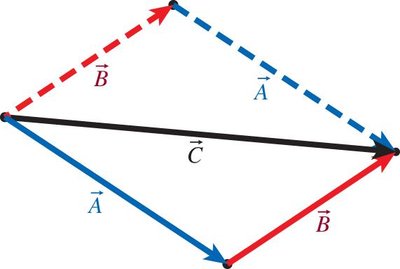
Vectors can be added or subtracted graphically (tip-to-tail method) or algebraically (component-wise).
Addition:
Subtraction:
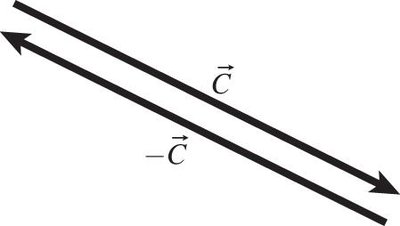
Inverse Vector: has the same magnitude as but points in the opposite direction.
Example: Adding vectors in components: , .
Motion in Multiple Dimensions
Displacement, Velocity, and Acceleration
Motion in physics is described using vectors for displacement, velocity, and acceleration. These quantities can be analyzed in one, two, or three dimensions.
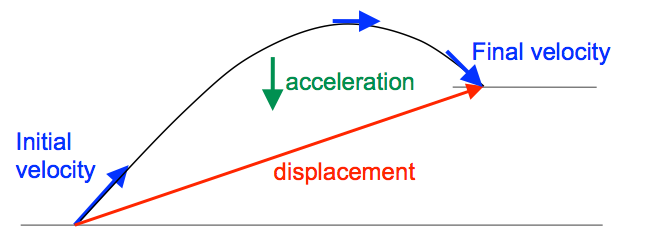
Displacement: Change in position, a vector quantity.
Velocity: Rate of change of position, a vector.
Acceleration: Rate of change of velocity, a vector.
Example: The diagram below shows initial velocity, final velocity, acceleration, and displacement for a projectile.
Inclined Planes and Tilted Coordinate Systems
Resolving Vectors on Inclined Planes
When analyzing motion on inclined planes, it is often useful to rotate the coordinate axes to align with the slope. Components of vectors are then calculated relative to the new axes.
Component along the slope:
Component perpendicular to the slope:
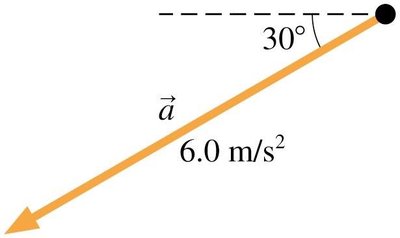
Example: An acceleration vector at 30° to the horizontal can be decomposed into components.
Summary Table: Vector Operations
Operation | Graphical Method | Algebraic Method |
|---|---|---|
Addition | Tip-to-tail | |
Subtraction | Add the inverse | |
Multiplication by Scalar | Stretch/shrink vector | |
Component Decomposition | Draw right triangle | , |
Applications and Examples
Projectile Motion and Kinematics
Projectile motion is a classic example of 2D kinematics, where vectors are used to describe the initial velocity, acceleration due to gravity, and displacement. The equations of motion are:
These equations allow calculation of the position and velocity of a projectile at any time.
Key Concepts and Definitions
Vector: A quantity with both magnitude and direction.
Scalar: A quantity with only magnitude.
Unit Vector: A vector of magnitude 1, indicating direction.
Component: The projection of a vector along an axis.
Tip-to-tail method: A graphical way to add vectors.
Displacement: The change in position, a vector.
Velocity: The rate of change of position, a vector.
Acceleration: The rate of change of velocity, a vector.
----------------------------------------
