Indietro
Polar Covalent Bonds, Acids, and Bases: Study Notes for Physics with Calculus Students
Guida di studio - Note intelligenti
 Appunti personalizzati basati sui tuoi materiali, ampliati con definizioni chiave, esempi e contesto.
Polar Covalent Bonds and Electronegativity
Bond Types and Ionic Character
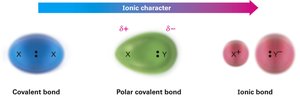
Chemical bonds can range from purely covalent to purely ionic, depending on the difference in electronegativity between the bonded atoms. Covalent bonds involve equal sharing of electrons, while ionic bonds involve complete transfer. Polar covalent bonds are intermediate, with unequal sharing due to differences in electronegativity.
Covalent bond: Electrons are shared equally between atoms.
Polar covalent bond: Electrons are shared unequally, resulting in partial charges (δ+ and δ-).
Ionic bond: Electrons are transferred, resulting in full charges.
Electronegativity and the Periodic Table
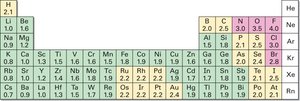
Electronegativity (EN) is the intrinsic ability of an atom to attract shared electrons in a covalent bond. The difference in EN between atoms determines bond polarity. The periodic table shows EN values, with fluorine (F) being the most electronegative and cesium (Cs) the least.
EN scale: Arbitrary, but useful for predicting bond character.
Metals: Low EN, weak electron attraction.
Nonmetals: High EN, strong electron attraction.
Bond Polarity and Inductive Effect
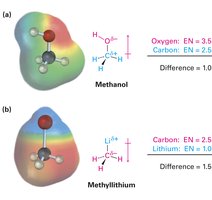
Bond polarity arises when atoms with different EN form a bond. The more electronegative atom attracts electrons, acquiring a partial negative charge (δ-), while the other atom becomes partially positive (δ+). The inductive effect is the shifting of electrons in response to nearby electronegative atoms.
Nonpolar covalent bonds: EN difference < 0.5
Polar covalent bonds: EN difference between 0.5 and 2
Ionic bonds: EN difference > 2
Dipole Moments and Molecular Polarity
Dipole Moment Definition
The dipole moment (μ) quantifies molecular polarity. It is the product of the magnitude of charge (Q) and the distance (r) between charges:
Measured in debyes (D): 1 D = coulomb meter
Examples of Dipole Moments
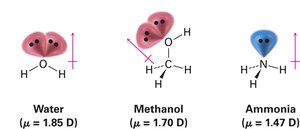
Water, methanol, and ammonia are examples of molecules with significant dipole moments due to their polar bonds and lone pairs.
Dipole Moments in Compounds
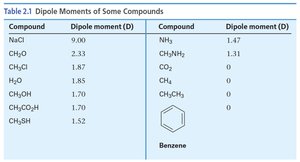
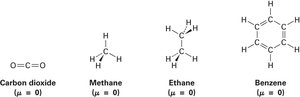
Table 2.1 summarizes dipole moments for various compounds. Symmetrical molecules like CO2, methane, and benzene have zero dipole moment due to cancellation of local dipoles.
Compound | Dipole moment (D) |
|---|---|
NaCl | 9.00 |
CH2O | 2.33 |
H2O | 1.85 |
CH3OH | 1.70 |
CH3CO2H | 1.70 |
CH3SH | 1.52 |
NH3 | 1.47 |
CH3NH2 | 1.31 |
CO2 | 0 |
CH4 | 0 |
C2H6 | 0 |
Benzene | 0 |
Formal Charges
Definition and Calculation
Formal charge is used to keep track of electron distribution in molecules. It is calculated as:
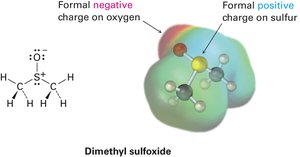
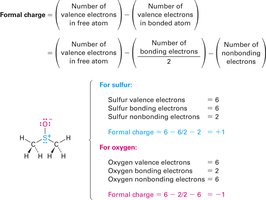
Common Formal Charges
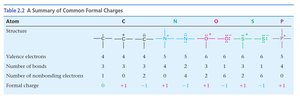
Table 2.2 summarizes typical formal charges for common atoms in organic molecules.
Atom | Valence electrons | Number of bonds | Number of nonbonding electrons | Formal charge |
|---|---|---|---|---|
C | 4 | 4 | 0 | 0 |
N | 5 | 3 | 2 | 0 |
O | 6 | 2 | 4 | 0 |
S | 6 | 2 | 4 | 0 |
P | 5 | 3 | 2 | 0 |
Resonance and Delocalization
Resonance Forms
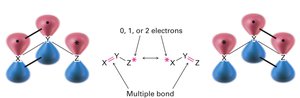
Some molecules cannot be represented by a single structure. Resonance forms differ only in the placement of π or nonbonding electrons. The actual structure is a resonance hybrid, which is more stable than any individual form.
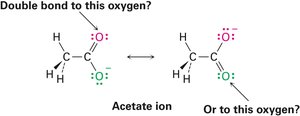
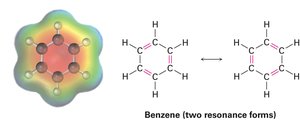
Rules for Resonance Forms
Resonance forms must be valid chemical structures (octet rule applies).
Electrons move in pairs, shown by curved arrows.
Resonance forms may contribute unequally to the hybrid.
Resonance with Different Atom Types
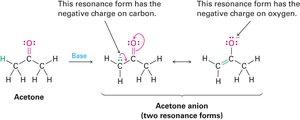
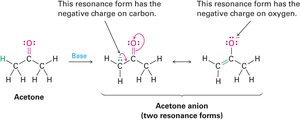
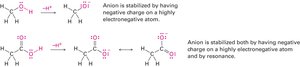
Resonance can involve different atom types, as in the enolate ion derived from acetone, where delocalization occurs between carbon and oxygen.

Acids and Bases
Brønsted–Lowry Definition
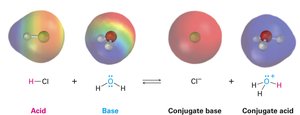
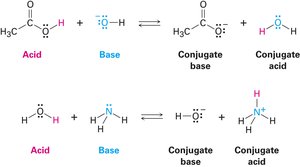
The Brønsted–Lowry theory defines acids as proton (H+) donors and bases as proton acceptors. The reaction produces a conjugate acid and conjugate base.
Brønsted acid: Donates H+
Brønsted base: Accepts H+

Acid and Base Strength
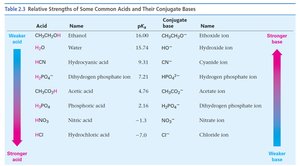
The equilibrium constant () for acid dissociation is related to acid strength. The acidity constant () is defined as:
Lower means stronger acid.
Predicting Acid–Base Reactions from pKa Values
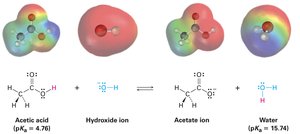
The difference in pKa values predicts the direction and extent of acid-base reactions. The stronger base holds the proton more tightly.
Organic Acids and Bases
Organic Acids
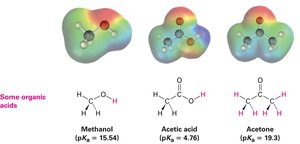
Organic acids are characterized by a positively polarized hydrogen atom. They can lose a proton from O–H or C–H bonds, especially when adjacent to a C=O group.

Organic Bases
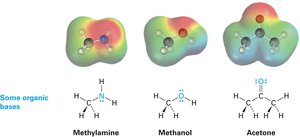
Organic bases have atoms with lone pairs that can bond to H+. Nitrogen-containing compounds are common organic bases. Oxygen-containing compounds can act as bases or acids depending on the reaction.
Lewis Acids and Bases
Lewis Definition
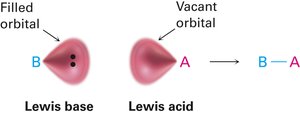
Lewis acids are electron pair acceptors, while Lewis bases are electron pair donors. This definition is broader than Brønsted–Lowry and includes metal cations and compounds with unfilled valence orbitals.
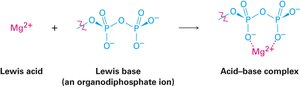
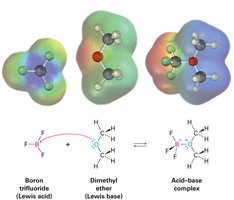
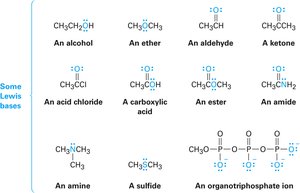
Lewis Bases
Most oxygen- and nitrogen-containing organic compounds are Lewis bases due to their lone pairs. Some compounds can act as both acids and bases.
Molecular Models and Noncovalent Interactions
Molecular Models
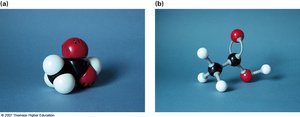
Molecular shape is critical in determining chemical properties and reactivity. Model kits help visualize three-dimensional structures.
Types of Noncovalent Interactions
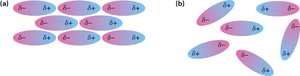
Dipole-dipole forces: Occur between polar molecules due to electrostatic interactions among dipoles.
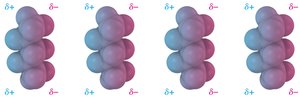
Dispersion forces: Present in all molecules, arising from constantly changing electron distributions.
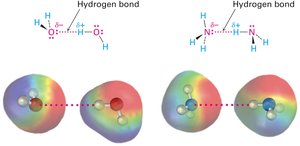
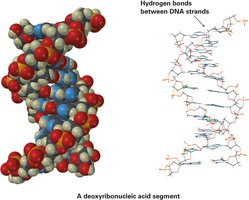
Hydrogen bonds: Most important in biological molecules, involving a hydrogen bonded to an electronegative atom and an unshared electron pair on another O or N atom.
Summary and Acidity Ranking
Key Points
Polar covalent bonds result from unsymmetrical electron sharing due to differences in electronegativity.
Molecular polarity is measured by dipole moment.
Formal charges help track electron distribution.
Resonance hybrids are more stable than individual resonance forms.
Brønsted acids donate protons; bases accept protons.
Acid strength is related to pKa; lower pKa means stronger acid.
Lewis acids accept electron pairs; Lewis bases donate electron pairs.
Noncovalent interactions include dipole-dipole, dispersion, and hydrogen bonds.
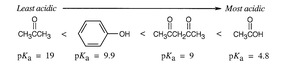
Ranking Acidity
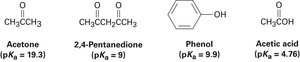
Substances can be ranked by increasing acidity using their pKa values. The lower the pKa, the more acidic the molecule.