 Indietro
The Nature and Propagation of Light: Optics and the Behavior of Light
Guida di studio - Note intelligenti
 Appunti personalizzati basati sui tuoi materiali, ampliati con definizioni chiave, esempi e contesto.
Chapter 33: The Nature and Propagation of Light
Introduction to Optics
Optics is the branch of physics that studies the behavior of light and other electromagnetic waves. Understanding the properties of light is essential for explaining natural phenomena such as the blue color of the sky, rainbows, and the functioning of optical devices like telescopes, microscopes, cameras, and eyeglasses. The principles of optics also underpin modern technologies including lasers, optical fibers, holograms, and medical imaging techniques.
Optics deals with the study of light's behavior, including its interaction with materials and its propagation.
Light can be described as particles, rays, or waves, each model providing unique insights into its properties.
Key concepts include reflection, refraction, dispersion, polarization, and scattering.
Huygens’s principle connects the ray and wave descriptions of light, aiding in the analysis of reflection and refraction.
Light and Its Interaction with Materials
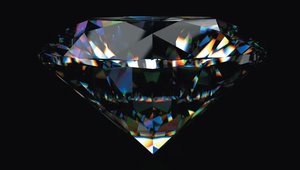
When light interacts with materials such as diamond, several phenomena occur that contribute to its distinctive visual effects. The sparkling and vivid colors observed in a cut diamond are due to:
Slower speed of light in diamond compared to air, causing refraction and internal reflection.
Different speeds for different colors (wavelengths) in diamond, leading to dispersion and the separation of colors.
Selective absorption of certain colors by the diamond, affecting the observed spectrum.
Example: The brilliance and color spectrum of a diamond illuminated with white light result from the combined effects of refraction, dispersion, and selective absorption.
Key Learning Outcomes
Understanding light rays and their relationship to wave fronts.
Applying the laws of reflection and refraction to analyze light behavior at interfaces.
Exploring total internal reflection and its conditions.
Examining how the speed of light in a material varies with wavelength, leading to dispersion.
Learning methods to polarize light from ordinary sources.
Understanding scattering and its role in phenomena like the blue color of the sky.
Utilizing Huygens’s principle to analyze reflection and refraction.
Review of Prerequisite Concepts
Speed of light in vacuum ()
Polarization by electric fields
Maxwell’s equations governing electromagnetic waves
Electromagnetic radiation, plane waves, wave fronts, index of refraction, and intensity of electromagnetic waves
Overview of Upcoming Topics
This chapter introduces the fundamental laws and concepts of optics, setting the stage for deeper exploration in subsequent chapters:
Chapter 34: Mirrors, lenses, and optical instruments
Chapter 35: Wave characteristics of light
Chapter 36: Advanced wave phenomena
Additional info: The study of optics is foundational for understanding both classical and modern physics, as well as for practical applications in engineering and technology.
----------------------------------------
