 Indietro
Library of Functions and Piecewise-defined Functions: Study Notes for Precalculus
Guida di studio - Note intelligenti
 Appunti personalizzati basati sui tuoi materiali, ampliati con definizioni chiave, esempi e contesto.
Library of Functions
Introduction to Key Functions
The library of functions consists of fundamental functions that serve as building blocks for more complex mathematical expressions. Understanding their properties, graphs, and behaviors is essential for mastering precalculus concepts.
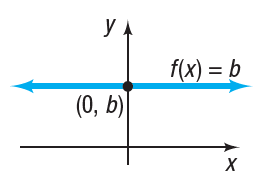
Constant Function: where is a real number. The graph is a horizontal line.
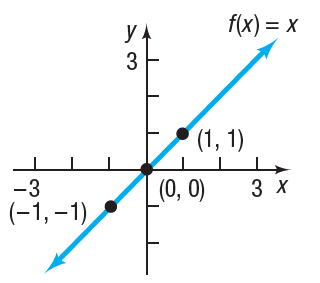
Identity Function: . The graph is a diagonal line passing through the origin.
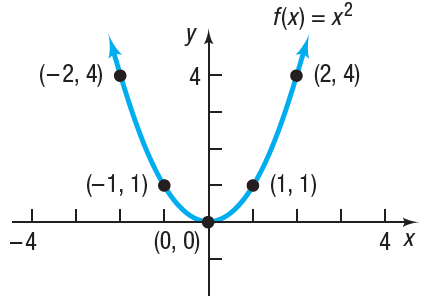
Square Function: . The graph is a parabola opening upwards.
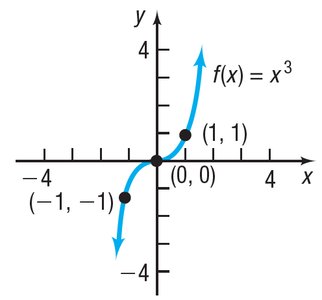
Cube Function: . The graph is an S-shaped curve passing through the origin.
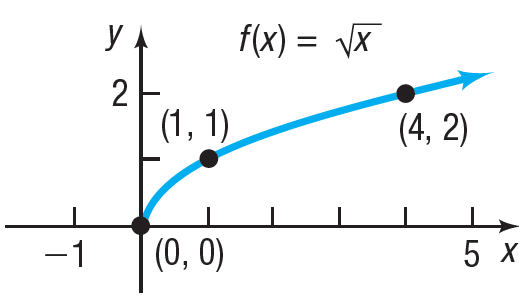
Square Root Function: . The graph starts at the origin and increases slowly.
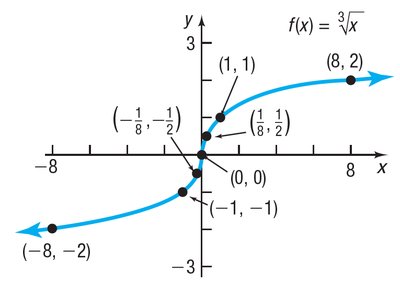
Cube Root Function: . The graph passes through the origin and is symmetric about it.
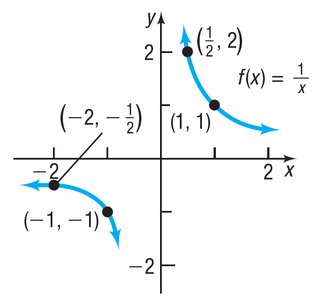
Reciprocal Function: . The graph consists of two branches in opposite quadrants.
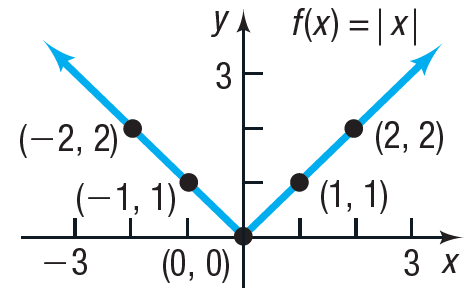
Absolute Value Function: . The graph forms a 'V' shape.
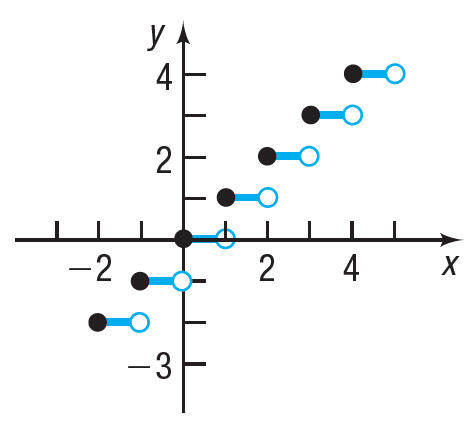
Greatest Integer Function: , which returns the greatest integer less than or equal to .
Example: The graph of the constant function is a horizontal line at .
Example: The graph of the identity function is a straight line through the origin.
Example: The graph of the square function is a parabola.
Example: The graph of the cube function is an S-shaped curve.
Example: The graph of the square root function starts at the origin and increases.
Example: The graph of the cube root function passes through the origin and is symmetric.
Example: The graph of the reciprocal function consists of two branches.
Example: The graph of the absolute value function forms a 'V' shape.
Example: The graph of the greatest integer function is a step function.
Properties of Key Functions
Square Root Function
The square root function is defined for nonnegative real numbers and has unique properties regarding its domain, range, and symmetry.
Domain and Range: Both are the set of nonnegative real numbers.
Intercepts: The x-intercept and y-intercept are both at (0, 0).
Symmetry: The function is neither even nor odd.
Monotonicity: The function is increasing on .
Extrema: The function has an absolute minimum of 0 at .
Cube Root Function
The cube root function is defined for all real numbers and exhibits symmetry about the origin.
Domain and Range: Both are the set of all real numbers.
Intercepts: The x-intercept and y-intercept are both at (0, 0).
Symmetry: The function is odd and symmetric with respect to the origin.
Monotonicity: The function is increasing on .
Extrema: The function does not have any local minima or maxima.
Absolute Value Function
The absolute value function is defined for all real numbers and is characterized by its 'V' shaped graph.
Domain: All real numbers.
Range: .
Intercepts: The x-intercept and y-intercept are both at (0, 0).
Symmetry: The function is even and symmetric with respect to the y-axis.
Monotonicity: Decreasing on , increasing on .
Extrema: Absolute minimum of 0 at .
Piecewise-defined Functions
Definition and Analysis
A piecewise-defined function is a function that is defined by different expressions depending on the value of the independent variable. These functions are useful for modeling situations where a rule changes based on input values.
Definition: For example,
Domain: Determined by the union of the domains of each piece.
Intercepts: Found by setting (y-intercept) and (x-intercept) in each piece.
Graph: Each piece is graphed over its respective interval.
Range: Determined from the graph.
Example: Analyzing a Piecewise-defined Function
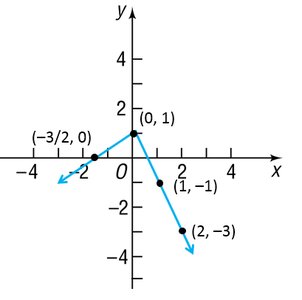
Consider .
Find : Since , use the first piece: .
Find : Since , use the second piece: .
Find : Since , use the second piece: .
Domain: All real numbers.
Intercepts: y-intercept at , x-intercept at for the first piece.
Graph: Graph each piece over its interval.
Range: From the graph, the range is .
Greatest Integer Function
Definition and Properties
The greatest integer function, also known as the floor function, returns the greatest integer less than or equal to a given number. Its graph is a step function.
Notation:
Domain: All real numbers.
Range: All integers.
Graph: Consists of horizontal segments.
x | y = f(x) = int(x) | (x, y) |
|---|---|---|
-1 | -1 | (-1, -1) |
1/2 | 0 | (1/2, 0) |
1/4 | 0 | (1/4, 0) |
0 | 0 | (0, 0) |
3/4 | 0 | (3/4, 0) |
Example: , .
Summary Table: Key Functions and Their Properties
Function | Domain | Range | Symmetry | Intercepts |
|---|---|---|---|---|
All real numbers | All real numbers | Odd | (0, 0) | |
All real numbers | Even | (0, 0) | ||
All real numbers | All real numbers | Odd | (0, 0) | |
Neither | (0, 0) | |||
All real numbers | All real numbers | Odd | (0, 0) | |
All real numbers | Even | (0, 0) | ||
Odd | None | |||
All real numbers | Integers | Neither | At integer values |
