 Indietro
Autism Spectrum Disorder: Biological Basis, Features, and Interventions
Guida di studio - Note intelligenti
 Appunti personalizzati basati sui tuoi materiali, ampliati con definizioni chiave, esempi e contesto.
Autism Spectrum Disorder (ASD)
Essential Features and Definition
Autism Spectrum Disorder (ASD) is a complex neurodevelopmental disorder characterized by persistent deficits in social communication and interaction, alongside restricted, repetitive patterns of behavior, interests, or activities. The disorder manifests in early childhood and affects multiple domains of functioning. - Key Point 1: ASD involves impairments in social-emotional reciprocity, nonverbal communicative behaviors, and the ability to develop, maintain, and understand relationships. - Key Point 2: Restricted, repetitive behaviors include stereotyped motor movements, insistence on sameness, highly fixated interests, and unusual responses to sensory input. - Example: A child with ASD may avoid eye contact, engage in repetitive hand-flapping, and show intense interest in specific topics. 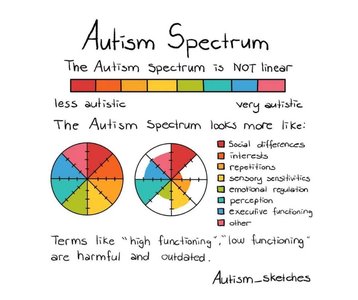
Person-First Language and Identity
The use of person-first language (e.g., "person with autism") emphasizes the individual beyond their diagnosis, though some prefer identity-first language (e.g., "autistic person"). - Key Point: Person-first language recognizes that a person is more than their diagnosis. 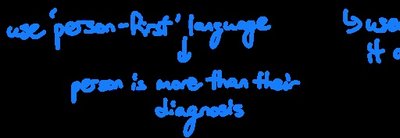
Autism as a Spectrum
ASD is not a linear condition; it encompasses a wide range of abilities and challenges across different domains. - Key Point: The spectrum includes social differences, interests, repetitions, sensory sensitivities, emotional regulation, perception, executive functioning, and other traits. - Example: Two individuals with ASD may have very different strengths and difficulties.
Core Symptoms and Diagnostic Criteria
Social Communication and Interaction
Deficits in social-emotional reciprocity, nonverbal communication, and relationship skills are central to ASD. - Key Point: Difficulties may include lack of eye contact, trouble understanding gestures, and challenges in forming friendships. 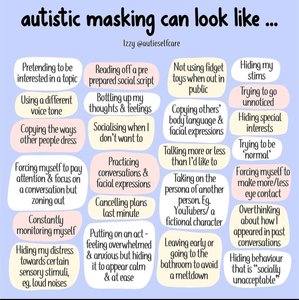
Restricted, Repetitive Behaviors (RRBs)
These behaviors are repetitive, inflexible, and often serve as coping mechanisms. - Key Point: Examples include hand-flapping, rocking, insistence on routines, and intense focus on specific interests. 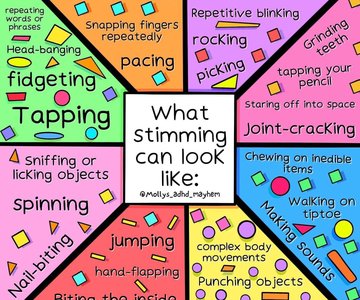
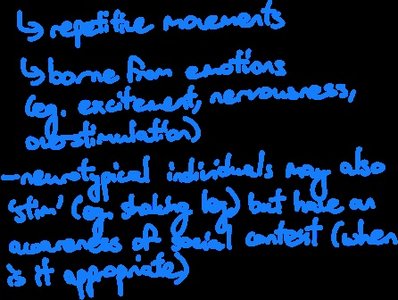
Stimming
Stimming refers to self-stimulatory behaviors commonly seen in ASD, such as repetitive movements or sounds. - Key Point: Stimming can be a response to excitement, nervousness, or overstimulation. - Example: Nail-biting, pacing, or tapping are common forms of stimming.
Severity Levels of ASD
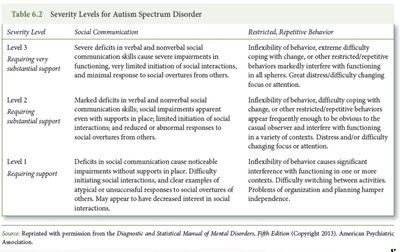
ASD is classified into three severity levels based on the degree of support required.
Severity Level | Social Communication | Restricted, Repetitive Behavior |
|---|---|---|
Level 3 (Requiring very substantial support) | Severe deficits in verbal and nonverbal social communication skills; very limited initiation of social interactions; minimal response to social overtures from others. | Inflexibility of behavior; extreme difficulty coping with change; restricted/repetitive behaviors markedly interfere with functioning in all spheres. |
Level 2 (Requiring substantial support) | Marked deficits in verbal and nonverbal social communication skills; social impairments apparent even with supports in place; reduced responses to social overtures from others. | Inflexibility of behavior; difficulty coping with change; restricted/repetitive behaviors appear frequently enough to be obvious to the casual observer. |
Level 1 (Requiring support) | Deficits in social communication cause noticeable impairments without supports in place; difficulty initiating social interactions; may appear to have decreased interest in social interactions. | Inflexibility of behavior interferes with functioning in one or more contexts; difficulty switching between activities; problems with organization and planning hamper independence. |
Communication Challenges
Qualitative Language Impairments
Language development in ASD is often atypical, with features such as pronoun reversals, echolalia, perseverative speech, and impairments in pragmatics. - Key Point: About 50% of individuals with ASD do not develop useful language. - Example: A child may repeat phrases (echolalia) or use "you" instead of "I" (pronoun reversal). 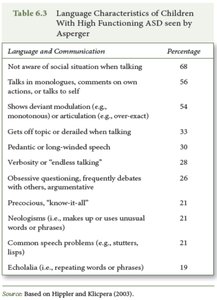
Language Characteristics in High Functioning ASD
Children with high functioning ASD (e.g., Asperger's) may display specific language traits.
Language and Communication | Percentage |
|---|---|
Not aware of social situation when talking | 68 |
Talks in monologues, comments on own actions, or talks to self | 56 |
Shows deviant modulation (e.g., over-exact articulation) | 54 |
Gets off topic or derailed when talking | 33 |
Pendantic or long-winded speech | 33 |
Verbosity or "endless talking" | 28 |
Obsessive questioning, frequent debates | 26 |
Proficiency, "know-it-all" | 21 |
Neologisms (makes up or uses unusual words/phrases) | 21 |
Common speech problems (e.g., stutters) | 20 |
Echolalia (repeating words/phrases) | 19 |
Accompanying Disorders and Symptoms
Common Comorbidities
ASD frequently co-occurs with intellectual disability and epilepsy, as well as ADHD, conduct problems, anxieties, fears, and mood disorders. - Key Point: Self-injurious behaviors (SIB) may also be present.
Medical Conditions and Physical Characteristics
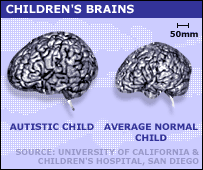
Children with ASD may have coexisting medical conditions, sleep disturbances, gastrointestinal symptoms, and sometimes larger-than-normal head size. 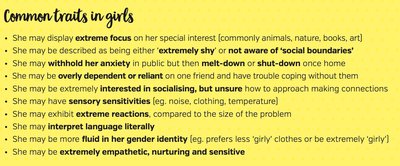
Prevalence and Course
Prevalence Rates
ASD is a global condition, with prevalence rates varying by region and gender. - Key Point: Worldwide prevalence is about 1 in 100 children; in the USA, 1 in 31 children (CDC, 2022). - Key Point: Boys are diagnosed more frequently than girls.
Barriers to Diagnosis in Girls
Girls with ASD may be underdiagnosed due to diagnostic norms based on male samples, clinician biases, symptom masking, and unique presentation. - Key Point: Girls may display extreme focus, sensory sensitivities, and interpret language literally.
Symptom Masking
Autistic masking refers to behaviors used to hide or compensate for autistic traits in social situations. - Key Point: Masking can involve pretending to be interested, using a different tone, or copying others' behaviors. 
Age of Onset
ASD can be reliably detected from 12 to 18 months, with stable diagnoses made around ages 2-3. - Key Point: Early screening is recommended for all children at 18-24 months.
Causes of Autism Spectrum Disorder
Problems in Early Development
Health complications during pregnancy, birth, or immediately after birth are more common in autistic children. - Key Point: Prenatal and neonatal complications are identified in a minority of cases. - Key Point: The theory that vaccinations cause autism has been debunked.
Genetic Influences
ASD is highly heritable, with complex genetic factors involved. - Key Point: Fragile-X anomaly, chromosomal anomalies, and tuberous sclerosis are associated with ASD. - Key Point: Concordance rates are 70-90% in identical twins, near 0% in fraternal twins. - Key Point: Heritability of ASD liability is estimated at 90%.
Brain Abnormalities
ASD is associated with growth dysregulation and structural abnormalities in multiple brain regions. - Key Point: Diffusion Tensor Imaging (DTI) shows weakened connections between regions for social communication and repetitive movements. - Key Point: Limbic system, fusiform gyrus, and prefrontal cortex are implicated.
Neurobiological Factors
- Key Point: Cerebral gray and white matter overgrowth, structural abnormalities in cerebellum and limbic system, decreased blood flow in frontal and temporal lobes, elevated blood serotonin, and atypical connectivity in the default mode network are observed in ASD.
Treatments and Interventions
General Principles
There is no known cure for ASD, but early identification and intervention can improve outcomes. - Key Point: Intervention goals include minimizing core problems, maximizing independence and quality of life, and supporting families.
Intervention Components
Effective interventions build rapport, teach learning-readiness skills, reduce disruptive behaviors, and improve social and communication skills. - Key Point: Teaching adaptive skills and functional communication is essential.
Medications
Medications may help reduce behavioral symptoms such as irritability, aggression, and self-injurious behaviors, but benefits are limited and variable. - Key Point: Antidepressants, stimulants, tranquilizers, and antipsychotics are sometimes used.
Common Interventions
- Applied Behaviour Analysis (ABA): Uses reinforcement to teach skills and reduce problematic behaviors. - Pivotal Response Training (PRT): Focuses on motivation and response to multiple cues. - Discrete Trial Teaching: Structured teaching method using repeated trials. - Early Start Denver Model (ESDM): Integrates ABA principles for young children. - Lovaas Model: Intensive behavioral intervention. - Speech, Occupational, and Physical Therapy: Addresses communication, motor, and daily living skills. - TEACCH: Structured teaching for independence. - Picture Exchange Communication System (PECS): Uses pictures to support communication.
Neurodiversity Movement and Implications for Interventions
Neurodiversity Perspective
The neurodiversity movement opposes attempts to "cure" or "normalize" autistic individuals, advocating for depathologizing traits unless they cause harm or violate rights. - Key Point: Interventions should respect individual differences and focus on quality of life. 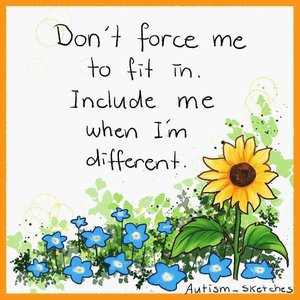

Resources and Media
Educational Resources
- Enabling Guide for Autism - NeuroDiverCity SG - ASAT evidence-based treatments - Autism Sketches
Movies and Series
Media representations of autism can help increase awareness and understanding. - Netflix: Love on the Spectrum, Atypical, The Good Doctor, Extraordinary Attorney Woo - Disney+: Loop 


Summary Table: Biological Basis of Autism Spectrum Disorder
Domain | Key Features |
|---|---|
Genetic | High heritability, chromosomal anomalies, twin studies |
Neurobiological | Brain structure abnormalities, connectivity issues, serotonin levels |
Developmental | Early onset, prenatal/neonatal complications |
Behavioral | Social communication deficits, repetitive behaviors, stimming |
Comorbidities | Intellectual disability, epilepsy, ADHD, mood disorders |
Exam Preparation Tips
- Focus on understanding the biological, behavioral, and social aspects of ASD. - Review diagnostic criteria and severity levels. - Familiarize yourself with intervention models and neurodiversity perspectives. - Use tables and visual aids to reinforce key concepts. Additional info: Academic context was added to clarify the neurobiological and genetic basis of ASD, as well as intervention principles and neurodiversity perspectives.
